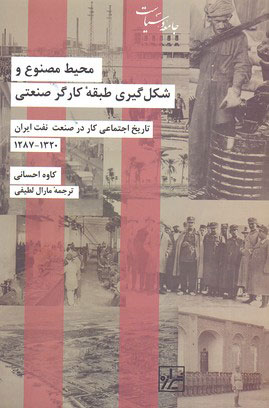
The Built Environment and the Making of the Industrial Working Class
The Social History of Labor in the Iranian Oil Industry (1908-1941)
Kaveh Ehsani
Shirazeh Ketab-e Ma, Tehran, 2019 · Persian
A spatial social history of labour in Iran’s oil industry from 1908 to 1941, showing how the oil complex of Khuzestan and the city of Abadan were assembled.
Kaveh Ehsani writes the history of oil in southwest Iran as one of ‘assemblage’ rather than natural emergence: an outcome of contested encounters between the material world and unequal social actors. Drawing on urban and spatial theory, from David Harvey to Timothy Mitchell and actor-network thinking, he follows the geopolitics of oil in Khuzestan under British imperial power, the integration of local agrarian and pastoral societies into oil capitalism through property and contract, and the rise of the ‘social question’ in Britain and in the oil complex after the First World War. Later chapters turn to the making of Abadan as an oil city and the new urban solidarities through which workers resisted dispossession and claimed a right to the city.
- Subjects
- Labor, Oil and energy, Urban studies
- Region
- Iran
- Period
- 1900–1979
Details
- Original title
- تاریخ اجتماعی کار در صنعت نفت ایران (1941 - 1908م / 1320 - 1287ش): محیط مصنوع و شکلگیری طبقه کارگر صنعتی
- Translator
- Maral Latifi
- Publisher
- Shirazeh Ketab-e Ma, Tehran
- Published
- 1398 (2019)
- Pages
- 642
- Format
- Hardcover
- Language
- Persian
- ISBN
- 978-622-6843-01-0