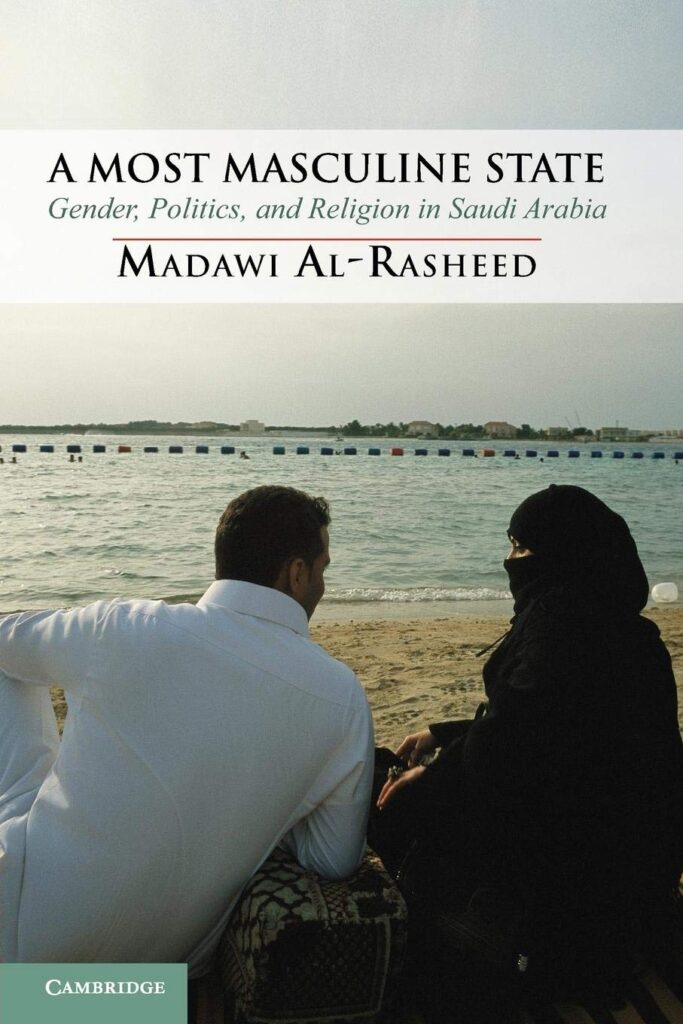
A Most Masculine State
Gender, Politics, and Religion in Saudi Arabia
Madawi Al-Rasheed
Cambridge University Press, 2013 · English
A historical study of how Saudi Arabia’s religious nationalism made women into symbols of political projects that demanded both piety and modernity.
Madawi Al-Rasheed argues that tradition, culture and religion alone cannot explain gender inequality in Saudi Arabia. She traces how Wahhabism turned from a religious revival into a form of religious nationalism, playing a role comparable to that of secular Arab nationalism in Egypt, and how the state used women as political symbols. Saudi women became hostages to contradictory projects that pressed them to be more pious and, at the same time, to embody modernity. Drawing on state documents, media sources and interviews, the book examines education, fatwas on women, women novelists, preachers and activists, and the new prominence of the ‘woman question’ after 11 September 2001, when it became an issue of global concern.
- Subjects
- Gender and women, Religion, State and governance
- Discipline
- Anthropology, Political science
- Period
- 1900–1979, Since 1979
Details
- Publisher
- Cambridge University Press
- Published
- 2013
- Series
- Cambridge Middle East Studies
- Language
- English
- ISBN
- 978-0-521-12252-8
Contents
- Introduction: The ‘Woman Question’ in Saudi Arabia
- 1 - From Religious Revival to Religious Nationalism
- 2 - Schooling Women: The State as Benevolent Educator
- 3 - Symbols of Piety: Fatwas on Women in the 1980s
- 4 - The Quest for Cosmopolitan Modernity
- 5 - Women in Search of Themselves
- 6 - Celebrity Women Novelists and the Cosmopolitan Fantasy
- 7 - Guarding Self and Nation: Women Preachers and Activists
- Conclusion: Light at the End of the Tunnel