A political history arguing that Iran’s foreign policy since 1979 follows a consistent logic of state survival and independence, shaped by a long memory of foreign intervention.
Books, films, reports and more on Iran and its region.
A political history arguing that Iran’s foreign policy since 1979 follows a consistent logic of state survival and independence, shaped by a long memory of foreign intervention.
An analysis of the decades-long confrontation between the United States and Iran, and a case for a more informed American approach to Iranian society.
A study of how the idea of the Middle East as a region was made, and of how treating it as a single unit has shaped and limited political science.
Four specialists examine what four decades of sanctions have done to Iran’s society, politics and economy, and what they have cost the United States and the wider world.
An introduction for readers outside Iran to the many social struggles that fed into the Woman, Life, Freedom movement of 2022–2023.
A comparative study of how women of different political and religious outlooks have campaigned for representation in formal politics in Iran and Turkey.
Leading political scientists survey a decade of research after the Arab uprisings and show how the field rethought authoritarianism, protest, identity, security and migration.
A study of how non-elite women’s practices of citizenship have shaped the making of the Iranian state since the revolution, from wartime to the present.
A comparative study of why the Arab uprisings of 2010–2011 led to democratic progress in some countries and to stagnation, repression or war in others.
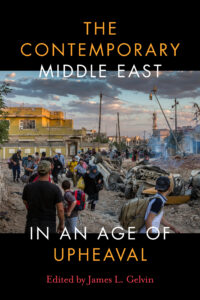
An edited volume on the ‘new Middle East’ that has emerged since the occupation of Iraq and the Arab uprisings, covering states, societies and regional politics.
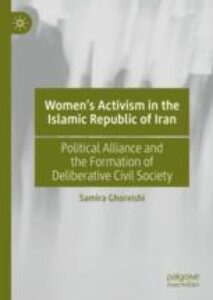
An analysis of how Iranian women activists have worked through the media, civil society and politics to build a pluralist, deliberative civil society in the Islamic Republic.
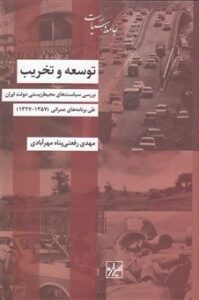
A history of environmental law and policy in Pahlavi Iran under the five development plans of 1948–1978, asking why no strong environmental movement emerged.
A theory of revolution that explains how revolutions start, unfold and end by tracing recurring sequences of events across cases, from England and Chile to Iran and Ukraine.
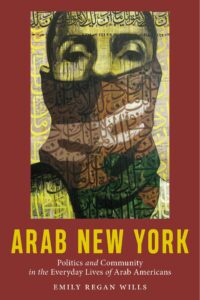
An ethnography of the everyday political life of Arab Americans in New York, based on fieldwork with community organisations in Bay Ridge, Brooklyn, between 2008 and 2010.
A historical and ethnographic study of drug policy in Iran that uses the state’s handling of drugs and addiction to examine how the Islamic Republic governs crisis.
A study of the stateless residents of the United Arab Emirates who were given passports of the Comoros, and of the ‘precarious citizenship’ produced by Gulf migration regimes.
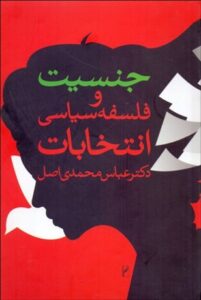
A study of women’s participation in public life and elections in Iran, arguing that sustainable and just development depends on their place in legislation and politics.
An analysis of why the Arab uprisings of 2011, revolutionary in their mass mobilisation, remained reformist in their aims and changed little in the structure of power.
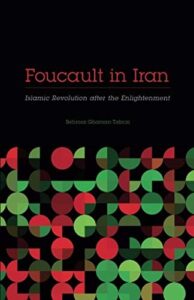
A reading of Michel Foucault’s writings on the Iranian revolution that defends them against their critics and traces how the revolution shaped his later thought.
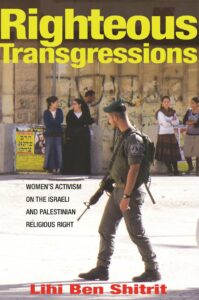
A study of women’s activism in four religious right-wing movements in Israel and Palestine, and of how they justify crossing the limits set on women’s roles.
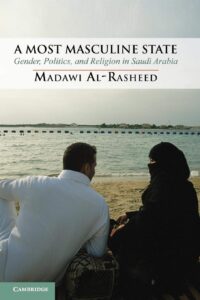
A historical study of how Saudi Arabia’s religious nationalism made women into symbols of political projects that demanded both piety and modernity.
This website uses cookies to improve your experience. We'll assume you're ok with this, but you can opt-out if you wish. Accept Read More