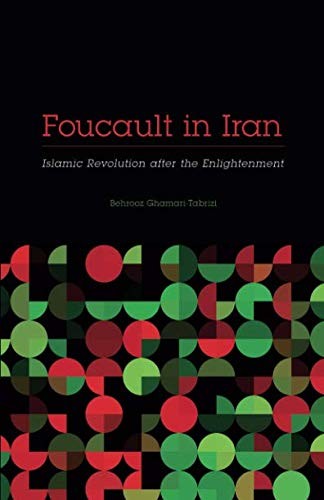
Foucault in Iran
Islamic Revolution after the Enlightenment
Behrooz Ghamari-Tabrizi
University of Minnesota Press, 2016 · English
A reading of Michel Foucault’s writings on the Iranian revolution that defends them against their critics and traces how the revolution shaped his later thought.
Behrooz Ghamari-Tabrizi revisits Michel Foucault’s 1978–1979 essays on Iran, long treated by critics as a lapse of judgement. The book opens with an account of the revolutionary movement and the role of Shi‘i ritual and symbolic language in it, then follows how Foucault made sense of the events. It answers the critiques of Janet Afary and Kevin Anderson and of Foucault’s feminist critics, including the exchange over women’s rights. Ghamari-Tabrizi argues that Foucault saw in the revolution an event that did not fit Europe’s progressive models of history, and that, although traces of the experience are visible in his last writings, Foucault never acknowledged the central part the political spirituality of the revolutionaries in Tehran’s streets played in that shift.
- Subjects
- Political Islam, Revolution
- Region
- Iran
- Discipline
- History, Political science
- Period
- 1900–1979, Since 1979
Details
- Publisher
- University of Minnesota Press
- Published
- August 2016
- Series
- Muslim International
- Pages
- 272
- Format
- Paperback
- Language
- English
- ISBN
- 978-0-8166-9949-0
Contents
- Introduction: Foucault’s Indictment
- 1. Thinking the Unthinkable: The Revolutionary Movement in Iran
- 2. How Did Foucault Make Sense of the Iranian Revolution?
- 3. Misrepresenting the Revolution, Misreading Foucault
- 4. The Reign of Terror, Women’s Issues, and Feminist Politics
- 5. Was ist Aufklärung? The Iranian Revolution as a Moment of Enlightenment
- Conclusion: Writing the History of the Present