
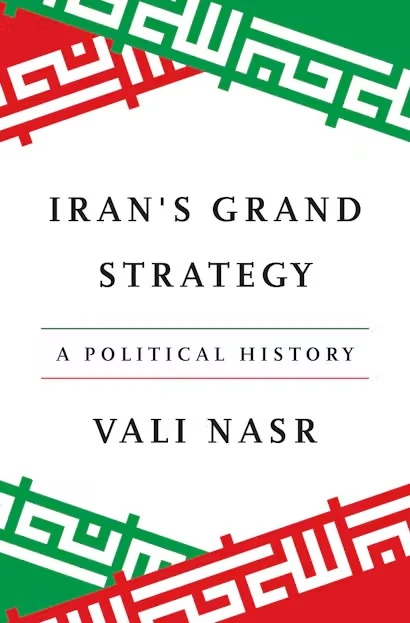
Iran’s Grand Strategy
A Political History
Vali Nasr
Princeton University Press, 2025 · English
A political history arguing that Iran’s foreign policy since 1979 follows a consistent logic of state survival and independence, shaped by a long memory of foreign intervention.
Vali Nasr reads the Islamic Republic’s conduct abroad as strategy rather than ideology or irrationality. He begins with the historical roots of Iranian insecurity, from territorial losses and wartime occupations to the 1953 coup, and then shows how the revolution made independence the central aim of the new state. The war with Iraq, in his account, turned that aim into a security-first doctrine. The second part, on the Khamenei era, traces the postwar debate between reform and resistance, the turn to forward defence and the building of the Axis of Resistance, the nuclear programme, and the economic and political price these choices have imposed on the country.
- Subjects
- Foreign policy, Security
- Region
- Iran
- Discipline
- History, Political science
- Period
- 1900–1979, Since 1979
Details
- Publisher
- Princeton University Press
- Published
- May 2025
- Pages
- xiv + 388
- Format
- Hardcover
- Language
- English
- ISBN
- 978-0-691-26892-7
Contents
- A Note on the Book
- Introduction
- 1. Loom of History
- Part I. The Crucible of Revolution and War
- 2. Seeking Revolutionary Independence
- 3. The Struggle to Win the Revolution
- 4. Sacred Defense: How the War Transformed Iran’s Strategy
- 5. How the War Made the Islamic Republic
- Part II. Khamenei and the Grand Strategy of Resistance
- 6. After the War: Reform or Resistance
- 7. Forward Defense: Seeking Strategic Depth for Resistance
- 8. The Rise of the Axis of Resistance
- 9. The Cost of Success
- 10. The Nuclear Gambit
- 11. The Price of Resistance