Rethinking Iran’s Grand Strategy with Vali Nasr (©Background)
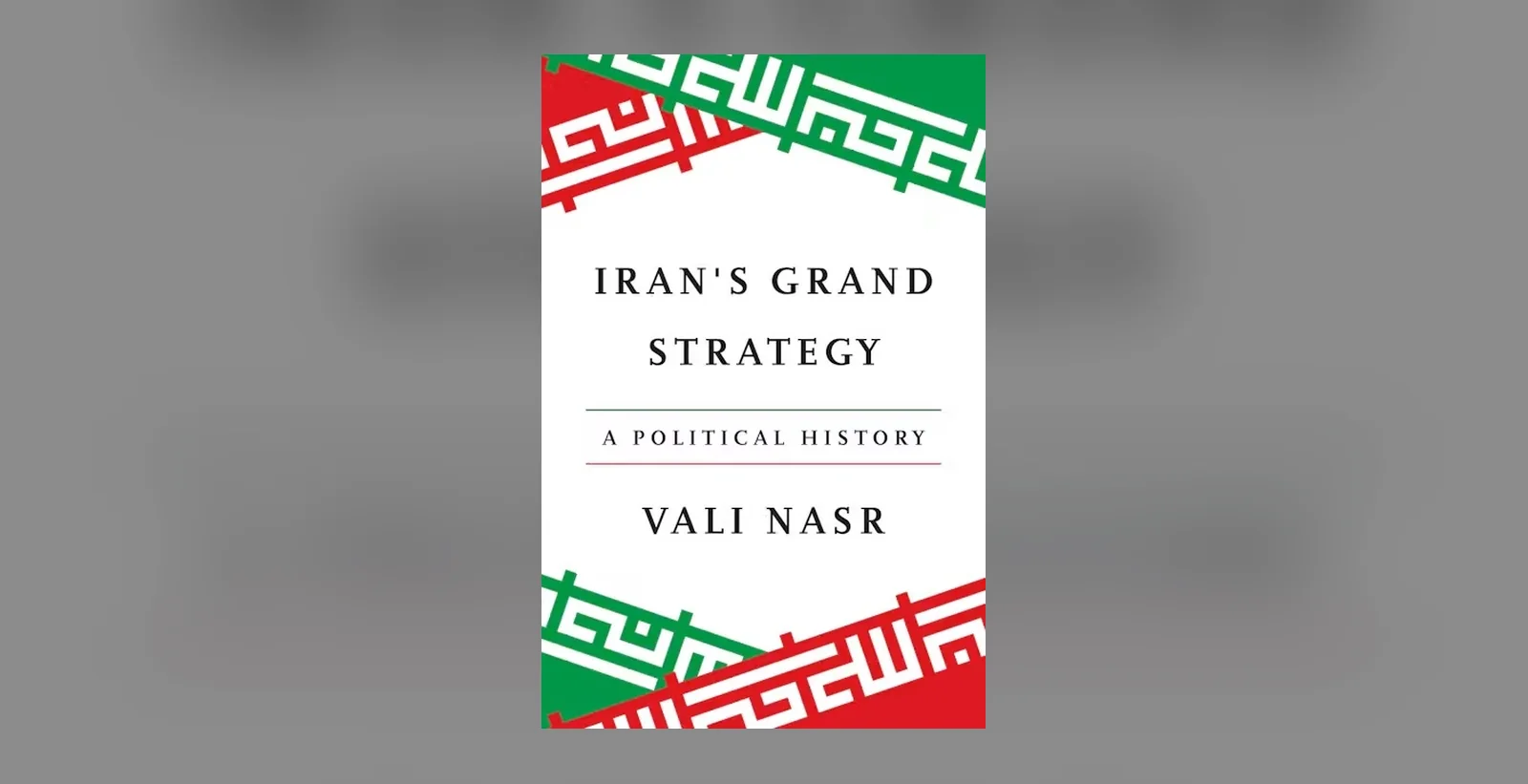
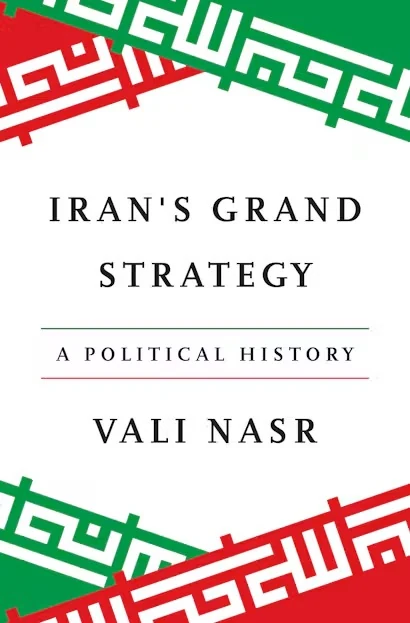
Iran’s Grand Strategy: A Political History
Vali Nasr
Princeton University Press, 2025
Vali Nasr’s Iran’s Grand Strategy (Princeton University Press, 2025) provides a historically grounded reinterpretation of Iranian foreign policy. Rejecting portrayals of the Islamic Republic as driven by ideology or irrationality, Nasr reconstructs a century of strategic calculation through the lens of national security. His central claim is compelling: the regime’s behavior follows a coherent logic of survival, rooted in Iran’s modern political experience.
At the heart of Nasr’s argument lies a powerful premise: state behavior has a rationale, and the Islamic Republic is no exception. That rationale is, broadly, state survival. State-building serves as its primary instrument, comprising two interrelated wings. The first is security-driven foreign policy, which manages rivalry, deterrence, and external threats. The second is a theory of development that supplies the material and institutional foundations for long-term consolidation through economic growth and social transformation. In Nasr’s reading, post-revolutionary Iran prioritises the first wing. Because for reasons rooted in Iran’s modern history threats to survival are perceived as foreign-born, security policy takes precedence, with development sequenced to follow once survival is secured. Nasr is right to center survival, but he is incomplete on how survival and development are politically determined within a contested nation-state.
This review engages Nasr on these two pillars but reframes them through the lens of the modern nation-state. It first reconstructs Nasr’s survival logic historically, then shows how three key episodes—the 1953 coup against Mossadegh, the 1979 revolution and the fall of the Shah, and post-Iran-Iraq war domestic politics—expose tensions between state survival and legitimacy in the eyes of the nation. In a nation-state, balancing survival with inclusive development is essential for a sustainable long-term path. When either is defined narrowly, resources can be diverted toward regime preservation, weakening legitimacy and constraining development.
Nasr admittedly does not attempt a complete theory of everything; a fuller account would need to integrate domestic legitimacy and distributional conflict into the analysis of survival and state-building.
Even a sympathetic reader may have questions. Granting the state’s security concerns, one can still ask whether the strategies used to address them have been costly or misguided. From different strands of political thought, critics might argue that Nasr is too dismissive of ideology and of how the national-security argument has been used by the Iranian government to justify repressive domestic policies. Many such criticisms, however, apply broadly to state-rationality arguments in international relations, where the assumption of a unitary rational state remains central.
This review offers a more limited commentary. It tracks the coherence of Nasr’s argument on its own state-centric terms but brings nation-state dynamics into the foreground to illuminate how state survival is always tied to the political relationship between the state and the nation, and to the groups that constitute each.
Nasr organizes his book around the claim that Iran’s foreign policy is driven by national security concerns shaped by deep historical insecurity. He presents this as the primary lens through which the post-1979 state chooses among its options. Many of the regime’s apparently contradictory policies, he argues, make sense once the pursuit of independence is understood as the dominant strategic priority.
Nasr begins by tracing how a persistent sense of insecurity emerged from Iran’s territorial losses, painful occupations during both world wars, and the crisis surrounding oil nationalisation under Mohammad Mossadegh. Mossadegh’s anti-colonial strategy, though initially popular, was ill-suited to the state’s weakness, Nasr argues. He underestimated security risks and overestimated domestic support. His downfall is thus presented as nearly inevitable: the state’s weakness led to economic deterioration, clerical and popular backing faded, and the threat of a communist takeover alarmed foreign powers.
Crucially, Nasr notes that despite concerns about economic performance, Iranians did not view the 1953 coup as inevitable or benign; they felt betrayed, and this resentment lasted for decades. That is an important sign that prosperity and sovereignty are intertwined pillars of a nation-state. The collapse of the monarchy, despite rapid economic growth between 1963 and 1977, further illustrates that material success failed both to consolidate a sustainable development path and to repair the rupture in the nation-state relationship created by the coup.
The second chapter turns to the revolutionary period and the emergence of esteqlal (independence) as the defining pillar of post-1979 policy. Nasr argues that independence was not a revolutionary invention but a long-standing national demand, and that factional struggles after 1979 were fought through competing claims to embody it. The hostage crisis becomes the pivotal episode: by seizing the anti-imperialist mantle, the clerical establishment marginalised liberal and leftist rivals and consolidated authority. In this account, foreign confrontation and domestic consolidation were intertwined, as the language of external threat reinforced internal regime survival.
The chapter on the Iran–Iraq War is where Nasr’s two-wing model becomes clearest. The conflict strengthened the foreign-policy wing by institutionalising a security-first logic and empowering coercive institutions, while redefining development as security provision rather than broad-based transformation. In consolidating survival, the war narrowed the developmental horizon and tied material policy more closely to regime preservation. It also reshaped the state–society compact, entrenching security institutions that would dominate postwar politics.
The hostage crisis becomes the pivotal episode: by seizing the anti-imperialist mantle, the clerical establishment marginalised liberal and leftist rivals and consolidated authority.
The post-Khomeini chapters examine competing visions within the Islamic Republic: one emphasizing confrontation and security-led consolidation, the other economic development and reform. Nasr shows how liberalisation efforts under Rafsanjani and Khatami remained constrained by a security-centred structure, producing cycles of partial opening followed by retrenchment. Ahmadinejad’s rise marked a renewed consolidation of the security-first approach, reinforcing the structural oscillation between reform and preservation that shaped both domestic politics and foreign policy.
Later chapters cover the nuclear dispute and the expansion of the state’s presence through allies and direct involvement in the broader Middle East. The feedback loop between domestic politics and foreign policy becomes especially visible here. Factional competition between reformists and hardliners shaped how successive administrations interpreted external threats and calibrated negotiation versus confrontation. Nasr shows how fears of encirclement and regime overthrow influenced Iran’s regional posture, but his framework is less explicit about how these foreign-policy shifts were rooted in struggles over domestic legitimacy.
By the end of the book, it is clear that foreign policy is endogenous to domestic legitimacy struggles, and that state and nation are both at work in almost every episode. National security concerns intersect with the state’s development agenda, the rent-seeking and survival strategies of ruling elites and the IRGC, and the need to maintain credibility with the nation. Foreign-policy decisions in Iran have never emerged from a unified state actor, but rather from continuous struggles among competing institutions and social forces that together form the fabric of the Iranian nation-state.
It is in light of this tense relationship within an evolving nation-state environment that one may better explain the political impact of the 1953 coup, the fall of the Shah despite rapid growth, Khatami’s landslide victory, Ahmadinejad’s rise after a period of relative stability, the controversial 2009 election and repression of the Green Movement, and the recurrent protests and crackdowns of 2017, 2019 and 2022.
Ultimately, Iran’s trajectory can be read as an ongoing conflict and evolving relationship between state survival and national legitimacy, between sovereignty and inclusive development. As recent protest waves in January 2026 and their brutal crackdown have made clear, the nation demands not only security but freedom and economic opportunity, and increasingly questions whether the Islamic Republic embodies those aspirations. The state, for its part, continues to equate its own survival with Iran’s survival. That the state has, for the moment, shown resilience and survived the existential threats of the two brutal wars imposed on it by the United States and Israel in 2026 may lend some merit to its security-first logic. Yet the result is a strained nation-state in which the two wings of state-building sometimes pull in opposite directions.
By clarifying what a national-security framework illuminates and what it obscures, Nasr’s book ultimately invites a broader inquiry: whether durable grand strategy in modern Iran can emerge without reconciling state survival with genuinely representative development.
Related Content
 Editorial Note: Iran and the New Middle East? (©Background) GlobIS Review, Issue 6
 New Horizons in Studying Iran–US Relations (©Background)
 The Crown Center: Middle East Studies at Regional and Global Intersection (©Background)
 How Sanctions Work: Iran and the Impact of Economic Warfare (©Background)
 War as the Production of Space (©Background)
Comments are closed.