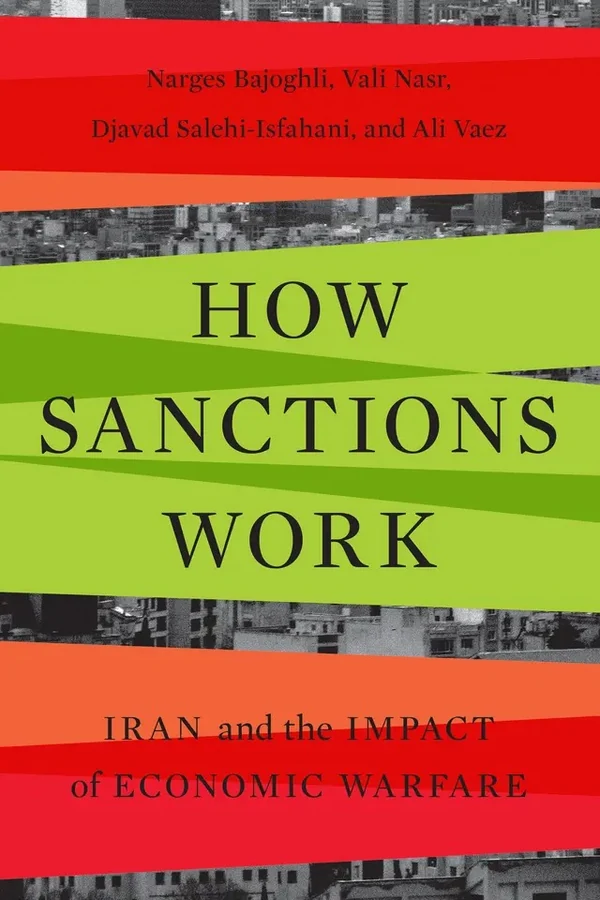
How Sanctions Work
Iran and the Impact of Economic Warfare
Narges Bajoghli, Vali Nasr, Djavad Salehi-Isfahani, Ali Vaez
Stanford University Press, 2024 · English
Four specialists examine what four decades of sanctions have done to Iran’s society, politics and economy, and what they have cost the United States and the wider world.
The book brings together an anthropologist, a political scientist, an economist and a policy analyst to assess the sanctions imposed on Iran since 1979. It combines long-form interviews conducted inside Iran with analysis of Persian-language media and social media, survey data and official statistics. Successive chapters follow the effects of sanctions on society, politics and the economy, the history of their escalation, and their costs for Washington, for Iran and beyond. The authors find that sanctions ended a decade of strong growth and impoverished much of the middle class without causing economic collapse or changing the state’s course. Instead, they strengthened hardliners and businesses linked to the Revolutionary Guards, pushed Iran toward Russia and China, and turned economic pressure into a lasting siege with heavy civilian costs.
- Subjects
- Foreign policy, Political economy, Sanctions
- Region
- Iran, United States
- Discipline
- Economics, Political science
- Period
- Since 1979
Details
- Publisher
- Stanford University Press
- Published
- February 2024
- Pages
- 212
- Format
- Paperback
- Language
- English
- ISBN
- 978-1-5036-3780-1
Contents
- Preface: When Sanctions Work
- Introduction: The Invisible War
- 1. When Society Is Sanctioned
- 2. When Politics Is Sanctioned
- 3. When Iran Was Sanctioned
- 4. When an Economy Is Sanctioned
- 5. What Sanctions Cost the United States
- 6. What Sanctions Cost Iran—and the World
- Conclusion: Permanent Siege