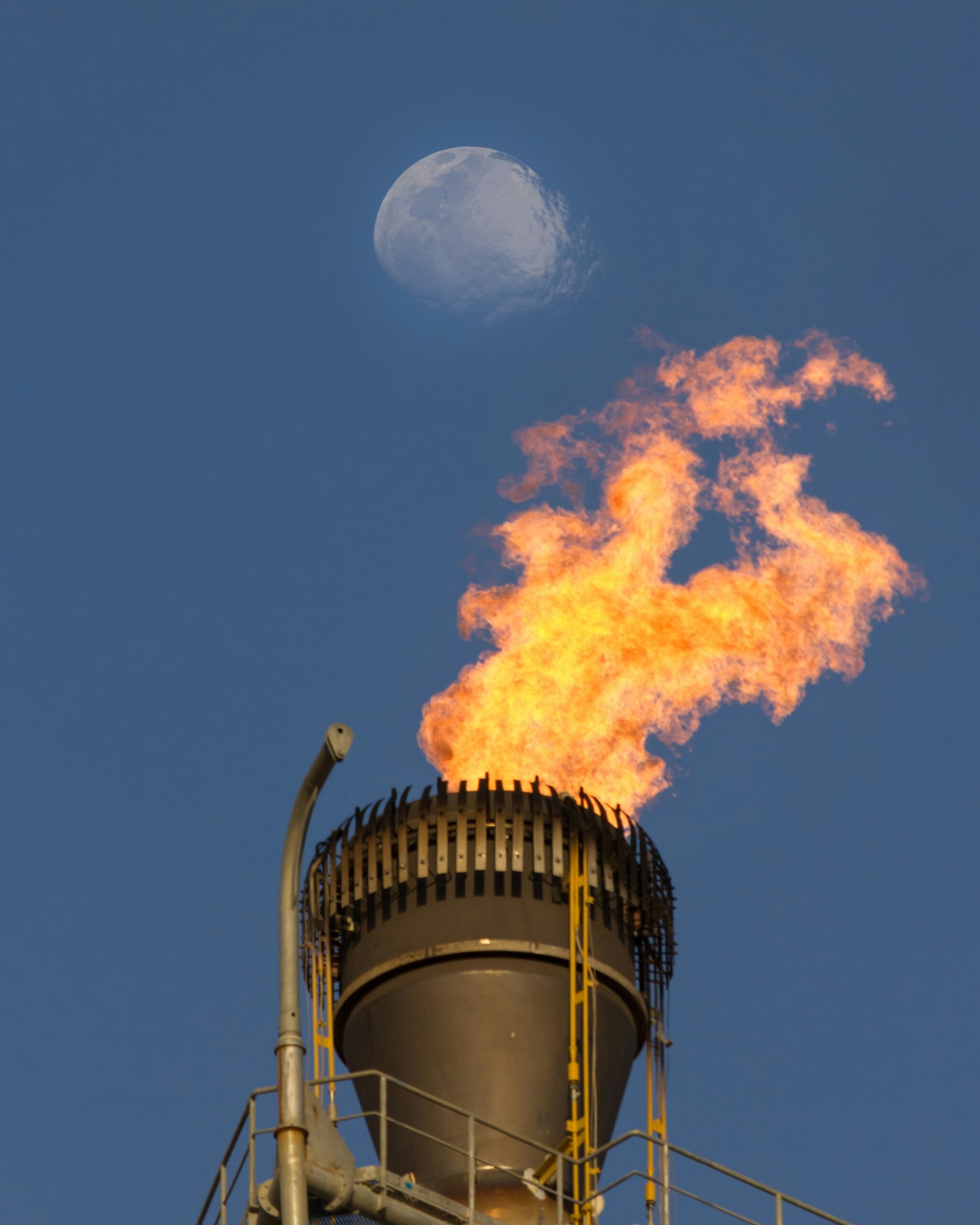
Crude Oil and the Mirage of Development (©Background)
/Book Review | Reading Time: 10 minutes
Crude Oil and the Mirage of Development
Mahbubeh Mirzaei | December, 2025
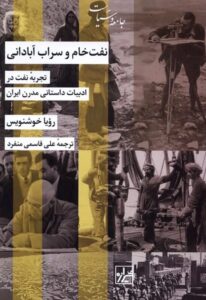 Crude Oil and the Mirage of Development draws on Roya Khoshnevis’s doctoral dissertation, defended in 2021 at the University of Amsterdam, to explore the lived experience of oil as reflected in modern Iranian literature. It provides a fresh analysis of modern Iranian literature through the lens of Human Energy Studies, which explores how energy systems impact economic and political relations as well as collective consciousness, culture, and art and literature creative works.
Khoshnevis’s book is situated specifically within the field of oil cultural studies, where oil is no longer seen merely as an economic resource or a chemical substance, but as a cultural concept or material that shapes imagination, emotions, and identity, and is intrinsically linked to the processes of oil-driven modernity. Oil modernity is marked by rapid change, uneven economic growth, inadequate infrastructure, a (semi)colonial state, and a pronounced gap between tradition and modernity. The author traces the representation of oil—and the modernity it brings—in the works of Iranian writers and intellectuals, from the early years of oil extraction to the present, through the lens of Human Energy Studies and with attention to the profound cultural impacts of oil.
Her coherent narrative of the representation of oil in selected literary works, both fiction and non-fiction, aims not only to deepen our understanding of how Iranian literature engages with the oil phenomenon but also to illuminate the emotional, social, and everyday experiences of Iranians living under the influence of the oil industry.
The book is organized into seven chapters, preceded by an introduction and followed by a conclusion. The introduction outlines the theoretical framework and key research concepts while examining the central themes and motifs that recur in oil-related literature. Alongside universal themes in oil narratives from Iran and beyond—such as colonialism, oil-driven modernity, labor, and the oil-shaped environment—the introduction highlights three concepts particular to Iranian oil literature: first, the representation of oil as a national symbol; second, the center–periphery dynamic within the oil-extraction milieu, highlighting spatial and class segregation; and finally, gender dynamics in oil cities, which reflect the lives and identities of women within the cultural and economic context of oil modernity.
The first chapter, titled “Iranian history, modern Persian literature, and the oil encounter,” offers a comprehensive overview of Iran’s political and social context alongside the evolution of modern Persian literature from the 20th century to the present day. It explains that “modern Iranian literature was influenced as much by oil modernity as it was by the Constitutional Revolution and the coup” (Khoshnevis, 2022: 46). Yet, the depiction of the oil experience in Persian literature remains a largely neglected topic among scholars of the field. It delineates three distinct periods in the history of oil representation in Persian literature and investigates how the theme of oil was configured in the literature of each period, reflecting the dominant political and social contexts.
The second chapter examines the “The Era of Oil Awareness (1911–1953),” or the first literary reflections on oil, focusing on two qasidas by Malik al-Shuʿarā Bahār, Sadeq Hedayat’s “The Case of the Dajjāl )Antichrist( Donkey” (1944), and Jalal Al-Ahmad’s “The Story of the Hives” (1955). Khoshnevis argues that oil—described by Hedayat as the “night-glowing pearl”—was depicted by the intellectuals of this period as a national treasure and valuable resource, undermined by foreign influence and the incompetence of the Pahlavi government.
The third chapter, titled “The Period of Conflict over Oil,” focuses on works produced from the 1930s up until the revolution. Among the novels analyzed in this chapter are Ashura in the Fall (1969) and Summer of the Same Year (1969) by Naser Taqvaei; The Native Boy (1970), Our Small Town (1970), and The Neighbors (1974) by Ahmad Mahmoud; as well as Siyasanbo (1979) and Akosia (1979) by Mohammad Reza Safdari. Khoshnevis contends that radical literature shaped by the oil nationalization movement, the 1953 coup, labor uprisings, and leftist ideologies portrays oil as more than just a “black treasure.” It foregrounds the weary bodies of workers and the ravaged cities and landscapes of the southern regions, highlighting the violent toll exacted by the oil industry. She vividly illustrates, through the stories of Mahmoud, Taqvaei, and Safdari, how authors have depicted the lived experiences of people in oil cities—marked by the scorching sun, the pungent smell of oil, grueling labor, and pervasive poverty. She argues that Summer of the Same Year, Taqvaei’s collection of short stories, is the first work in Persian literature to address the persistent tensions between local workers and employers in the industrial regions of southern Iran. Taqvaei depicts the arduous lives of oil workers, the difficulties of living in isolated and desolate company towns, their struggles against exploitation, job insecurity, and harsh living conditions. When their struggles fail, they often face death, exile, or imprisonment, highlighting their powerlessness and desperation in the face of the “oil monster.”
In Summer of the Same Year, we witness the frustration and failure of the workers’ struggles through the story of Ashur, a worker-activist, as he returns to his workplace after the protests are suppressed and his time in prison. Reflecting on the experience, he says: “We were told that things were improving. Yet when we returned, it became clear that nothing had gotten better. We would come on muggy mornings and sit together in silence, like strangers. We felt that much had changed, but saw that nothing had truly changed.” Or, “We would sit in a quiet corner where there were four other tables, each occupied by three or four men, most of them dock workers. They sat silently, staring at their glasses, and you could tell they had forgotten how to blink” (ibid., 58). Ashur, “a man who managed to evade the perils of fighting and rebellion, simply expose himself to death at his workplace. His coworkers clean his blood from the iron plates and continue their tasks as if nothing had happened; for the oil industry, the lives of individuals like Ashur hold little value, and another worker seamlessly takes his place.” (ibid.: 116)
Khoshnevis writes: “Whereas Taqvai foregrounded the conflict between oil-town workers and foreign managers, Mahmoud turns to the more intimate and private dimensions of workers’ lives.”
Rather than elevating workers and local residents to heroic status, Mahmoud portrays them as uninformed, confused, and at times immature—an approach that gives his stories particular significance by highlighting “the local people’s inability to accurately understand and perceive the colonial industrialization process that overwhelmed them” (ibid., 119).
Mahmoud writes in a straightforward style, drawing on the everyday lives of those affected by oil in order to help them make sense of the sudden and far-reaching changes they experience. He seeks to help them manage the hardships that have made daily life more difficult. It is within this context that Khoshnevis identifies The Neighbours as the first oil-based realist novel in modern Iranian literature. She cites Brent Ryan Bellamy’s book, Fueling Culture: 101 Words on Energy and the Environment, to better introduce the genre; Bellamy defines “oil realism” as a style of storytelling that vividly portrays the impact of oil in everyday life in literary and non-literary, using rich detail and comprehensive imagery.
Another book reviewed in this chapter is Safdari’s Siyasanbo, which portrays the semi-colonial nature of the oil industry with stark violence. Safdari illustrates this violence not through poverty or the exhausting, insecure work that many endure, but through acts of rape and murder. The disrespect shown by foreigners toward Alsano’s wife and her tragic murder serves as a powerful metaphor for the domination and humiliation inherent in oil colonialism. Through these harrowing scenes, Safdari exposes the significant power imbalance between the local population and foreign exploiters. In the narrative surrounding the main character’s death in the stories of Siyasanbo and Akosia, petroleum products are explicitly transformed into instruments of murder. (ibid.: 148-155)
Khoshnevis argues that the common theme in the narratives of this period is the transformation of local individuals and suffering workers into political activists. These fighters acquire the language of protest within a context of exclusion and repression. Yet, the fates of many—such as Khalid, Shahro, Ashur, and Siyasanbo—often culminate in prison or death. This recurring outcome, the author suggests, reflects the destiny of those living under the shadow of oil-driven modernity.
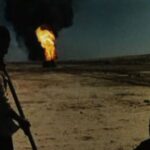
Chapter four focuses on Ebrahim Golestan’s film production in the southern regions. This chapter analyzes Golestan’s style of photography and narration in his fiction film The Secrets of the Treasure of the Jinn Valley (1974) as well as in two documentaries: One Fire (1961) and Wave, Coral and Granite (1962). These documentaries are part of the Outlook Series (1961-1963), which was commissioned by the oil consortium. Khoshnevis suggests that Golestan documentaries and his critical and detailed perspective transcend traditional industrial documentation. Golestan narrates the perilous working and living conditions in this region through a combination of images and text. In the film A Fire, he juxtaposes the image of a widespread fire with scenes of indigenous agriculture, illustrating the conflict between the oil industry and the lives of nomadic people (ibid.: 171). In another part of the film, after showing the scene of the dynamite explosion, it depicts the dangers and struggles of the job, focusing on close-ups of workers’ blackened and worn-out faces. (ibid.: 169)
The Secrets of the Treasure of the Jinn Valley was produced by Golestan in the 1970s, during the height of economic growth driven by the oil industry. Khoshnevis argues that he employs allegorical language in this film to portray a society that views oil wealth not as an opportunity for prosperity, but as a deceptive and destructive force: “Golestan aims to demonstrate how oil has influenced modern Iranian culture and emphasize the instability and fragility inherent in this culture” (ibid.: 180). This work narrates the experience of official modernization in Iran—a rapid change that appeared to promise prosperity but ultimately turned out to be a mirage, characterized by superficiality, dependency, and a lack of developing essential infrastructure.
Having examined these two periods, Khoshnevis engages in the final three chapters with three works of fiction. The Drowned (1989) by Moniro Ravanipour, I Turn Off the Lights (2001) by Zoya Pirzad, and Mirage of the Dead (2011) by Farhad Keshvari were all published after the 1979 Revolution, yet they focus on oil-related experiences from the 1950s through the 1970s. These works shift focus from the broader political and socio-economic effects of the oil industry—such as worker poverty, changes in local communities, colonialism, and resistance—to explore the sensory, psychological, and cognitive aspects of everyday life. Khoshnevis writes that these narratives, which emphasize memory, gender, and emotion, represent new expressions of the oil experience. In this context, oil is no longer merely associated with poverty and labour; instead, it transforms into a magical substance that encompasses emotion, imagination, and the body.
The book creatively examines the novel The Drowned as a magical realism text. Khoshnevis argues that in Ravanipour’s fictional world, the magical force disrupting people’s lives does not stem from fairies and genies, elements of the local culture, but rather from the “magical nature of the oil industry” (ibid.: 202-204). In The Drowned, the arrival of tall, handsome, blond strangers to a small, remote village in southern Iran marks the onset of a different kind of magic—not one of spells or enchantments, but a magic wrought by capital, machinery, and a mysterious substance rising from the earth’s depths to transform nature, the human and non-human creatures in the environment, and to reshape the very understanding of the world. In depicting the clash between myth and industry, Ravanipour emphasizes the modernity that intrudes upon people’s lives under the guise of black magic—promising salvation but ultimately overwhelming the land, the sea, the villagers, and even the supernatural beings of the area.
While women occupy marginal roles in the works discussed in the earlier chapters—often as sex workers or nurses—Zoya Pirzad’s I Turn Off the Lights, examined in the fifth chapter, brings women to the center, making the novel one of the few literary works to authentically depict a woman’s experience of life in industrial, male-dominated oil towns. Khoshnevis engages with the gendered dimensions of oil culture through analyzing Pirzad’s story in this chapter. She argues that the industry “marginalizes even those women who seem to benefit from it, compelling them to become unpaid domestic workers who are dependent, isolated, and depressed.” (ibid.: 249)
Khoshnevis introduces the concept of “the oil company lady” to refer to women living in oil company settlements, highlighting the often-overlooked participants in Iran’s oil world. This concept draws on Sharae Deckard’s article “The Gendered Oil Story: Energy, Imperialism, and Social Reproduction,” which “explores women’s roles in oil extraction sites and illustrates the connection between female homemaking and fossil fuel energy.” (ibid.: 225)
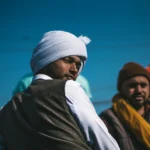
The final chapter of the book examines Farhad Keshvari’s novel The Song of the Dead (2011) alongside several archival images from the Museum of the Petroleum Industry and the British Petroleum website. These images document people, spaces, and local conditions among the Bakhtiaris during the early days of oil extraction in Iran. Khoshnevis employs the concept of “failed experience” to analyze the fragmented and nonlinear narrative style characteristic of Keshvari’s novel. She examines the marginalized position of local people in relation to foreign powers, as depicted in archival images, and explores why the Bakhtiari, despite their early involvement and significant role in oil extraction, have only recently begun to articulate their experiences. She interprets this “delay” as a result of the traumatic and disruptive effects of the oil industry’s abrupt and violent intrusion into the lives and environment of the Bakhtiari people.
To conclude, Crude Oil and the Mirage of Development examines how various aspects of life shaped by oil have been represented in the relevant literature and documentaries, situates these representations within their historical context, and analyzes them through an interdisciplinary lens using a range of concepts and theoretical frameworks. It is important to note that one of the pivotal questions the author raises—namely, “How did oil modernity contribute to the emergence and flourishing of modern fiction in Iran?” (ibid.: 46)—remains largely unexplored in the book. Nonetheless, effectively addressing this question would necessitate a more thorough engagement with prior scholarship on the history of modern Iranian literature, beyond the brief overview offered in the book’s introduction.
I would like to add that some of the book’s analytical claims, while original, lack sufficient historical and sociological support. For instance, Khoshnevis interprets many of the oil-related experiences reflected in literature as “traumatic.” She applies this concept particularly rigorously to characterize the Bakhtiaris’ reticence in discussing their encounters with the oil industry. In the case of the Bakhtiaris, this claim is not supported by a convincing analysis; instead, it relies primarily on the symbolic and metaphorical interpretation of Farhad Keshvari’s novel and images, rather than on historical or sociological evidence. In fact, the factors contribute to such reticence, including the puzzlement and shock experienced by ordinary people in response to sudden changes, the semi-colonial nature of the oil industry, the geographical isolation of southwestern Iran, political repression, the limited tradition of narrative and writing among the southern working classes, and the impact of war and widespread migration—factors that Khoshnevis briefly mentions in the book but largely overlooks in her final analysis.
Nevertheless, Crude Oil and the Mirage of Development stands out as a significant contribution that reconceptualizes the interplay between literature, energy, and modernity in Iran. Through its interdisciplinary approach, the book not only expands the horizons of historical, literary, and cultural studies but also inaugurates a nuanced dialogue on the entanglements of oil, literature, and culture within the Iranian context.

Comments are closed.