Topics in the Sociology of Shi’ism in Iran (©Background)

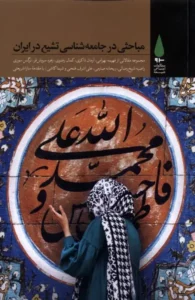
In recent years, the sociological exploration of Shi’ism has received more attention in Iran. The book Topics in the Sociology of Shi’ism in Iran, edited by the Sociology of Shi’ism Research Group (SSRG), represents a noteworthy contribution to this developing field. This research group was established as a research committee (RC) of the Iranian Sociological Association (ISA) in 2011, and Sara Shariati, a professor of sociology at the University of Tehran, and daughter of prominent Islamic scholar Ali Shariati, has led the group since then. According to the group’s website, its members share a common concern: “the absence of a sociological perspective in the study of Shi’ism in Iran.” In her introduction to the book, Shariati highlights a significant issue in the sociology of Shi’ism: the over-reliance on non-Iranian sources and the scarcity of “domestic sources,” which she argues would offer a deeper understanding of the research context. (p. 15-16)
The book’s structure consists of an introduction and nine articles, addressing different topics, but all revolve around the general theme of Shiism. The second and fourth articles incorporate a historical approach to the development of Shia ideas and thoughts, while the sixth article deals with the cultural dimension of Shi’ism. I argue that beneath this very general theme, the sociology of Shiism, there exists a subtle yet interconnected thread which is the sociology of the Shia state. Specifically, in articles seven through nine, the Shia state in Iran became a major object of study.
While the first article follows an abstract discussion on the conceptualizations of the clergy as a social group, the second article focuses on the theory of Velayat al-Faqih. The prominent theme of the third article revolves around how recent religious movements in Iran have approached the government during the era of the Occultation of the twelfth Imam in Shia Islam. The subsequent article examines the relationship between the doctrine of occultation and constitutional government. The fifth article delves into the connections between Shia differentiations and the political dynamics of their respective periods. Another article explores the government’s use of the revitalization and renewed popularity of pilgrimage as a central theme. The seventh article focuses on government policies regarding Imāmzādes and endowments (waqf). Following this, an article addresses the portrayal of women from Ahl-e Beyt[1] as portrayed in the formal narratives endorsed by the Islamic Republic. Finally, the last article discusses the Shia calendar within the context of the Islamic Republic.
In her introduction to this edited volume, Shariati examines the history of Shia studies conducted by Western scholars and argues that Henry Corbin’s books are not essential in this field, due to his failure to adopt a “social approach.” In contrast, she emphasizes the contributions of Yann Richard, Sabrina Mervin, Bianca Amoretti, and Pierre-Jean Luizard, as well as highlights authors who have written specifically about the 1979 Revolution, such as Theda Skocpol and Hamid Elgar, and presents them as pioneers in the social studies of Shi’ism.
The book marks a significant departure from the numerous mainstream publications produced by the state-run or state-funded publishers and research institutions. It represents a new effort to introduce Shiism into the field of sociological study in Iran, however, it does not consistently fulfill this premise. In some instances, it veers away from rigorous scientific inquiry, specifically within the realm of social sciences, and intersects with kalām, where various religious doctrines are initially acknowledged and treated as established truths.[2]
This shortcoming is particularly evident where the “Occultation of the Imam” is treated as a fact, rather than being presented as “the Shia belief in the Occultation of the Imam,” and is even framed as an independent variable in a social analysis. I will explore this issue in greater detail while reviewing the articles one by one.
The first article, titled “Sociological Conceptualization of the Social Positioning of Clerics in Shi’ism,” co-authored by Sarah Shariati and Kamāl Razavi, seeks to critique the Inadequacy of the conceptualization of “the clergy” in the texts that study the clergy from a social perspective. The authors argue that these works fall short in providing a “sociological conceptualization” (p. 21-22) because they have applied the sociological concepts without adequate efforts to adopt them to the subjects at hand. (p. 43-44).
Upon reviewing various texts that analyze the clergy through categories such as class, stratum, group, or organization, the authors assert that none of these categories aptly correspond with the clergy. For instance, they argue that applying the concept of “stratum” to the clergy results in a “generalization” that lacks precision, ultimately failing to elucidate “the essence, characteristics, and attributes” of the clergy (pp. 24-25). The authors advocate for the importance of “conceptualization” in sociology, arguing that it necessitates a clear definition of how to measure the applicability of categories to the subject at hand, in order to “depict the reality ” (p. 55). However, the article itself does not put forth a specific “conceptualization” of the clergy. Given its critiques of other perspectives, it appears that the authors are looking for a concept that represents the trans-historical nature of the clergy. We may ask how such an essentialist and trans-historical conceptualization would account for the transformations of the clergy across different historical periods; for instance, the pre-revolution period, when they opposed to the government, and the post-revolution period, when they assumed positions of power.
The second article, titled “The Mystic, the Islamic Jurist, the Pragmatic Politician: Three Faces of the Velayat-e Faqih’s Theorist” by Ārmān Zākerī, takes a different approach from the trans-historical view outlined in the first article and examines the evolution of the clergy’s role in Shi’ism before and after the revolution. This transformation can be encapsulated in the phrase: the clergy has shifted its focus from preserving Islam through the state to preserving the state through Islam. Additionally, the article explores the relationship between Shia jurisprudence (feqh) and the state, tracing its development from the emergence of the jurisprudential movement among Shias in the third century AH. Zākerī argues that initially, Shia jurists did not view the issues of governing as central to their jurisprudential endeavors due to their lack of political power, prioritizing private matters instead. However, as their role in political power arose over time, they began to justify collaboration with rulers, marking a significant shift in their jurisprudential perspective (p. 67-74). The author views the theory of Velyāt-e Faqīh as a considerable departure from traditional Shia jurisprudence, going far beyond simply justifying cooperation with the government. However, he avoids interpreting this departure as either a deviation or a positive evolution.
Zākerī delves into Āyatollāh Khomeinī’s writings on governing, exploring three distinct intellectual phases in the evolution of his views, each marked by a predominant focus on mysticism, jurisprudence, and politics. He assesses Khomeini’s perspective on political power through the lens of Islamic theorists but does not investigate the parallels between Khomeini’s understanding of government and that of the sultanistic rule. By sultanistic rule, I refer to a hierarchical system in which the individual at the top wields the highest authority, transcending both society and state institutions. Consequently, his will is not constrained by any laws, including those enacted by his own government.
The third article, titled “A Social Analysis of the Encounter of Religious Forces in Iran with Shia’s Expectation (entezār),” authored by Fahīmeh Bahrāmī, explores how six religious social forces in Iran perceive the concept of entezār and analyzes their sociological characteristics. These social forces include the traditional clergy, the Hojjatiyye Association, the political clergy, religious intellectuals, post-revolutionary religious intellectuals, and the apocalyptic conservatives (p. 129). The first group, “the traditional clergy,” began to emerge at the onset of “the Major Occultation.” According to Twelver Shias, this period started with the death of the fourth ambassador of the Twelfth Imam, who did not designate a successor before his passing. This group was further solidified with the establishment of the Islamic seminary during the Islamic Middle Ages and remains relevant today (p. 137-130). The article does not clarify whether the cessation of the activities of the organization of “Imamiyye Agents”, which was seen as the envoy of the Twelfth Imam, was a result of the increasing influence of Shia jurists and hadith scholars or was a consequence of it. I argue that, in sociological analysis, cause and effect cannot be viewed in the same way as in jurisprudential texts. The rise of jurists and hadith scholars in the third century may itself be a contributing factor to the phenomenon known as “the Occultation,” as well as to the challenges surrounding the existence of the organization of “Imamiyye Agents”, or “deputies of the Imam.” Only through a sociological examination of the various factors that have led to the weakening of this organization can we fully understand the sociological context of “the Occultation.”
This article is significant for its exploration of the Occultation among the political clergy and the Hojjatiyye group, a reactive force that cannot sustain itself without the presence of an “other” or an enemy. It illustrates that the messianism of the Hojjatiyye, despite its outward appearance, is more negative than affirmative in nature. As its political function has primarily served the ruling power—manifested in opposition to the National Movement (Nehzat-e Mellī) and the Marxist Tudeh Party prior to the 1952 coup, in its campaign against Bahāism following the coup and severe persecution of the Bahā’īs since the 1979 revolution, and later in its struggle against Marxist groups. (p. 148-150). The article further suggests that within the political clerical current, entezār has, in short, come to signify support for the Islamic Republic. (p. 161)
The fourth article, titled “An Investigation into the Intellectual, Political, and Social Consequences of the Doctrine of Occultation in the Second Constitutional Era, with a Focus on the Role of Islamic Scholars (Olamā),” authored by Narges Suri, aims to elucidate the impact of the Shia doctrine of occultation on the political activism of Shia clerics during the constitutional era. The author notes that clerics at that time were compelled to take positions on constitutionalism based on Islamic jurisprudence. It appears that the task of the clerics opposed to constitutionalism was not difficult, as the legacy of their Islamic scholarship served as a ready-made arsenal to oppose the constitutionalist ideas. In contrast, those in favor of constitutionalism had to exert considerable effort, offering innovative interpretations of Shia traditions. This might explain why, as the article suggests, the number of texts produced by pro-constitutionalist clerics during that period exceeds those written by their adversaries. The jurisprudential dilemma faced by pro-constitutionalist clerics was that, according to the Imamiyye Shia belief, legitimate governance is solely the prerogative of the Imam, rendering any government, whether constitutional or absolute, illegitimate during his absence (p. 193). They were thus faced with the challenge of either adapting their understanding of Islam to endorse constitutionalism or separate Islam from political matters to support constitutionalism independently. This article illustrates that while constitutionalist clerics endeavored to provide an Islamic interpretation of constitutionalism, they ultimately failed to fully reconcile the two.
To illustrate the limitations of the jurists’ constitutionalism, the article examines Mohammad Hossein Na’īnī (1860-1936) as a representative figure among pro-constitutionalist clerics. It highlights his work, The Admonition of the Community and the Purification of the Nation (Tanbīh al-Ummah wa Tanzīh al-Millah), written during the critical period between the bombardment of the parliament (1908) and the onset of the Second Constitutionalism (1909). This study indicates that Na’īnī was unable to fully move beyond the constraints of the Shia understanding of politics, and ultimately, in seeking to subject constitutionalism to the authority of the jurists, he aligned at certain points with the opponents of constitutionalism (p. 225). In other words, the constitutionalism that aimed to limit the absolute power of the Shah, although it achieved this aim with the support of the jurists, ended up being constrained by the emerging absolute authority of the jurists themselves. However, the article fails to address the material conditions underlying this intellectual impasse. One could build on the hypothesis that the intellectual deadlock of Shi’a constitutionalists may have reflected a broader social blockage that constrained and shaped the horizon of their efforts. Exploring this hypothesis could complement the work of this article in future research.
The fifth article addresses the relationship between intellectual closures and openings and the material conditions in which they occurred. In “Which Shi’ism?” Ali-Ashraf Fathī explores the question of why, during the early centuries of Islam, Sunni scholars were proponents of ijtihad[3] while Shia scholars opposed to it, and what led to a reversal of their positions around the late third century. He attributes this shift to the decline of the Abbasid Caliphate and the rise of the Buyids dynasty (p. 249). The author also raises the question of why the Akhbārī school gained power during the Safavid period, but declined in the Qajar period, when the Mujtahids rose to power, and again seeks the answer in the political dynamics of their respective periods (p. 258-259). However, when addressing the coincidence of “the Occultation” with the rise of mujtahids and jurists, he interprets occultation as the cause of increased social diversity and the growth of rationalism, analyzing the two in a cause-and-effect relationship (p. 250-251) — a connection that cannot be substantiated sociologically. Had these phenomena instead been analyzed as concurrent, it might have opened up a space for investigating the factors that gave rise to them.
The article “A Portrait of Pilgrimage in Iran” by Shima Kāshī highlights that pilgrimage to sacred sites has become increasingly common and diverse globally in recent decades (p. 276). Kāshī notes that a similar trend has also emerged in Iran. She asserts that the Islamic Republic has effectively leveraged this trend for its own objectives. According to Kāshī, the growth in the number of pilgrimage sites and the corresponding rise in revenue of shrines in Iran can be traced back to the mid-1960s and continued after the 1979 revolution. Moreover, due to the presence of unofficial pilgrimage sites—such as sacred trees, walls, and footprints (qadamgāhs), — the actual number of pilgrimage locations is much greater than what official statistics suggest. (p. 280)
Kāshī also refers to new forms of pilgrimage, including visits to the tomb of contemporary poet Sohrab Sepehrī (1928-1980) and the Throne of Solomon (Takht-e Soleymān). She observes notable similarities between the memories of visitors to these new pilgrimage sites and the traditional ‘pilgrimage experience.’ Ultimately, Kāshī examines government policies, asserting that the state’s development of shrines and creation of non-traditional pilgrimage sites—including the graves of martyrs, war zones, and the mausoleum of Ayatollah Khomeini—aligns with this trend. He concludes that the government “has recognized the popular religion’s tendency toward sacralization as an opportunity and systematically seeks to […] utilize them as platforms for propaganda and the consolidation of its discursive power” (p. 302).
The article “From Development to a Sense of Placelessness: A Critique of Development and Renovation Projects for Shrines” presents the findings of Sheikh-Rezāeī’s research on nine shrines (Imāmzādes) in Tehran. Through field observations and data collected from open sources, such as websites of institutions connected to the shrines, including the Endowment Organization, the article identifies two parallel trends in these development projects: commercialization and their use for propaganda purposes. The policy-making about religious endowments (waqf) and shrines has focused on enhancing their profitability, for example, by selling burial plots or setting up bazaars and shops. At the same time, these sites are employed as propaganda bases to promote the regime’s ideology through cultural programming, rituals, and distribution of cultural products (p. 325-326). The author explains the erasure of diversity and growing homogenization of pilgrimage sites resulting from development plans through Edward Relph’s concept of the sense of placelessness.
The article “From the Margin to the Centre, from Epic-Makers to the Honor of the Shi‘a: The Transformation of the Image of the ‘Women of the Prophet’s Household’ in Official Discourse,” by Reyhāneh Sāremī, seeks to trace how the women of the Prophet’s household (Ahl al-Bayt) have been portrayed as the ideal female figures of the Islamic Republic over several decades. To achieve this, the researcher conducts a content analysis of a corpus that includes the country’s official calendars, content from state-run media, particularly the Islamic Republic of Iran Broadcasting (IRIB), as well as the book publishing sector and speeches delivered by government officials.
The article asserts, first, that the portrayal of the women of the Ahl-e Beyt has gradually moved from the margins to the center of official discourse, and second, that their status has evolved from figures who carried forward a revolutionary mission to embodiments of Shi’a honor (p. 346). In the early years of the Islamic Republic, the role of Ahl-e Beyt women was dim in narratives; however, they were characterized by a combative and justice-seeking spirit, standing firm in their beliefs. In the later period, however, “the heroic and combative aspects of their character are sidelined […] and they come to be portrayed as grieving and mournful.” The article specifically highlights how in the narrative of the women of Ahl-e Beyt during the events of Ashura, their commitment to chastity, veiling, and the preservation of their dignity are emphasised, portraying them as “embodiments of the honor of Shia men” (p. 370-371). The author contends that such a discursive shift has facilitated the emergence of the concept of “defender of the shrine” (modāfe’-e haram).
The concluding article of the book, “The Shia Calendar in Shia Government,” by Zohreh Sorushfar, explores the growing number of occasions in the official national calendar and offers insights into the reasons driving this increase. However, these insights have not been thoroughly examined and primarily serve as preliminary hypotheses. (p. 377-399)
This makes it clear that the articles in this book trace the topic of Shi’ism over a broad historical timeline, extending as far back as the 3rd century AH, though the primary emphasis is on contemporary times, particularly on the era of the Islamic Republic. As a result, in some cases, this wide temporal scope leads to generalizations and a lack of specific detail or accuracy. Nonetheless, since this work represents an initial endeavor, there is optimism that future volumes and studies by the Sociology of Shi’ism Group will offer a more focused and in-depth exploration of the subject. This book, along with other works by the group, has embarked on a new path of study within the field of sociology in Iran. All the articles collected here are grounded in academic research, with several derived from the authors’ thesis projects. Beyond the sources they cite, the data they generate, and the analyses they offer, these articles also raise significant questions that encourage researchers to investigate this emerging field further.
Footnotes
- Ahl-e Beyt refers to the family of the Prophet Muhammad in Islam. Shias believe this family includes the imams, who they see as the rightful leaders of the Muslim community. ↑
- Kalam is an Islamic scholastic branch focused on demonstrating sacred doctrines, with its practitioners known as Motakallem. They seek to defend religious principles against non-believers, offering proofs to support their views. This can be seen as similar to Christian apologetics. ↑
- Ejtehad is the independent reasoning of Islamic law experts to address new legal issues, contrasting with taqlid, which is the imitation or adherence to established legal precedents. ↑
Related Content
 Breathing the Mist, Untangling the “Complicated”: How Scholars of Muslim Backgrounds Viewed the Jina Movement in Iran (©Background)
  Revolt Against Theocracy: The Mahsa Movement and the Feminist Uprising in Iran (©Background)
  Organizing at Universities and Unfolding Revolution in Iran
  Cultural Revolution in Iran and Targeting the Political Rivals
  Cultural Revolution: It is Time to Balance the Books!
  Rereading the 1979 Revolution over Time (©Background)
Comments are closed.