State, Land, and Labor in the Making of an Iraqi Periphery: Basra, 1921-1963 (©Background)
/Dissertation Review | Reading Time: 4 minutes
State, Land, and Labor in the Making of an Iraqi Periphery
Basra, 1921-1963a
Gabriel Young | December, 2025
Topic and central argument
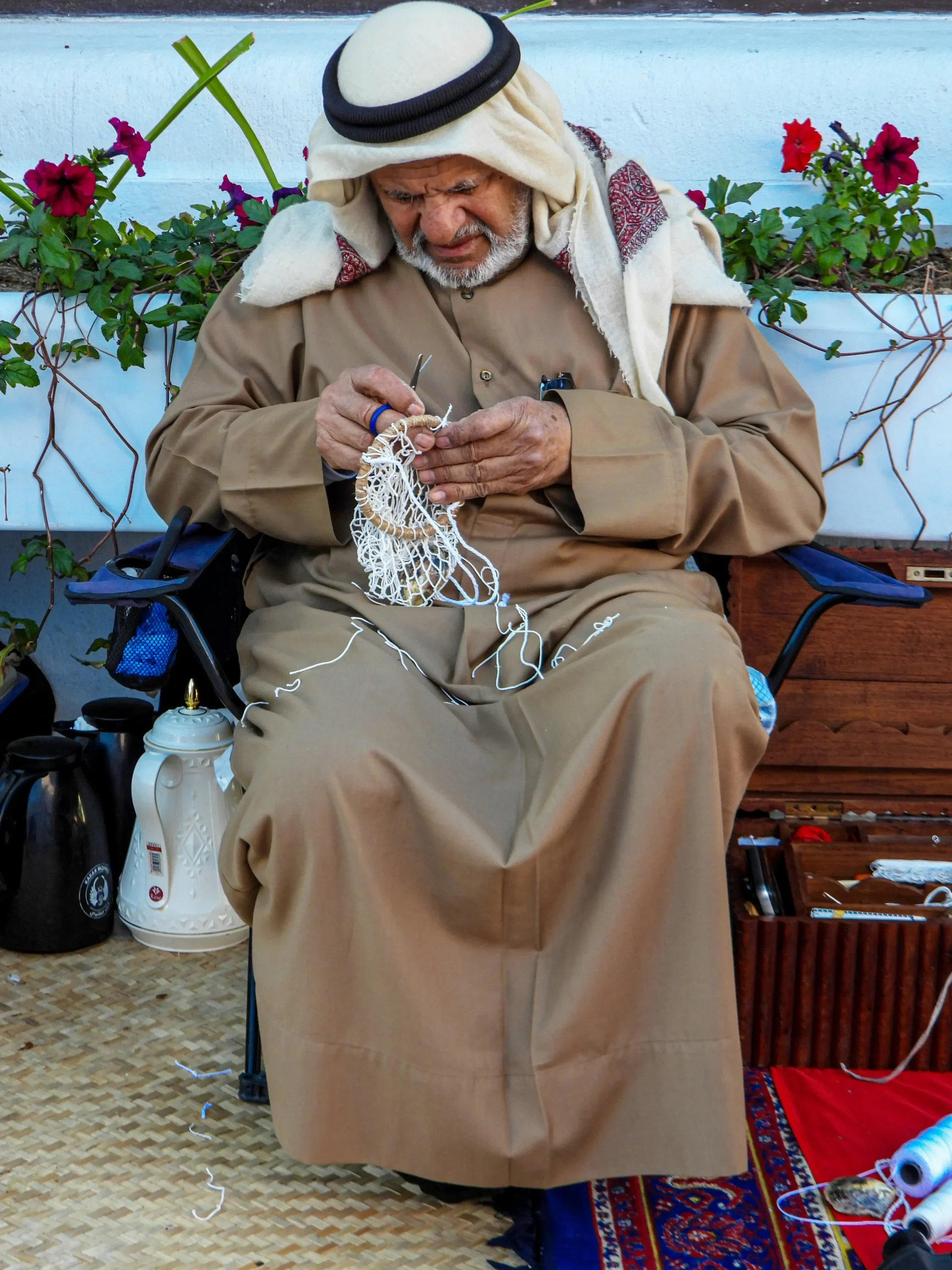
My dissertation investigates how struggles over land and labor in date agriculture and oil extraction around the Persian Gulf port city of Basra transformed the twentieth-century Iraqi state. At the heart of the study is a puzzle: why did the growing material wealth of Basra province between the 1920s and 1960s—first in cash crops and then in hydrocarbons—coincide with the erosion of its historically vibrant civil society? How did a central hub of the Gulf region become a province that was at once a commodity frontier and a political and territorial periphery of the Iraqi state?
At the turn of the twentieth century, large merchant-landowners and small farmers had made Basra a key node in Gulf trading and migration networks by growing dates for export to both Indian Ocean and Euro-American markets. Moreover, the Shatt al-ʿArab tidal estuary simultaneously marked and dissolved the borders of the Ottoman and Qajar empires, and in this transimperial geography both elite and popular classes exercised meaningful political autonomy across what is today Basra, Khuzistan, and Kuwait. They assembled property holdings, social ties, and political networks that transcended Gulf imperial administrations, regularly privatizing public land, withholding taxes, and claiming multiple nationalities. The first half of the study shows how Basrawis sought to maintain ties to Khuzistan and Kuwait after World War I—even as new national borders emerged under British colonial occupation—while also pushing the nascent Iraqi state to intervene in the date economy amid new global capitalist crises.[1]
The second half of the project argues that the outcome of the agrarian struggles between the 1920s and 1940s reduced the ability of Basrawis to contest the terms of oil development in the 1950s and 1960s and reoriented their political geography away from the Gulf and toward an Iraqi national space centered on Baghdad. The protectionist measures of the Iraqi national state, which depended on the taxation of date exports for most of its revenue before oil, unintentionally deepened the immiseration of many Basrawi farmers in the very places where multinational oil firms sought to extract hydrocarbons after World War II.[2] The new extractive economy helped displace social conflict from the date plantations that had anchored the Gulf regional world to the pumping stations and pipeline terminals of a nationally scaled oil company that came to employ many former date cultivators. And while Basrawi oil workers helped lead the waves of mass protest that culminated in the overthrow of Iraq’s neo-colonial monarchy and initiated the nationalization of its oil industry in the late 1950s and early 1960s, the scope of their political capacity and demands also shrank over time.
The inadvertent and gradual outcome of decades of appeals by farmers, trading companies, multinational energy corporations, and oil workers to officials in different parts of the Iraqi state apparatus was the newfound ability of institutions in Baghdad to unilaterally determine land use and labor costs in Basra. These powers proved central to the new extractive development model. Iraqi state officials in Baghdad were able to capture and distribute more and more of the value of the country’s oil resources, while Basrawis could only contest the distribution of state rents rather than the fundamental terms of the oil economy: why, whether, and for whom hydrocarbons ought to be extracted. Hence, even as the supergiant oil fields and petrochemical complexes of Basra became ever more central to fiscal and industrial policy in twentieth-century Iraq, Basrawis found themselves peripheral to those concerns—enriched materially but marginalized politically.
Analytical and historiographical interventions
The study contributes to several bodies of multi-disciplinary scholarship to generate new analytical insights and deepen our understanding of the Gulf. First, it uses sources that are new to scholarship outside Iraq to re-narrate the history of the country from the perspective of communities in Basra rather than those in Baghdad. As in scholarship on other Gulf states such as Iran or Saudi Arabia, the historiography on Iraq has privileged the trajectory of political, social, and cultural life in the national capital. However, given the historically transnational ties between Gulf states, it is necessary to reconsider topics like nationality or protectionism from the perspective of littoral regions like Basra or Khuzistan. I have been able to do so by using new archival material from Basra—such as land-sale records and labor contracts—instead of more common print materials from Baghdad or the British colonial archive in London.[3]
Second, this research presents a bottom-up history of economic decolonization in the twentieth century. Although scholars of natural-resource sovereignty increasingly recognize the central role of Gulf states like Iraq and Iran in the development of this novel political and legal principle, the main actors of their accounts are the economists, engineers, and lawyers who led international initiatives like OPEC. The study shows how those anti-colonial economic projects were also a response to pressures from popular classes, such as the Basrawi oil workers who accelerated the push toward resource nationalization in the 1950s and 1960s—ultimately with unintended consequences for domestic political arrangements.
Third, the project studies agrarian change and oil development together and thus provides a different explanation for the nature of authoritarian rule in the Gulf. Whereas many accounts of Gulf politics construe the relationship between oil and authoritarianism abstractly, in terms of geopolitics or rents, I focus on the material processes by which an extractive political economy is built and the local historical context in which this occurs. I show how, in the case of Basra—which may mirror the trajectory of other formerly agrarian littoral regions like Khuzistan—the forms of state intervention in the agrarian economy that had stretched across the early-twentieth-century Gulf region shaped the social and institutional terrain on which a nationally scaled extractive economy would later develop in a specifically undemocratic fashion.
Notes
- For my earlier research on the political geography of British colonial rule in Basra and the Shatt al-ʿArab borderland, see “Infrastructures of Empire and Sovereignty: The Port of Basra in Interwar Iraq,” Journal of Arabian Studies Vol. 9, No. 2 (2019): 123-144. doi: 10.1080/21534764.2019.1750545. ↑
- For my most recent research on the land conflicts that the new oil economy provoked in the Basra countryside, see Gabriel Young, “Remaking a Sovereign Landlord: Property and Dispossession Along the Basra Oil Frontier, 1938-1954,” Comparative Studies in Society and History (2025), 1-27, doi: 10.1017/S0010417525100200. ↑
- On archival sources central to my research, as well as the methodological challenges that they have presented, see Gabriel Young, “Archives After State Unmaking: Researching Provincial Urban Histories in Iraq,” Journal of Contemporary Iraq & the Arab World Vol. 16, No. 1-2 (2022): 71-87, https://doi.org/10.1386/jciaw_00073_1. ↑
Related Content
 GlobIS Review, Volume 2, Issue 2 (©Background)
  New Horizons in Persian Gulf Studies (©Background)
  Indigenous Refusal: Arab Minority and the Formation of the Modern State in Iran (©Background)
  Local History of Oil Capitalism
  Short Reviews*
  Breathing the Mist, Untangling the “Complicated”: How Scholars of Muslim Backgrounds Viewed the Jina Movement in Iran (©Background)
Comments are closed.