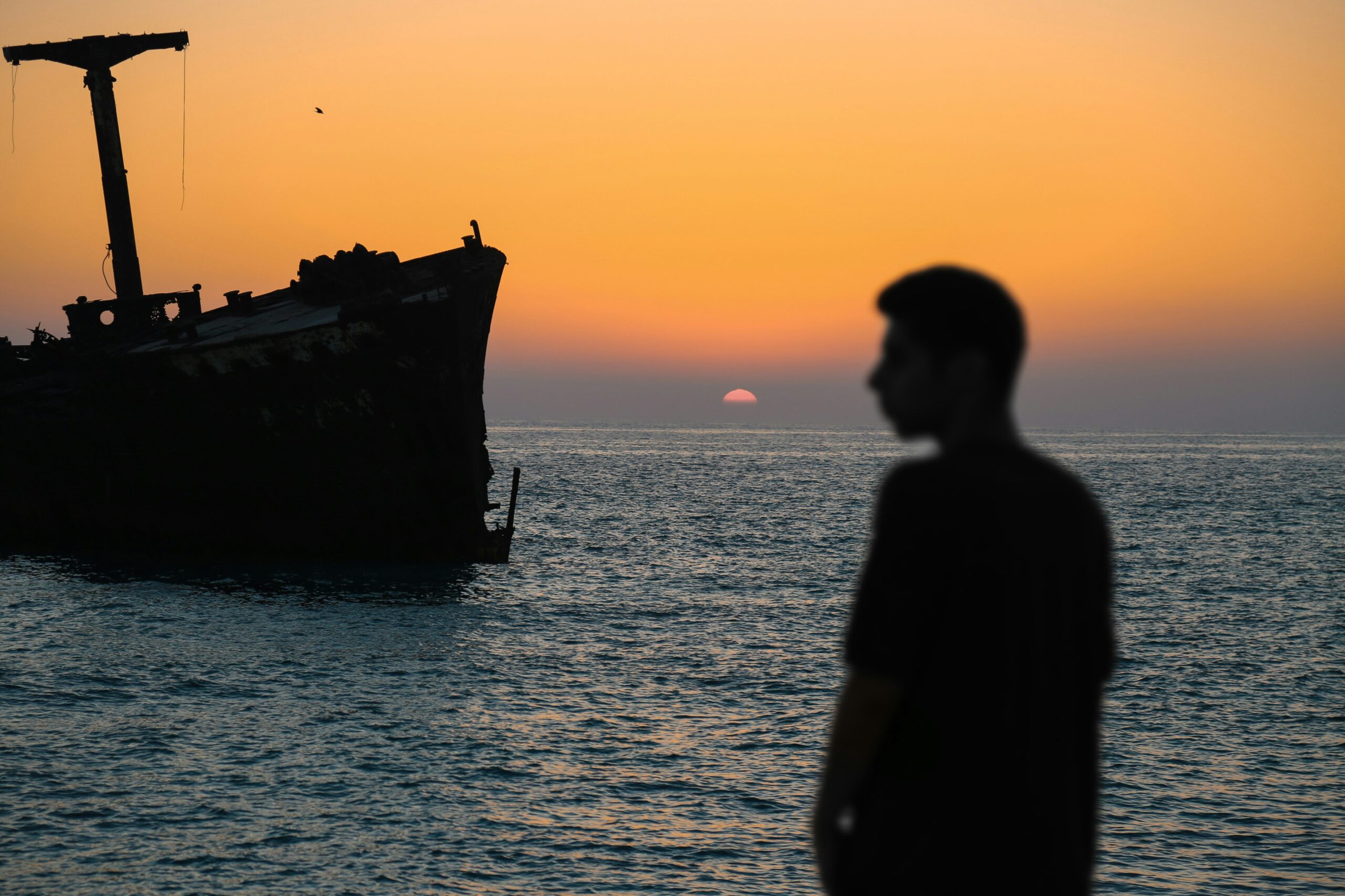
Indigenous Refusal: Arab Minority and the Formation of the Modern State in Iran (©Background)
/Dissertation Review | Reading Time: 4 minutes
Indigenous Refusal
Arab Minority and the Formation of the Modern State in Irany
Aghil Daghagheleh | December, 2025
My dissertation, Indigenous Refusal, is an ethnographic and historical study of Arab communities in Khuzestan, a province in the southwest of Iran, examining how they negotiate state power and resist its practices. The dissertation begins with ethnographic observations that show how Arab people describe themselves as Indigenous (al-sokan al-asliyeen), as communities deeply embedded in the ecological world they inhabit: in the land, the marshes and their reedbeds, and the rivers, to name a few. Their claim of indigeneity is inseparable from a strong sense of refusal: a refusal of the state’s claim to sovereignty over the region; a doubt about the meaning of Iranian citizenship; a rejection of what they see as exogenous forces seeking to displace and uproot them; and a refusal of the narrative that incorporation was salvation and modernization rather than catastrophe. This refusal is widespread, resurfacing in poetry, everyday conversation, and in the slogans of protests that erupt in the region from time to time.
After exploring the meanings of indigeneity and refusal as they are expressed and debated in everyday life, the dissertation turns to a historical account of their origins. It traces the roots of refusal to the traumatic encounters between the Iranian state and Arab communities, before and during the formation of the modern nation. The study shows how Arab communities resisted the encroachments of forces originating from the centers of empires—the Persian, Ottoman, and later European—throughout the eighteenth and nineteenth centuries. In these early historical periods, the politics of Arab communities revolved around protecting indigenous autonomy and a way of life embedded in the land and its rivers and waterways, which I conceptualize as an “aquatic assemblage” (p. 18). The dissertation then explores the multiple modalities of refusal that emerged within these historical contexts: from military confrontations with the British to shifting alliances with neighboring states, and efforts to hinder the emerging infrastructures of global capitalism, including the opening of the Karun River to global trade, oil extraction, industrial agriculture, and customs houses.
The study, then, illustrates how the meaning of refusal was transformed after 1925, when the Iranian state overthrew local Arab rule, replaced it with a centralized Persian military administration, and consolidated its power in the decades that followed. Through this project, the Iranian state redefined the region, renaming Arabistan as Khuzestan, aiming to “return” it to the Iranian nation and to “revive” its Persian identity. This was a violent project, entailing killing, exile, humiliation, and the systematic erasure of Arab history. In other words, what was celebrated in Tehran as the birth of the modern Iranian nation was experienced among Arab people as an apocalypse, the beginning of a new era of loss, dispossession, and marginalization.
The ethnography, as such, reveals refusal as embodied experience—a politics that does not necessarily express itself openly but is inscribed in the body. And “the ‘no’ to the state that did not find an avenue through which to be uttered was inscribed on the body and collective memories of the Arab communities” (xiii). Moving between oral histories, collective events, and gathering as well as everyday conversations, the work shows how this inscribed refusal travels through time, continually reproducing Arabness in Iran. The inscribed nature of refusal, however, does not confine it to a single manifestation or form. Instead, refusal weaves, blends, and intertwines with ideologies, discourses, and various practices, emerging in various modalities, constantly disrupting and unsettling the myth of the nation’s completeness.
The clearest example of this transformation, and of the contemporary manifestation of refusal, is religious conversion, which the dissertation examines in Chapter 5. The majority of Arabs in Khuzestan are Shia, yet since the early 2000s, and with the rise of Salafism in the Middle East, many have converted to Sunni Islam. As the study shows, conversion is neither a sign of radicalization nor the outcome of foreign influence. Rather, it operates as another form of refusal: a quiet delinking from the state’s ideological apparatus that manipulates and manages ethnic relations through religion. Within this context, conversion emerges as an embodied act through which individuals withdraw and consequently subvert the new ideological order of the state.
The dissertation argues that “ethnicity” is inadequate to grasp the nature of the relationship between center and periphery. What is at stake is not cultural differences or marginalization; rather, it is the coloniality of modern state formation itself. Drawing on scholarship on the meaning of indigeneity, the study illustrates that, within the Iranian context, indigeneity is produced through the enduring ties that people have forged with their ecological worlds over centuries, and through their encounters with the state’s internal colonization and its disruptive forces, exemplified in the seizure of land, water, and memory under the banners of modernization and nation-building, to name a few.
Still, despite its contributions, the work leaves several questions open. While the dissertation provides readers with manifestations of refusal through history, one would expect to see more examples of refusal in contemporary Iran. The chapter on religious conversion offers an insightful case, yet I acknowledge that it is not enough, as the study misses mapping out life within tribal zones and the analysis of contemporary Arab activism. Moreover, although the dissertation distinguishes between “refusal” and “resistance,” the boundary between them remains blurred. Is refusal a subset of resistance, or does it constitute a distinct political phenomenon altogether? And if so, what are the hallmarks of refusal beyond its embodied dimensions?
Further, the use of indigeneity within the Iranian context, and more broadly in the Middle East, is not without its problems. While readers may see parallels with other cases, these comparisons require more justification. The study also needs to clarify how this form of indigeneity differs from the well-known settler-colonial contexts in the world, and reconceptualize the theories to fit Iran’s specific histories of incorporation and exclusion.
Despite these challenges, I hope Indigenous Refusal offers a new perspective on Iran from its periphery. The dissertation complements existing studies of ethnic relations in the country, and through deep ethnographic fieldwork, I have sought to give voice to marginalized and understudied communities and to open a space for rethinking the periphery not as a zone of anxiety and fear but as a site of possibility: a place from which the nation can be reimagined in new, more inclusive ways and from which a new path toward the future can emerge.
Related Content
 GlobIS Review, Volume 2, Issue 2 (©Background)
  New Horizons in Persian Gulf Studies (©Background)
  Short Reviews*
  On the Uses and Disadvantages of Exile and Diaspora for Iranian Studies (©Background)
  Breathing the Mist, Untangling the “Complicated”: How Scholars of Muslim Backgrounds Viewed the Jina Movement in Iran (©Background)
  Cultural Revolution: It is Time to Balance the Books!
Comments are closed.