Short Reviews*

Sinews of War and Trade: Shipping and Capitalism in the Arabian Peninsula
Laleh Khalili
Verso Books, 2021
In our networked world, the realities governing the international movement of freight are easily forgotten. But maritime transport remains the bedrock of trade. Convoys perpetually crisscross the oceans, carrying gas, oil, ore – indeed, every type of consumable and commodity. These movements, though practically invisible, mean that control of the seas is vital in an age when no nation can survive on domestic products alone.
Professor and author Laleh Khalili travelled the Mediterranean, the Red Sea, and the Indian Ocean aboard gigantic container ships to investigate the secretive and sometimes dangerous world of maritime trade. What she discovered was strangely disturbing: brutally exploited seafarers enduring loneliness and risking injury to keep the cogs of trade turning. In the Arabian peninsula’s ports, forbidden places encircled by barbed wire and moats of highways, the dockers struggle for benefits and political rights, as they have for generations. Environmental catastrophes threaten with increasing intensity and frequency. Around the oil-trading nations of the Middle East, a history of British colonialism, modern US imperialism, and local autocracies combine to worsen the conditions of modern seafarers, and piracy persists near the Horn of Africa. From her research riding the sea lanes and visiting the major Middle Eastern ports, Khalili has produced a book that exposes the frayed and tense sinews of modern capital, a physical network without which none of our more abstracted webs and systems could operate.
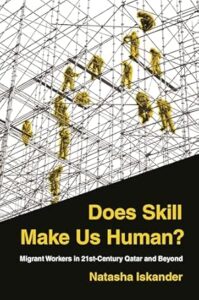
Does Skill Make Us Human? Migrant Workers in 21st-Century Qatar and Beyond
Natasha Iskander
Princeton University, 2021.
An in-depth examination of Qatar’s migrant workers reveals how skill functions in the language of control and power. While “skilled” versus “unskilled” is often framed as a neutral measure of ability or training, Does Skill Make Us Human? demonstrates that these distinctions are used to restrict freedom, curtail political rights, and even constrain access to imagination and desire. Natasha Iskander takes readers into Qatar’s booming construction industry in the lead-up to the 2022 World Cup, and through her unprecedented look at the experiences of migrant workers, she reveals that skill functions as a marker of social difference powerful enough to structure all aspects of social and economic life. Through unique access to construction sites in Doha, in-depth research, and interviews, Iskander explores how migrants are recruited, trained, and used. Despite their acquisition of advanced technical skills, workers are commonly described as unskilled and disparaged as “unproductive,” “poor quality,” or simply “bodies.” She demonstrates that skill categories adjudicate personhood, creating hierarchies that shape working conditions, labor recruitment, migration policy, the design of urban spaces, and the reach of global industries.
Source: Publisher
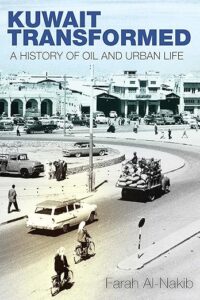
Kuwait Transformed: A History of Oil and Urban Life
Farah Al-Nakib
Stanford: Stanford University Press, 2016
As the first Gulf city to experience oil urbanization, Kuwait City’s transformation in the mid-twentieth century inaugurated a now-familiar regional narrative: a small traditional town of mudbrick courtyard houses and plentiful foot traffic transformed into a modern city with marble-fronted buildings, vast suburbs, and wide highways.
In Kuwait Transformed, Farah Al-Nakib connects the city’s past and present, from its settlement in 1716 to the twenty-first century, through the bridge of oil discovery. She traces the relationships between the urban landscape, patterns and practices of everyday life, and social behaviors and relations in Kuwait. The history that emerges reveals how decades of urban planning, suburbanization, and privatization have eroded an open, tolerant society and given rise to the insularity, xenophobia, and divisiveness that characterize Kuwaiti social relations today. The book makes a call for a restoration of the city that modern planning eliminated. But this is not simply a case of nostalgia for a lost landscape, lifestyle, or community. It is a claim for a “right to the city”—the right of all inhabitants to shape and use the spaces of their city to meet their own needs and desires.
Source: Publisher
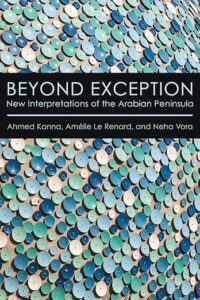
Beyond Exception, New Interpretations of the Arabian Peninsula
Ahmed Kanna, Amélie Le Renard and Neha Vora
Cornel University, 2020
Over the nearly two decades that they have each been conducting fieldwork in the Arabian Peninsula, Ahmed Kanna, Amélie Le Renard, and Neha Vora have regularly encountered exoticizing and exceptionalist discourses about the region and its people, political systems, and prevalent cultural practices. These persistent encounters became the springboard for this book, a reflection on conducting fieldwork within a “field” that is marked by such representations. The three focus on deconstructing the exceptionalist representations that circulate about the Arabian Peninsula. They analyze what exceptionalism does, how it is used by various people, and how it helps shape power relations in the societies they study. They propose ways that this analysis of exceptionalism provides tools for rethinking the concepts that have become commonplace, structuring narratives and analytical frameworks within fieldwork in and on the Arabian Peninsula. They ask: What would not only Middle East studies, but studies of postcolonial societies and global capitalism in other parts of the world look like if the Arabian Peninsula was central rather than peripheral or exceptional to ongoing sociohistorical processes and representational practices? The authors explore how the exceptionalizing discourses that permeate Arabian Peninsula studies spring from colonialist discourses still operative in anthropology and sociology more generally and suggest that de-exceptionalizing the region within their disciplines can offer opportunities for decolonized knowledge production.
Source: Publisher
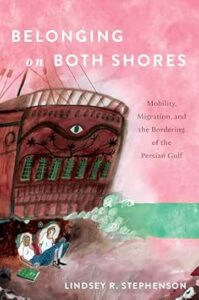
Belonging on Both Shores: Mobility, Migration, and the Bordering of the Persian Gulf
Lindsey R. Stephenson
Stanford University Press, 2026
For most of their history, the people around the Persian Gulf littoral were socially intertwined and economically interdependent. But the twentieth century ushered in nationalization projects, British imperial intervention, and border regulations, all of which posed challenges to everyday mobility in this oceanic world. Those crossing the water became the primary foil for bordering spaces, restricting and regulating movement, and defining difference more generally. Belonging on Both Shores tells the story of people’s struggles to move freely between Iran and the Arab shores of the Gulf as the unregulated mobility that had characterized everyday life in the nineteenth century was increasingly policed in the twentieth.
Using a wide range of Arabic, Persian, and English sources, Lindsey Stephenson demonstrates how state officials refined notions of territorial belonging against the movement of Iranians, the most visible mobile “group” in the Persian Gulf arena. Engaging migrant voices, Stephenson narrates how Iranians challenged a perceived requirement to belong to a single place and highlights the techniques these migrants employed to remain connected to both shores. Tracing the movement of Iranians across and around the Persian Gulf and investigating how the technologies of state and mobility transformed fluidity and people’s understanding of movement, this book tells a new story of how the modern Gulf was formed.
Source: Publisher
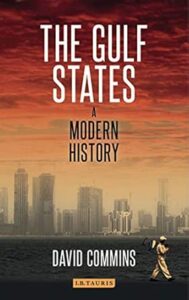
The Gulf States: A Modern History
David Commins
Bloomsbury Publishing, 2012
The geopolitical importance of the Gulf region is a source both of great interest and great tension. David Commins here provides an in-depth narrative of the modern political history of the Gulf States, offering a comprehensive and accessible account of their recent development and strategic importance.
This book sets out a detailed study of the region’s history, starting from the empires and dynasties of the pre-modern era. Focusing primarily on economic, cultural, religious and social themes, it works its way forward through the pre-modern patterns of the 14th century to the Muslim empires that dominated in the 16th to early 18th centuries, and from the era of British supremacy to the formation of modern states, Arab nationalism and revolution. The motifs of geography, hierarchy and values are interwoven throughout the book as it examines important topics, including the influence of the Ottoman Empire, the rise of Arab dynasties, oil wealth and modern prosperity, and the formation of the Gulf States as we know them today.

Between Dreams and Ghosts: Indian Migration and Middle Eastern Oil
Andrea Wright
Stanford University Press, 2021
More than one million Indians travel annually to work in oil projects in the Gulf, one of the few international destinations where men without formal education can find lucrative employment. Between Dreams and Ghosts follows their migration, taking readers to sites in India, the United Arab Emirates, and Kuwait, from villages to oilfields and back again. Engaging all parties involved—the migrants themselves, the recruiting agencies that place them, the government bureaucrats that regulate their emigration, and the corporations that hire them—Andrea Wright examines labor migration as a social process as it reshapes global capitalism.
With this book, Wright demonstrates how migration is deeply informed both by workers’ dreams for the future and the ghosts of history, including the enduring legacies of colonial capitalism. As workers navigate bureaucratic hurdles to migration and working conditions in the Gulf, they in turn influence and inform state policies and corporate practices. Placing migrants at the center of global capital rather than its periphery, Wright shows how migrants are not passive bodies at the mercy of abstract forces—and reveals through their experiences a new understanding of contemporary resource extraction, governance, and global labor.
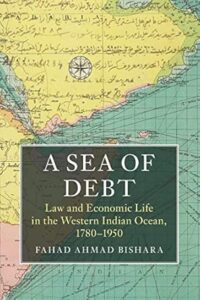
A Sea of Debt: Law and Economic Life in the Western Indian Ocean, 1780–1950
Fahad Ahmad Bishara
Cambridge University Press, 2017
In this innovative legal history of economic life in the Western Indian Ocean, Bishara examines the transformations of Islamic law and Islamicate commercial practices during the emergence of modern capitalism in the region. In this time of expanding commercial activity, a mélange of Arab, Indian, Swahili and Baloch merchants, planters, jurists, judges, soldiers and seamen forged the frontiers of a shared world. The interlinked worlds of trade and politics that these actors created, the shared commercial grammars and institutions that they developed and the spatial and socio-economic mobilities they engaged in endured until at least the middle of the twentieth century. This major study examines the Indian Ocean from Oman to India and East Africa over an extended period of time, drawing together the histories of commerce, law and empire in a sophisticated, original and richly textured history of capitalism in the Islamic world.
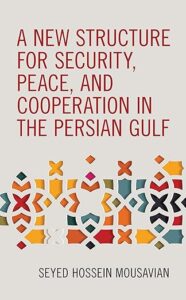
A New Structure for Security, Peace, and Cooperation in the Persian Gulf
Seyed Hossein Mousavian
Bloomsbury Publishing PLC, 2020
Tensions between Iran and its Arab neighbors at the Persian Gulf have often been described as one of the challenges to the world peace and security over the past decade. As a result, one of the puzzles of the current international relations has been the question of whether or not, there are prospects to resolve conflicts between Iran and Saudi Arabia and GCC and envision normalized, friendly diplomatic relations between the two sides. This book argues that normalized and friendly ties between Iran and Saudi Arabia is possible, and indeed, the author shows that there is a historical precedence for it, even in the post-1979 revolutionary Iran. And, if normalized and friendly diplomatic relations are possible between Iran and Saudi Arabia, then, it is not hard to envision that maladies of sectarianism as well as Sunni-Shi’a conflict would subside in the region. The book draws on the author’s involvement, conversations, interviews, and personal observations as Ambassador and official over several decades. The book tries to explore the possibilities of diplomatic resolutions to the existing conflicts between Iran and Saudi Arabia and offer a roadmap to achieving sustainable diplomatic relations.
Source: Publisher
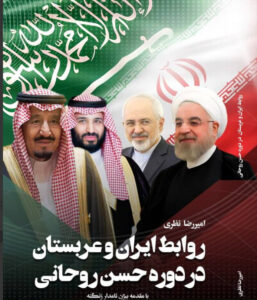
Iran–Saudi Arabia Relations during the Hassan Rouhani Administration
AmirReza Nazari
Karaj: Jahan-e Siasat, 1404/2025
AmirReza Nazari offers a well-documented and analytical examination of the political, diplomatic, economic, and security dimensions of Iran–Saudi Arabia relations during the presidency of Hassan Rouhani (2013–2020). Drawing on his doctoral dissertation, now published in book form, he traces the government’s strategic decisions, key events, and the influence of international sanctions, regional crises, and ideological rivalries in order to illuminate the roots, challenges, and opportunities shaping these relations. His attention to official policy documents, speeches by relevant authorities, and stated positions of Iranian and Saudi officials provides a clear picture of diplomatic dialogues, attempts at de-escalation, and the obstacles that persist. He also familiarizes readers with officials’ perspectives on the complexities of Iran’s foreign policy and its implications for security and stability in the Middle East.

Uneven Development and its Social and Cultural Cleavages in the Makran Coastal Region
Hassan Hajizadeh Mishi
Tehran: Hurin, 1403/ 2024
Hajizadeh Mishi, the author of Uneven Development and Its Social and Cultural Cleavages in the Makran Coastal Region, is an academic from the region who expands the scope of Persian Gulf studies in Iran beyond its conventional zone and examine critically the socio-economic inequalities arising from state development projects and their impacts on local communities. Using existing data and mapping it to visualize the region’s social, economic, and cultural conditions, he traces the trajectory of uneven development and highlights both interregional and intraregional inequalities along the coast, which he attributes to policies of polarized growth. The book underscores the importance of coastal-zone management and development planning in Makran for achieving sustainable regional development. It argues that the continuation of existing policies runs counter to the goals of balanced and justice-oriented development in coastal areas.
It is worth noting that in recent years other works have also been published to document and reflect on development projects in Makran, including Makran of Iran: Eight Oral Narratives of the Development of the Makran Coast by Ansieh Amirifar (Kowsar Research and Training Center, 2024) and The Makran Artery: A Narrative of the Construction of the Oil Transfer Pipeline from Goreh to Jask by Mehdi Qazli (Soure-ye Mehr Publications, 2024). Their publication signals at least a quantitative growth in Gulf studies focused on the eastern segment of this coastline.
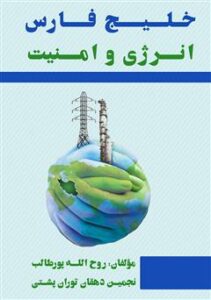
The Persian Gulf: Energy and Security
Rouhollah Pourtaleb; Najmin Dehqan Touran-poshti
Tehran: Azarfar Publications, 1395/2016
The Persian Gulf: Energy and Security, is among the books that draw on dependency theory to illustrate the decisive connection between the concentration of energy resources in the Persian Gulf and the security and military architectures of the surrounding states, particularly those along its southern littoral.
Emphasizing the region’s geopolitical location and the strategic significance of the Strait of Hormuz within global energy circulation, the authors contend that oil-dependent, single-commodity economies have driven these states toward the militarization of their security environments, expanded arms acquisitions, and the normalization of extra-regional military presence—ultimately generating a dependent security pattern. As a result, the structural interlinkage of energy, security, and militarization in the Persian Gulf—even during periods of relative peace—remains a central force in reproducing insecurity and sustaining external intervention in this geopolitical arena.
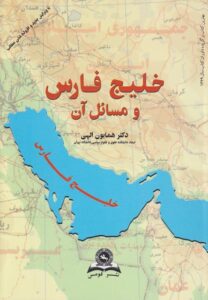
The Persian Gulf and Its Issues
Homayoun Elahi
Tehran: Ghoomes Publishing Company, 1369/1990 /2nd print 2017
The Persian Gulf and Its Issues has served as a comprehensive introductory resource for university-level instruction. The book’s thirteen chapters explore the Persian Gulf’s geopolitical, historical, and economic dimensions, addressing themes such as geographical and climatic conditions, the islands and the Strait of Hormuz, political history, border disputes, the changing roles and strategies of both regional and extra-regional powers, as well as the region’s broader economic and demographic shifts
Focusing on the regional transformations of the late twentieth and early twenty-first centuries, the author underscores the impact of foreign policies and interventions—notably those of the United States and the former Soviet Union—as well as the economic shifts driven by rising oil prices and large-scale labor migration to the southern Gulf states, on security, politics, and the everyday lives of local communities. The book also provides statistical tables on oil and gas imports and exports, population, and border disputes, making it a valuable resource for scholarly research on the Persian Gulf.
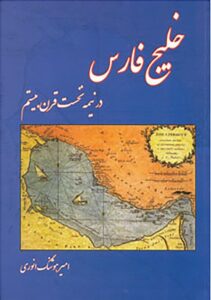
The Persian Gulf in the First Half of the Twentieth Century
Amir Houshang Anvari
Tehran: Khaneh-ye Tarikh va Tasvir-e Abrishami, 1390/ 2011
Drawing on a wide array of sources—including archival materials from the Iranian and British Ministries of Foreign Affairs, records held in Iran’s National Archives, and reports from contemporary newspapers, Amir Houshang Anvari offers a detailed study of the region’s political, economic, and social landscape in the first half of the twentieth century.
The Persian Gulf in the First Half of the Twentieth Century is organized into five main sections: global influences, the countries and borders of the Persian Gulf region, Iran’s political developments, economic issues, and social issues. Drawing on a wide array of documents, news reports, and archival materials, the book examines the strategic significance of the Persian Gulf, the policies pursued by foreign powers, and the legitimacy of Iran’s efforts to protect its interests in the region.
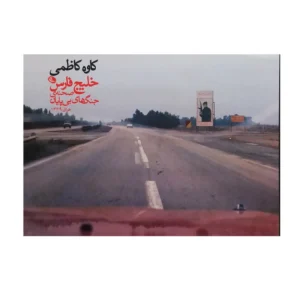
The Persian Gulf: A Stage of Endless Wars — Iraq, 1991
Kaveh Kazemi; translated by Bita Ghaffari
Tehran: Nazar Printing and Publishing, 1399/ 2020
The Persian Gulf: A Stage of Endless Wars — Iraq, 1991, by Kaveh Kazemi, is the fourth photo book by this Iranian photographer and documents his three-week presence in Iraq less than one month after the start of the military operation to expel Iraqi forces from Kuwait. Kazemi, then a freelance journalist for international media outlets, gained rare access and joined the small group of foreign correspondents present on the ground. In this book, he documents his observations of bombed areas, cities, and hospitals, while also reflecting on the restrictions and security challenges he encountered while traveling and attempting to transmit photographs to international media. He combines these personal observations with the events he recorded and his analysis of the Gulf War’s short- and long-term consequences. This documentary account of Iraq’s social and humanitarian crisis, alongside its devastated infrastructure, underscores the troubling reality that the Persian Gulf continues to be entangled in persistent tensions and multiple crises.
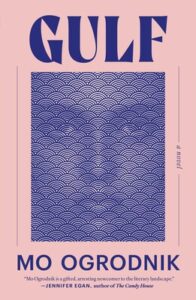
Gulf
Mo Ogednik
Summit Books, 2025
American filmmaker Mo Ogednik’s debut novel, Gulf, follows five women from around the world who land in the Gulf for variety of reasons. Justine is a New York–based itinerant museum professional selected by the UAE government to curate an exhibition at the Zayed National Museum in Abu Dhabi. Dounia is a wealthy Saudi mother living in the port city of Ras al-Khair with Flora, her Filipina domestic worker, who has come under the kafala (sponsorship) system.
Eskedare, a girl from Ethiopia, is following her love to Qatar- to build stadiums for the 2022 FIFA World Cup but falls into the hands of traffickers and eventually encounters Justine in the UAE. And Zeinah is a young Syrian woman forcefully married to an Islamic State fighter to secure her parents’ safety and her path ultimately leads her to this region. Through the eyes of these women, the Gulf—despite its alluring glamour—appears as a ‘Wild West,’ a space they enter either for financial gain or in pursuit of what they believe is rightfully theirs.
* Summaries are adapted from publishers’ websites with minor edits.
ISSN 2818-9434



Comments are closed.