A Review of the Persian Gulf Studies Quarterly (©Background)
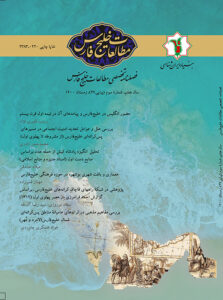 The Persian Gulf Studies Quarterly (PGSQ) is is one of the few Iranian periodicals dedicated exclusively to the study of the Persian Gulf. Since its launch in summer 2014, the journal has published twenty-seven issues, with the most recent appearing in the winter of 2022.
The journal is published by the Iranology Foundation (Bonyād-e Irānshenāsī), an institution established in 1997, under the Office of President to oversee and coordinate academic research in Iranian studies. Bonyād offers M.A. and Ph.D. programs in Iranology and publishes three other quarterly journals in addition to PGSQ, including the Iranology Report, Iranian Studies, and Fara-nama, the latter dedicated to the critical study of the texts produced in the field of Iranology[1].
The PGSQ includes article-reviews on the history of research on the Persian Gulf and the shifts in the field. Some of the reviews claim that earlier works focused primarily on the region’s economy and trade, while later scholarship expanded to address the political strategies of rulers and their conflicts over control of the Persian Gulf’s littoral and hinterland, with shifting emphases over time, particularly following the advent of Islam. By the late nineteenth century, as international competition for influence in the region intensified alongside the discovery of oil, the oil economy and the Persian Gulf’s geopolitical significance emerged—among other issues—as central subjects of debate. These questions remain highly contentious today, especially in light of escalating regional rivalries within the Persian Gulf and beyond, and now fall under the broader rubric of “Persian Gulf Studies” (see Asadpour & Eskandari, 2022; Abbasi, 2017).
The goals of the PGSQ are articulated on its website as follows: “The Persian Gulf has always occupied a distinctive place in Iran’s international economic and, however, this does not diminish the need to attend to its historical, geographical, and cultural significance. This quarterly aims to convey a measure of the antiquity and richness of this vital and sensitive region through scholarly articles and, by drawing on the abundant heritage of the Iranian littoral of the Persian Gulf, to highlight the role of Iranian culture and civilization in shaping the identity of the Persian Gulf and its surrounding lands.”
The academic goals of the journal are defined broadly and extend well beyond economic and political issues to encompass “archaeology, mythology, history, geography and geopolitics, historical geography, anthropology, sociology, local and indigenous culture (folklore), law and international relations, maritime affairs, local literature, economic topics, environmental issues, islands and ports, tourism, and related fields.” Moreover, the section outlining the journal’s aims and vision on its website further expands this scope to include the littoral and hinterland of the Sea of Oman (Makran), international relations and law, futures studies, and comparative studies centered on the Persian Gulf. The journal’s articles further extend to neighboring countries, focusing in particular on Yemen, Saudi Arabia, and Qatar.
The breadth of topics is evident even within a single issue. For instance, PGSQ Issue No. 3 includes articles on the role of the Young Turks during the Ottoman period, Russian naval presence and Bushehr port’s role in nineteenth‑century trade, a report on the first Persian Gulf seminar in Iran in the 1960s, a study of the beliefs and ritual practices of the Ahl‑e Havā [2] in southern Iran, and an eighteenth‑century map of the Persian Gulf. These appear alongside an article on ecotourism opportunities and an introduction to region’s animal and plant species. While this wide thematic and temporal scope reflects the journal’s inclusivity, it also limits focus on specific fields and can make it difficult for readers to discern the journal’s overall paradigmatic orientation.
Within this range of materials, regional security emerges as a major focus, alongside historical and archival studies, as well as several articles addressing contemporary disputes over the name of the Persian Gulf and the three islands.
Morād Dellalat (2020), a Ph.D. student in political geography at Kharazmi University in Tehran, examines Persian Gulf security by analyzing intersecting regional and global interests. In his article, “The Geopolitical Strategy of the United States in the Persian Gulf with Emphasis on the National Security of the Islamic Republic of Iran,” he argues that the concept of security in the twenty‑first century has expanded beyond national and regional boundaries. Dellalat explores U.S. security strategies in the Persian Gulf and their implications for Iran, suggesting that U.S. foreign policy treats the region as vital to its national security, with the ultimate goal of nothing other than ensuring energy security—a conclusion underscored by the imbalance between U.S. energy supply and demand.
Dellalat identifies three U.S. post–Cold War strategies in the Persian Gulf: a “soft” approach fostering direct ties with regional populations (notably in Iran and Syria); a preventive, interventionist strategy based on military operations; and an energy-focused strategy aimed at controlling strategic energy hubs, weakening OPEC, and emphasizing Iraq’s role. He argues that U.S. objectives toward Iran include limiting its regional influence, pressuring the Revolutionary Guard, strengthening Arab–Israeli relations, and targeting Iran’s military sector.
Other studies following a similar framework highlight the need for regional convergence for security or economic reasons. For example, Mahmoud Nazarnia et al. (2018), in “An Analysis of the Position of the Islamic Republic of Iran in Ensuring Security in the Strategic Region of the Persian Gulf” (PGSQ Issue No. 12), argue that security is foundational to development and emphasize the Persian Gulf’s importance due to its energy resources and strategic location for trade. Reviewing regional energy statistics, they note that demand for the area’s resources is rising, further underscoring its strategic significance.
According to Nazarnia et al., post-Revolution Iran “did not have the possibility of forming stable alliances with neighbors” and therefore relied on realpolitik strategies, including self-help, balancing power and threats, and forming alliances with extra-regional powers.[3] They argue that They argue that pursuing a form of “collective security project” has been vital for Iran in the region; however, given regional circumstances—particularly the presence of the United States and the challenges posed by members of the Gulf Cooperation Council—they do not see a clear prospect for such a security arrangement. Instead, they recommend pursuing alternative forms of security, variously described as participatory or indigenous, though the conceptual distinction between these terms is not clarified. They also stress the importance of confidence-building among regional states, including fostering ideological commonalities, bridging Arab–Persian divides, and addressing historical negative biases.
Similarly, Nāmi (2018), an assistant professor of political geography at Farābi University, in the article “The Geopolitics of the Persian Gulf and Its Historical and Future Challenges,” examines how differing geopolitical strategies contribute to disunity among regional governments. He distinguishes political geography, which analyzes the effects of political decisions on geography, from geopolitics, which considers how geographical characteristics influence state behavior. Nāmi identifies border and territorial disputes, divergent interpretations of security geography, the presence of extra-regional powers, and cultural–geographical conflicts—such as Sunni–Shiʿi divisions—as major obstacles to regional convergence. He concludes that “collective action by regional states” is “the only security formula for achieving real security in the region.”
Another article on this theme, by Qorbanzadeh and Eghbāli[4] (2021), “The Strategy of the Islamic Republic of Iran for Establishing Security in the Persian Gulf Region,” highlights the destabilizing impact of extra-regional forces and focuses particularly on how regional rivalries contribute to insecurity. They argue that “regional security based on cooperation among regional governments,” especially “in the wake of recent regional developments, the emergence of a new Iraq, and the entry of foreign military forces,” provides the most suitable path toward securing the Persian Gulf. According to the authors, the foundation for such cooperation may rest on “shared political, strategic, and economic concerns,” despite the region’s cultural diversity, although the article does not clearly elaborate on what these shared concerns entail.
The authors attempt to establish a relationship between the level of domestic security of governments and their approach to major powers in the region in the Persian Gulf countries, arguing that the “low level of social cohesion and political legitimacy” is the primary cause of weak national security in these countries. The authors see “collective security” as essential for regional stability and development, defining it as “a system of power in which each state guarantees the security and independence of the others.” They argue that “inclusivity and commitment” are the most crucial elements in a collective security model, deterring aggressors by dissuading them from undertaking acts of aggression.
Notably, despite thematic overlaps such as the emphasis on regional convergence, these articles devote limited attention to the lived experiences of the inhabitants of the Persian Gulf littoral, whose everyday lives, despite national borders that divide them in various ways, remain deeply interconnected socially, economically, and culturally. Undoubtedly, the security of this region and the daily lives of its residents are mutually constitutive: security is a prerequisite for the continuity of their ordinary lives, and they, in turn, play a vital role in establishing and maintaining regional security.
Yet despite this close connection, these populations are scarcely represented in the material published in the PGSQ, except in articles examining specific rituals and ceremonies, such as traditional boat (lānj) launching or zār rituals. A significant portion of the journal focuses on historical documents spanning from the Seleucid and Parthian eras to the Qajar and early Pahlavi periods. While these materials are undeniably important, they leave little space for exploring the lived experiences of contemporary populations.
It is certainly true that Persian Gulf security is a crucial concern for Iran, and a journal addressing disputes among neighboring states, regional treaties, military conflicts, and the influence of extra-regional powers can be highly valuable. The key question, however, is from which perspectives this security is analyzed, and whether the lives and everyday experiences of local inhabitants are considered rather than overlooked.
Moreover, the articles in this journal rarely reflect the fact that they were written by Iranian scholars based in Iran, and they read as though any researcher anywhere in the world could make similar theoretical claims about such dimensions of the Persian Gulf as, indeed, many have done, for better or worse. Strikingly, Iranian scholars of the Persian Gulf have made little use of the advantage of conducting research within the country, and their work rarely reflects an insider perspective, much like Iranian studies scholars around the world. This absence of a “from-within” viewpoint can be seen as another significant gap in Persian Gulf Studies and, by extension, in the Persian Gulf Studies Quarterly.
Nonetheless, the continued publication of a journal centered on the Persian Gulf offers hope that future work may pay greater attention to local and national specificities and to the everyday lives of the region’s inhabitants, thereby fostering a clearer connection between Persian Gulf Studies and our contemporary collective life.
- Digital versions of all issues of these journals are publicly accessible on the website of the Bonyād-e Irānshenāsī: https://www.iranology.ir/ ↑
- – Ritual practices of the Ahl‑e Havā are ceremonial and healing rites in southern Iran, performed for individuals believed to be affected or possessed by spirits (“winds”) that influence their physical, psychological, or social well‑being. ↑
- – Mehran Kamrava, in his interview with Keshavarzian for this issue, criticizes Iranian scholars of the Gulf for focusing excessively on topics of realpolitik. ↑
- Ghorban-Ali Ghorbanzadeh is an assistant professor of political science at Imam Khomeini University, and Mahdi Eghbali is a Ph.D. candidate in international relations at Azad University of Rafsanjan. ↑
Related Content
 GlobIS Review, Volume 2, Issue 2 (©Background)
  New Horizons in Persian Gulf Studies (©Background)
  Making Space for the Gulf (©Background)
  Migration and Citizenship in Eastern Arabia: A Review of the Field
  Short Reviews*
  Breathing the Mist, Untangling the “Complicated”: How Scholars of Muslim Backgrounds Viewed the Jina Movement in Iran (©Background)
Comments are closed.