
The Persian Gulf in Military Geography (©Background)

/Book Review | Reading Time: 7 minutes
The Persian Gulf in Military Geography
Kaveh Bayat | December, 2025
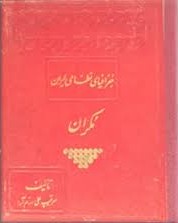 The seventeen-volume collection Military Geography of Iran, published in Tehran between 1941 and 1946 and supervised by Brigadier General Haj Ali Razmara, is one of the most significant geographical sources on contemporary Iran, with The Iranian Islands in the Persian Gulf (1944) as its principal volume on the Persian Gulf. The order of publication and its underlying logic for separating the volumes are not clear to us, as Iran was then divided into six provinces according to the country division law of 1937. However, the military regions underwent significant changes, growing from nine divisions and four independent brigades stationed across the country in 1935 to 18 divisions by 1940 (Qaem Maghami, p. 78). This total may seem to correspond with the seventeen divisions in Razmara’s Military Geography; however, the classification is not entirely consistent, since two of the eighteen divisions were based in Tehran and four in Azerbaijan, meaning the military territorial divisions were fewer than administrative divisions of the 1937 law.
It is noteworthy that Tehran is not specifically referenced in the Military Geography. Azerbaijan is divided into eastern and western parts, while a separate volume focuses on the deserts of Iran, which do not align with the geographic or military divisions of the country. (ibid.) The primary aim of compiling this collection, especially volumes on the border provinces, was to assess their defense capabilities—highlighting strengths and weaknesses while accounting for geography, communication lines, and other relevant factors. As we will see, the islands are particularly significant in this context.
Razmara was not the first Iranian officer to write about the Persian Gulf; however, he was the first to approach it from the perspective of military geography. Earlier writings include series of articles by Major Ahmad Ehtesabian in Qoshoon magazine from 1923 to 1928. These articles were later compiled and published in 1931 under the title Military Geography of Iran, but it had a broader focus than just military topics. Arnold Wilson’s The Persian Gulf was another work on the region translated into Persian in the same year by Mohammad Saeedi, at the request of Qoshoon magazine. The Persian Gulf, written by Gholam Ali Bayander, commander of the Iranian Navy, and published in 1938, was primarily intended to raise awareness among Iranians, “particularly government officials and employees” (Bayander, p. 16) and, despite the valuable information it provided, did not focus extensively on military aspects.
Razmara was appointed as the head of the Army’s Geographical Department in 1935. However, it appears that most of the data and insights that later contributed to the collection of Military Geography were gathered from 1937 onwards, during his collaboration with the War University (Razmara, pp. 95-96). Military Geography does not include a separate volume on Iran’s Persian Gulf coastline; instead, its research on the region is incorporated into the volumes covering the southern provinces.
This includes the volume on Khuzestan (1941), whose sixth chapter, titled “The Coasts of Khuzestan” (pp. 64–80), examines “a maritime border stretching approximately 210 kilometres, from the Khin River in the Shatt al-Arab to the port of Daylam,” comprising two types of banks—“those formed by the Shatt al-Arab and those formed by the sea” (ibid., 64)—with Khorramshahr, Abadan, and Bahmanshir among its principal sites.
The volumes on Fars (1944) and Kerman (1944) also include separate chapters on their coastal regions. The Fars coast is described as an area stretching approximately 800 kilometres, “beginning at the port of Shah Abdolshah, located 12 kilometres west of Daylam, and ending at the mouth of the Mehregan River, 25 kilometres west of the port of Khamir.” This chapter provides detailed information on the region’s population, economic conditions, human geography, islands, roads, rivers, ports, and estuaries (Fars Region, pp. 126–134).
The primary focus of the sixth chapter of the book Kerman Region, titled “The Status of the Coasts of the Kerman Region from Bandar Abbas to Jask,” is a detailed account of the geographical features of this area, which extends approximately 470 kilometres; General observations on the climate are followed by an analysis of the mountain ranges, rivers, estuaries, and the depth of coastal waters. In the section titled “Ports and Villages on the Coast,” each port and village is presented with a brief overview of its human geography and the living conditions of the local population, including their worsening economic situation. Like people in other regions, “many residents along the coast—particularly in areas such as Jask and Biyaban—have migrated to Oman due to economic hardships, often finding work as laborers in pearl-fishing workshops. As a result, many once-thriving areas in Biyaban area are now abandoned and devoid of homes” (Kerman, 171). Razmara provides suggestions for the development and progress of the region, highlighting the need to construct dams and improve communication infrastructure. This includes upgrading the coastal path to a gravel road and to extend the telephone line from Bandar Abbas- Minab to Jask, and Chah Bahar(ibid.).
The far southeastern section of the Iranian coast along the Persian Gulf was part of the sixth province, known as Makran, according to the National Divisions Law of 1937, at the time Razmara was compiling this collection. He writes that the province is bordered “to the north by the Khorasan region, to the west by the Kerman region, to the south by the Sea of Oman, and to the east by British Baluchistan” (Makran, 19).
The seventh chapter, titled “The Status of the Makran Coast,” begins by describing the general characteristics of the region: “Although the Makran coast is approximately 700 kilometres long, it has few significant spots, and there are not many important or notable locations along its length… The population and inhabited areas along the Makran coast are quite scarce, with only a handful of individuals living there, relying on minimal fishing for their livelihoods. It is estimated that the total population from east to west is around 5,000, with approximately 2,000 residents living in Chahbahar alone…”(ibid., 79). The chapter details settlements along the coast, especially the major ports of Jask and Chahbahar (ibid., 72-105).
As noted earlier, this collection aimed to illustrate the defensive posture of various regions, particularly border provinces; along the southern borders, it was the coastal areas that were considered crucial for the country’s defence. However, it is emphasized that securing defence requires attention beyond the coasts: “The implementation of this significant and challenging task can only be achieved by maintaining control over the islands; losing the islands is akin to losing the coasts” (Kerman, 208). The issue of islands is examined in detail in the volume titled The Iranian Islands in the Persian Gulf. This volume includes eleven maps and examines the islands of Kharg, Kharko, Sheikh Shoaib, Faro, Kish, as well as several smaller islands, such as Hendorabi, Siri, Bumosi, Tunb, Bani Tunb, Qeshm, Hengam, Hormuz, Lark, and the Bahrain Islands. It describes the geographical and natural conditions, population demographics, economic status, military significance, and includes a general assessment of each island. For islands such as Kish, Qeshm, Hengam, Hormuz, and Bahrain, their historical background is discussed, noting that European attention to them began in the 16th century. This attention, the text explains, caused “each of these islands to become the target of prolonged and successive operations, and most of them were destroyed and devastated as a result of military campaigns…” (The Iranian Islands in the Persian Gulf, 2).
As we understand from other sections of the book, the destruction and devastation of most of these islands and villages in the northern part of the coastal area, were result of many factors, not only these military operations. In the eleventh chapter of this volume, titled “General Views on the Persian Gulf Islands,” the author discusses each island’s economic sectors—such as agriculture, mining, pearl fishing, boat building, navigation, and fishing—and, alongside this economic overview, examines the challenges the local population faced in terms of work and livelihoods.
Some of these challenges, he wrote, were due to natural conditions, such as water shortages and the lack of significant mineral deposits, while others were caused by human factors, including the migration of residents seeking better living conditions in response to these difficulties: “Today, the population of the Iranian islands is small and continues to decline. A significant reason for these decreases is the lack of livelihoods. As noted in the economic section, the Iranian islands are severely lacking in agricultural resources and are unable to meet the needs of their residents, necessitating the import of goods from abroad” (ibid., 122). The text discusses the traditional livelihoods that have been prevalent in the islands through history, including pearling, fishing, portering, and boat building and suggests that “attention to these activities is vital for ensuring a sustainable living for the people” in these areas. He adds that, with such measures, “the migrated inhabitants may return and the islands will regain their former prosperity in terms of population and development”(ibid.).
In this volume, as in others, Razmara dedicates sections to describing the military measures necessary to defend these islands (ibid., 123–131). However, he stresses that, even in terms of securing their defensive capacities, “…all efforts should be made to develop and maintain habitation on these islands. The more uninhabited and economically worthless they become, the more challenging and laborious military operations will be” (ibid., 132). Razmara sees a connection between the economy and the increasing migration of people from the southern provinces. Although he regarded this as a significant issue that the administrative system should address by improving the economic and social conditions of these areas, including their dependence on free trade throughout the Persian Gulf. However, his discussion of this connection remained limited to scattered observations.
References
Bayandar, Gholam Ali. (2009). Persian Gulf, Vol. 2. Tehran: Mahmoud Afshar Endowment Publications.
Brigadier General Razmara, Hajali. (1941). Military Geography of Iran: Khuzestan. Army Printing House.
———–. (1941). Military Geography of Iran: Makran. Army Printing House.
———–. (1944). Military Geography of Iran: Fars. Army Printing House.
———–. (1944). Military Geography of Kerman. Army Printing House.
———–. (1944). Military Geography of Iran: Iranian Islands in the Persian Gulf. 133 pages, 11 maps.
Razmara, Kambiz, and Bayat Kaveh . (2003). Memoirs and Documents of Lieutenant General Haj Ali Razmara. Tehran: Shiraz Publishing and Research.
Ghaem-e-Maghami, Jahangir. History of the Modern Iranian Army from 1921 to 1941, Volume 1. Army Printing House.
Related Content
 GlobIS Review, Volume 2, Issue 2 (©Background)
  New Horizons in Persian Gulf Studies (©Background)
  The Identity Politics of a Body of Water: On Persian Gulf Studies in Iran (©Background)
  Migration and Citizenship in Eastern Arabia: A Review of the Field
  A Review of the Persian Gulf Studies Quarterly (©Background)
  Short Reviews*
Comments are closed.