New Horizons in Persian Gulf Studies (©Background)
/Dialogue | Reading Time: 23 minutes
New Horizons in Persian Gulf Studies
A Cenversation between Azam Khatam, Arang Keshavarzian, and Kaveh Ehsani
Azam Khatam, Arang Keshavarzian, and Kaveh Ehsani | December, 2025
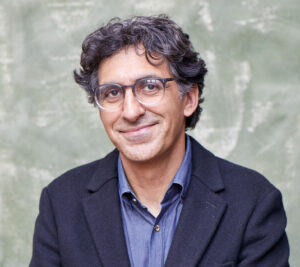
Arang Keshavarzian is Professor of Middle Eastern and Islamic Studies at New York University. His research and teaching centers on questions of political economy of Iran and the wider Middle East. He has had a particular interest in the relationship between spatialization, capitalism, and political power. He is the author of Bazaar and State in Iran: The Politics of the Tehran Marketplace (Cambridge UP, 2007; translated by Ebrahim Eskafi for Shirazeh Ketab (1399)) and co-editor, with Ali Mirsepassi, of Global 1979: Geographies and Histories of the Iranian Revolution (Cambridge UP, 2021). His most recent book is Making Space for the Gulf: Histories of Regionalism and the Middle East (Stanford UP, 2024). It is the recipient of the 2025 Roger Owen Prize from MESA for best book in economic history, economics, and political economy as well as an honorary mention for the 2025 biannual book award from the Association for Gulf and Arabian Peninsula Studies. His articles on various topics have appeared in several edited volumes as well as Politics & Society; International Journal of Middle East Studies, Geopolitics; Economy & Society; International Journal of Urban and Region Research, and Middle East Report.
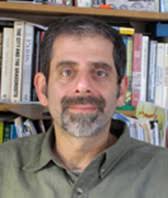 Kaveh Ehsani is an Associate Professor of International Studies at DePaul University in Chicago. His research focuses on the political economy, social history, and urban transformation of the Middle East, with particular attention to development, oil, labor, and Iran. He is one of the editors of Working for Oil: Comparative Social Histories of Labor in the Global Oil Industry and is a contributing editor for Middle East Report (MERIP) and GlobIS Review.
Azam Khatam (A.Kh.): Thank you for agreeing to do this interview, especially after all the time and effort you devoted to this issue as its advisor, and for sharing your perspectives on Persian Gulf Studies.
It appears that academic research on the Persian Gulf began with a preoccupation with security and oil. In Iran, the focus seemed to have been on political geography or defensive geopolitics (Gholamali Bayandar, 1938; Haj Ali Razmara, 1944; Sadid al-Saltaneh, 1967). Can we say that academic research about the Persian Gulf began with one core theme: border security? And how do studies on oil intersect with this trend?
Kaveh Ehsani (K.E.): To answer this question, I would have to break it down a bit: We must differentiate between the published studies of the PG predating the modern era, conducted mainly by Europeans, or earlier medieval travellers like al-Muqqadassi. Second, we should also distinguish between general “scholarly” versus “academic” studies (in the sense of knowledge produced in and for academic institutions).
Obviously, local people had intimate and practical knowledge of the region and kept producing it to manage their lives. However, systematic knowledge production by outsiders for a wider consumption began with travellers, adventurers, colonial agents, and technical experts, who were by and large not academics. While rich and invaluable, this kind of knowledge production about the region has never been separate from power. This is especially the case with Europeans during the colonial era. Chief among these, we can point to the remarkable 7 volumes of the Gazetteer of the Persian Gulf by Lawrence Lorimer’. This compendium was gathered by Lorimer from the reports produced by British colonial agents for Britain’s Foreign Office, and contain the most detailed information and analysis about minute aspects of material and political life around the Gulf and the Sea of Oman in the 19th Century that we have available. It reveals how colonial empires (but also modern national states) require local visibility to rule territories and populations. To that I should add the many travelogues and studies by influential figures during the colonial era, like Rawlinson, Curzon, Dieulafoy, Thessiger, Arnold Wilson, Sykes, and many others that are now rightly considered part of the standard histories of the region. They are often of the highest scholarly standard but are not academic in the sense of being rooted in universities or similar institutions. None of these people were academics, but they immersed themselves in local languages and histories and lived and traveled across the region to produce remarkable accounts that we now refer to. Much of their work was presented at the Royal Asiatic Society of Britain and published in their journal. The topics ranged from how political relations were negotiated, to how long distance travel and trade were handled, tribal alliances and warfare were conducted, religious pilgrimages were organized, what life was like in the marshlands of Iran and Iraq, how the region’s rivers, like Karun or Tigris, bound social life along thousands of kilometers, what property and tax regimes were in place, crops and local economies, the economies of fishing and pastoralism, family genealogies, which clan possessed firearms, and what kinds, how disputes were adjudicated, etc. To these must be added the work of archeologists and philologists (most of whom also were not academics), who excavated ancient artifacts, established museums, deciphered long-dead languages, and essentially re-wrote histories of antiquity that became the backbone of modern nationalist cultures. On the Iranian side, I should point out the travelogue to Khuzestan of the royal engineer Najm-al Molk. My point is that most of this earlier, rich knowledge, was not sponsored by academic institutions, but had some connection to state interests, whether colonial or national. The preoccupation with oil and security that you mention, date to the post- WWI era when modern national boundaries began to be firmed up, and oil extraction and trade entered the global economy.
As for formal ‘academic’ studies, they are far more recent. The investigation themes vary. Some are, as you mention, focused on and limited to nationalistic interests and the geopolitics of oil and security. But fortunately, there is also a growing body of scholarly inquiry that focuses on the social histories and lived lives of the ordinary people around the Gulf. A good recent example is the work of Willem Floor who has been publishing encyclopedic compendiums of the social histories of the Persian Gulf in multiple volumes. His many books on coastal cities and the Persian Gulf itself, also make available the colonial records of Dutch, Portuguese, and other European colonial incursions since the 16th Century.
My point is that rigorous, and if you like, scientific/scholarly knowledge production about the Persian Gulf, has always had deep connections to power relations, but power of very different kinds.
Arang Keshavarzian (A.K.): Kaveh emphasizes an important point– much of the knowledge about the Persian Gulf produced in English has been tied to interests and questions of political power. Some of this a reflection of the expanding and deepening British Empire in South Asia and by the early twentieth century it became animated by establishing oil sectors in the northern part of the Persian Gulf. Even in the 1980s and 1990s when these Gulf states were independent and Middle East Studies in the United States and Europe went through a maturation and became informed by a diverse set of social theories and innovative methods that critically examined power relations, “Gulf Studies” remained narrow and quite parochial. Most of the works still focused on questions of oil, rentierism, monarchies, tribalism, and international relations. With the 1979 Revolution, the Iran-Iraq War and first Gulf War in 1990-1, and the creation of the Gulf Cooperation Council (GCC), Gulf Studies was intimately connected to US geopolitical interests and by the 1990s “the Gulf” became narrowly understood as the Arabian Peninsula, with Iran, Iraq, Yemen, and South Asia falling out of the concept and treated as “external” or even a threat. So, it became very common to pick up a book or go to a conference on “the Gulf” and have little or even nothing on Iran, Iraq, and Yemen. Meanwhile, much of the local historiography and writing were deeply wedded to nationalism and turning the writing of society and history into tools of national and even state preservation.
A.Kh.: Kaveh, in this issue we are republishing a review of your book, The Built Environment and the Making of the Industrial Working Class: The Social History of Labor in the Iranian Oil Industry. Would you tell us how oil-centered approaches emerged and came to shape the field of Persian Gulf Studies?
K.E.: There is a vast literature on the topic of oil and how it has transformed the PG. A lot of this work, especially in Iran, is mainly focused on the political and economic impact of oil and the role of ruling elites or the rentier state, at the expense of trying to investigate and understand the agency and role of people and places where oil is actually extracted, processed, exported. On the other hand, there is a growing body of historical research on what I call the urban, or social, life of oil, which examines the complex social, spatial, and political transformations produced by the advent of oil extraction and the related industries and institutions that have enabled its continued operation.
A.K.: Rentier state theory forces us to not only draw a very hard boundary between state and society, but also between states. It treated rentier states as closed boxes that somehow magically produce oil, export it, and import revenue or capital. So, politics and struggle is reduced to questions of distribution within the nation-state. Kaveh’s scholarship and similar works illustrate how there is a lot more conflict than the rentier model captures and also states are not unitary and closed boxes. Much of the new work on oil in the Gulf explores transnational processes of accumulation, urbanization, and organizing and learning.
A.Kh.: In 2022, you both contributed to the publication of a special Persian Gulf issue of the journal Goftogu (issue 92) in Tehran. As you now serve as special issue advisers for the GlobIS Review on the subject. what key themes did you seek to foreground in that volume, and which of those continue to shape the focus of the current issue?
K.E.: The central arguments that we tried to make in that special issue of Goftogu was that the Persian Gulf should be seen as a social and geographic entity in itself (like the Indian Ocean), rather than a shallow patch of water parceled between riparian states. This is the approach of Arang in his groundbreaking new book, Making Space for the Gulf. and is being continued by several of his former students, some of whom are sharing their work in this issue of GlobIS Review. The rationale behind this approach is that few of the region’s issues and characteristics can be properly understood within modern national borders only. Take for example my own recent work on ecological crises in Iran and Iraq (and by extension in the PG). A century of modern industrial and national projects has been transforming this region. The locations of these mega projects may be within national borders, but their effects are not. Large mega dams in Turkey’s Anatolia, or agribusinesses and refineries in southern Iran, affect the entire ecology and living conditions of people living downstream. Destructive warfare and urban and industrial pollution create toxic environments that have drastic repercussions beyond national borders. The same is true of the impact of climate change, droughts, and the toxification of air and soil, etc. The clearest way to understand the interconnectivity of this region is through the vast movements of workers, refugees and migrants crossing borders legally or illegally, and in the process leave lasting and transformative effects. Other examples include devastating dust storms affecting Khuzestan, Basra, Kuwait and northern Gulf. Their origins are in the drained marshlands of Iran and Iraq, but their impact is not felt only locally and within national borders.
A.K.: In this issue and the one for Goftogu, we have tried to introduce readers to a new and critical scholarship on the region that both challenges the narrow imperial gaze and confronts nationalistic and homogenizing understandings of the region as either Iranian or Arab, traditional or modern, and so on. In the Goftogu issue we also emphasized historical change and dynamism and several of the essays questioned the notion of the Gulf as being either static or only going through simplified historical ruptures of “pre-oil versus post-oil” or “before 1979 and after the revolution.” A number of the works being reviewed in this issue also seek to historicize the region in important ways. And in doing so, they move us far away from the limited questions about rentier states, geopolitics, and timeless tribal societies and show the role of actions and agency ignored by much of the previous scholarship. I am talking about laborers, non-citizens, women, fisherman, farmers, or non-humans.
A.Kh.: Arang, we have reviewed your book in this issue, and Kaveh highlighted its importance in laying the groundwork for a new research agenda in Gulf Studies. Could you tell our readers how you became interested in Gulf Studies? What motivated you, and what unfamiliar aspects did researching the Gulf from the southern shore reveal?
A.K.: My interest in the Persian Gulf region, including southwestern Iran, goes back to my earlier research on the Tehran Bazaar. When I was doing work on that project and interviewing bazaaris and others, I realized that in order to understand the commercial economy of the 1980s and 1990s, I would have to take economic zones in the borderlands as well as Dubai and other Persian Gulf cities seriously. Not only was this eye-opening to me, but it made me think about borders, space, and territoriality and how they related to capitalism, nationalism, and political power. As I read more, I realized there are others asking similar questions and the Persian Gulf is interesting because you can see different dynamics depending on where you are physically and socially located. It looks different when you are in Tehran rather than in Bandar Lengeh or Dubai and it is more or less of a border if you are an Iranian fisherman or a South Asian construction worker or an American investor or an Arab woman with family ties in both Kuwait and Hormozgan. So, my book is an attempt to think about space, scale, political imaginations, and sociability all together.
A.Kh.: It seems when you began researching this topic, a new wave of Gulf Studies was taking shape—seen in Adam Hanieh’s work on Gulf capitalism, Laleh Khalili’s on regional infrastructure, and Ananya Roy’s on circulating urban models from Dubai to Asia, your own book on politics of space and Kaveh’s on oil, war and environment— collectively proposing a new framework for regional analysis. What, in your view, are the core themes of this emerging research program?
A.K: I don’t think that there is a single framework that has emerged. This new critical Gulf Studies that we are talking about, which definitely include Hanieh, Khalili, and Roy, is coming from different disciplines and focused on distinct empirical questions, histories, and places. I guess what unites them for me is that they all emphasize contextualizing the 19th and 20th century Persian Gulf within the history of capitalism and not somehow outside of it. Second, they all resist treating the nation-state as the only political unit or actor.
K.E.: I find the emerging branch of scholarship that frames the Persian Gulf within the larger geographic universe of the Indian Ocean and the hinterlands of Arabia, Iran, and Iraq, instead of trapping it into isolated and artificial national studies refreshing. This trend probably started with the work of K.N Chaudhuri (1985), Trade & Civilization in the Indian Ocean. As a disciple of Fernand Braudel’s material history of the Mediterranean, Chaudhuri brought a similar lens to the vastness of the Indian Ocean, of which the Sea of Oman and the Persian Gulf are extensions, for example you can look at the work of Engseng Ho (2006), The Graves of Tarim, or Johan Mathew (2016) Trafficking and Capitalism Across the Arabian Sea. Other scholars have followed by exploring the remarkable diasporic movement of populations and how these diverse diasporas bind social and cultural lives across these vast distances. A great example of this is the growing body of ethnographies of diasporic workers in the region. Examples include the works of Neha Vora, Ivan Szelenyi, Samuli Shielke, Noora Lori, Andrea Wright, and many others on the harrowing labor experiences of diasporic workers from Egypt, the Indian subcontinent, the Philippines, etc. in UAE and Qatar. Others document the experiences of sex workers and domestic workers. Aside from anthropologists, there are some remarkable works of literature on the same experience that should not be overlooked, for example the novels of Amitav Ghosh (about Bengali workers in the Gulf) and Abdulrahman Muniff (about the coming of the oil industry to Arabia). Of course, Iranian literature and film is rich in this regard, with the works of Ahmad Mahmoud, Amir Naderi, and even Esmail Fassih. Roya Khoshnevis has recently written about this ‘Petro literature’.
A.Kh.: You mentioned some of the ethnographies of diasporic workers in the region. We have reviewed some of them in this issue, including Vora and Lori’s. Do all Gulf states treat research on migrant labor or environmental issues as equally sensitive? How does freedom to do research on these topics vary across the region? Which countries in the Gulf region were pioneers in these studies, and what were their main concerns?
K.E.: If you look, there are few such published studies of Saudi Arabia, Bahrain, or Kuwait, while Dubai has been the site of much ethnographic work. Post- US invasion Iraq has been relatively more open for researchers, when not plagued by bloody civil war and violence, so there are fascinating studies on gender relations, sectarianization, retribalization, ecological crises, public health issues, etc. being produced by Iraqi or foreign scholars working in and on Iraq. Some of this work is being published in the excellent Journal of Contemporary Iraq & the Arab World that was launched in 2007, four years after the US invasion. While Iraq was descending into misery and civil war, courageous and committed scholars were at least able to do their work, often in high risky circumstances, but at least there was less direct interference by the police state. In Iran, during the reformist era, travel and research by scholars based in Iran and those outside was relatively easier, but since 2005 the conduct of independent archival work, local ethnographic research, or independent social and environmental investigations have become increasingly risky and constrained by threats of state repression. Critical scholarship and knowledge production continue to be linked with power, including the repressive powers of authoritarian states who feel threatened by independent and critical scholarship.
A.K.: Academic freedom is an important question that is often not discussed or acknowledged. There are real limits to doing field and archival research across all the places in the Gulf. Unfortunately, wars, dictatorships, and insecurity places real limits to what researchers in these countries can do or who can visit. There have been moments and openings that some of us have been lucky to benefit from and do research. Also, researchers have developed innovative ways to conduct interviews outside of the region. For instance, by interviewing migrant workers in their home countries or by reading documents against the grain or accessing private archives. Of course, not all research on the Gulf is critical and some researchers have actively cultivated ties with repressive forces and used their research for specific political agendas. And this has been used as an excuse to silence others.
One important development in the past 10-15 years is the proliferation of branch campuses of US and European universities in Qatar and the UAE. On the one hand, this has led to more students and faculty living and studying in Eastern Arabia. In several cases good work is being produced by these faculty or research centers. But we should not assume that these are islands of academic freedom or that their brand of liberalism is not without exclusions or hierarchies. In my book I briefly discussed my own case in 2017 when my plan to teach at NYU-Abu Dhabi was ended because my security clearance was denied. But this is one minor case of many.
While censorship and security concerns have limited who can do research in the region and what topics can be covered, I think lack of financial support is equally important. Many researchers, especially Iranians and Iraqis, lack the time or funds to take weeks and months to conduct interviews, go to archives, and present in conferences.
A.Kh.: I agree financial support is important for academic work, but in Iran, visiting oil and gas industrial sites is treated as a highly sensitive security matter. These sites—often the size of an entire county (shahrestan)—are fenced, gated, and strictly controlled. As a result, there is very little research on the living conditions of oil-sector workers in Assaluyeh and other locations. This dearth of research stands in sharp contrast to the 1960s and 1970s, when studies on urban history of the southern coast flourished in Iran, mainly within the Institute of Social Studies and Research at the University of Tehran. Critical writings also grew outside universities, such as Nasser Taghvayee’s novels, which depict labor tensions in Abadan and other oil towns. Did this body of literature flourish in tandem with the nationalization movement?
A.K.: I don’t know enough about this scholarship, but I agree that it is often forgotten how much interest there was in southern Iran among Iranian intellectuals in the 1950s-1970s. This includes Taghvayee, but also Al-e Ahmad, Sa’edi, Golestan, Kimiavi who made films and wrote books about various topics, including religion, injustice, the oil sector, and more. The Pahlavi state had its own goals and imagination when it came to the Persian Gulf and the Iranian military being the guardian of the waterway. I discuss this in my book when I examine the Kish Island project. I think much more interesting work can be done on how modernizers and social critics have imagined and represented the Gulf at various moments in modern Iran.
A.Kh.: Recently, local historiography and anthropology have grown in southern cities in Iran. I have seen two books written by locals on new oil and urban developments in Makran. What can you tell us about this local history?
K.E.: It’s true that local histories have proliferated in recent times. This is a great development, but it also can be less than overwhelming if and when the usual ethical and qualitative standards of publication are ignored. There are examples of local histories that merely compound what others have already written, and sometimes they fail to attribute their sources, which is usually considered plagiarism! For example, there is a local history of Masjed-Soleyman that is widely cited, but it contains whole passages copied verbatim, without even changing the wording, from other people’s work. In what way can this be considered a contribution to knowledge? When this basic ethical failure happens, everything else in the book becomes suspect, since the ‘author’ could have just ‘borrowed’ somebody else’s work, or just made it up! In other cases, you have local histories that are basically like a stew made of boiling together random leftovers, or to use a Persian expression, ‘aash-e shola qalamkar’! For example, there are urban histories of major cities in Khuzestan that list who ruled locally under different dynasties, then offer standard histories of the oil industry, moving on to sketching the current era, and end up with a list of local cuisine.
I am by no means dismissing local histories! On the contrary, they can be invaluable if and when they contain new information. But, the criteria for a good history cannot be reduced to whether it is local or not. I think at this stage we need more focus on specific aspects of the topic under study, and some familiarity and respect for scholarly standards. We urgently need deeper knowledge, including local knowledge, about this complex region – on changing property relations, gender relations, modes of livelihood, inner community power relations, ecological transformations, geographic practices (like water and soil regimes, housing patterns, etc.). There is nothing wrong with someone sharing deep local insights about food regimes and cuisine, but then let’s make that the topic!
A.Kh.: In the early 1990s, two universities were established in coastal provinces—University of Hormozgan in Bandar Abas and Persian Gulf University in Bushehr— Yet they lack social science departments and seem designed primarily to train engineers and technical personnel for the oil industry. Do these universities have any exchanges or collaborations with Gulf Studies programs at your own institutions?
K.E.: The inter- university connections is a topic that Arang should comment on, because his university does have these connections. Mine doesn’t. As to the Gulf-oriented Iranian universities, I have some personal experience, being on the dissertation committee of a PhD student from one of these universities. They are motivated and talented students, but they have not been well-prepared for this kind of research. They can hardly speak or read English, let alone Arabic, and I think the same may be true of the faculty. Transnational academic exchanges require a minimum of infrastructures that should be integrated into the curriculum and supported by budgets and institutional commitment – such as language training, good library services, a relative lack of travel restrictions, and financial support. I doubt any of these are currently true.
But this is not limited to Iran. I have also had several graduate students from Saudi Arabia who were generally ill-prepared and unfamiliar with critical social sciences, and also quite apprehensive about their security when their own government monitoring them, to the extent that their embassy demanded to monitor the research papers that they wrote for their classes! Critical and independent scholarship can be both risky and threatening to powers.
A.K.: I do not know much about these universities or their international collaborations, but it does not surprise me that they are focused on the sciences and technology rather than social science and humanities. Political and economic elites in Iran overwhelmingly view Hormozgan and the south as a frontier, rather than a society. These are distant places that are important strategically and for untapped resources. I think in Saudi Arabia there is a tendency to view the Eastern shore that way too. That is one of the factors that I think makes the relationship to the Persian Gulf a little different for Kuwaitis, Emiratis, and even Iraqis than Iranians. In Kuwait, the UAE, Qatar and so forth the Persian Gulf is right there and the capital city is on its shores. My sense is that too many Iranians (and maybe Iraqis and Saudis) treat the Persian Gulf region as a distant and untamed frontier– a commodity frontier, but also culturally and socially distant.
A.Kh.: I like your articulation of some of the central governments’ approach to their coastal provinces as “frontier” and not society. This year, with the rise of water scarcity and drought in Iran, President Pezeshkian’s administration has raised proposals to relocate the population to the southern coasts and even move the capital to the southern coast. Parallel to this, proposals to transfer water from the Persian Gulf to Tehran and other cities are on the table. A plan for a thousand-kilometer canal from the coast to Tehran is now being debated, though independent environmental experts strongly oppose it. For the system, moving water is both more practical and more profitable than moving people. What can the experiences of other Gulf countries with drought—for example, their large-scale desalination plants— teach us as a potential model?
K.E.: These are ridiculous “solutions” and fancy tales repeated by people who believe there are magical technological fixes to social-political problems! The UN predicts that human life will soon become impossible around the PG due to rising temperatures, so how does it make sense to move millions of people there? Adam Hanieh has pointed out in his recent book that the supposedly “green policies” of the Arab states in the PG, such as carbon offset, are little more than ploys aimed at increasing oil exports without raising new objections about contributing to global warming! These existential crises – water shortages, pollution, toxicity, soil erosion, etc. are caused by the machinations of undemocratic political and economic systems – unregulated capitalism, nation-state building, imperialism. Fixing them through top-down and large-scale techno-engineering solutions is a mirage perpetrated by the very systems that are at the root of these crises.
A.Kh.: In Iran, the achievements of Saudi Arabia and the UAE have generated both fascination and frustration among technocrats and ordinary people. For years, Dubai’s success was attributed to the Iranian Revolution and the halt of Iran’s global trade during the war with Iraq. In recent decades, the oil-driven modernization models of Mohammed bin Salman and Sheikh Maktoum have attracted wide attention, and some believe Iran needs a similar ‘iron-fist’ model to develop. Books like The Sheikh CEO: Lessons in Leadership from the Maktoum family by Yasar Jarrar have multiple translations and sell well. What aspects of social and political life in the Gulf are obscured by this technocratic obsession with economic growth?
A.K: It makes sense that Iranians look at Dubai, Doha, or Riyath and read the news about the physical infrastructures being built and the investments being made by their sovereign wealth funds or foreign firms and conclude that this is making their economies flourish. But I am not sure what lessons can be drawn from them for Iran let alone duplicated. Economic growth models are not easily duplicated both because the social conditions, including demographics, vary across countries, but also the historical conjunctures that they emerged in differ.
The Eastern Arabian economies in the past quarter-century have been profoundly structured by both access to massive amounts of savings and exploitable labor– that is non-citizen workers, who are disempowered (that is, they have no unions and little legal protections) and can be deported at moments of crisis. Is this what Iranians want to replicate? And even if they do, it will require massive re-writing of laws, social welfare policies, and political institutions. In the area of water and environment, is Iran’s solution to build expensive, energy intensive, and polluting desalination plants? it seems to me that much of what has been happening in public discourse in Iran in the past 5-10 years is not based on honest and serious examinations of what has unfolded in these other countries.
K.E.: To what Arang said I would add this, that the example to which you refer is not just about ‘technocratic obsession with economic growth’! Rather, this is about a profoundly anti-democratic perspective that considers political tyranny a necessity for imposing desired socio-economic change from above! This has been a longstanding perspective among Iranian technocrats and liberal, nationalist, and neoliberal experts and policymakers. It is fascinating to read the growing body of “oral histories” and biographies of “great men” of the Pahlavi (as well as post- Revolution) era. For example, look at the autobiographies of Ebtehaj, Mohammad Reza Shah, or the many technocrats interviewed by the Harvard and Iranian Foundation Oral History Projects: There is always the same running theme, with the hero/narrator claiming they had the best intentions to bring about the country’s salvation because they had the golden key to modernity that their rivals lacked. This golden key can be the Plan Organization, the prescriptions of the modernization theory, growth pole theories, or an ‘Islamic’ version of either one. What is common to these illusions is historical determinism: The quasi-religious belief that history has a universal and preordained path ‘forward’, embodied in liberal and market-centered principles of endless material growth and middle class prosperity. The task of the hero of these stories, be they the Shah, Ebtehaj, Hassanali Mansor, or Sheykh Maktoum, the “CEO” of UAE, is to overcome the many obstacles being posed by political rivals, ignorant bureaucrats, or ‘backward’ ordinary citizens, so that they can deliver the golden promise of their versions of the “Great Civilization”! When they fail in their top-down social engineering projects, the recurring lament is that they did not have enough power to break the resistance by all these mal-intentioned enemies. This would be funny if it hadn’t had such dire consequences.
A.Kh.: Some Iranian studies centers—such as Princeton—explicitly include “Gulf Studies” in their mandate. Are Iranian Studies interested in the Persian Gulf primarily through historical research, or does this include the contemporary Gulf as well?
A.K.: My sense is that when Iranian centers reference the Persian Gulf it is because of nationalist nostalgia and anxiety rather than a substantive interest in understanding the Persian Gulf as a social space and connective tissue. But the adoption of these names by donors is one thing and what happens in the centers is something else and I think there are a number of serious researchers across the world who are trying to think about Iran’s many relations to the world and this includes the Persian Gulf as place for circulation and learning as much as conflict and geopolitical aspirations. That is what I think the works reviewed and discussed in this volume try to do.
A.Kh.: At the end of this conversation, I would like to return to the question of states’ rivalry politics in the region: Could the growing power of Saudi Arabia and the UAE, alongside Iran’s weakening regional position—especially following the collapse of the Syrian government—and Israel’s aggressive agenda beyond Palestine, contribute to containing regional rivalries and fostering expanded economic cooperation?
A.K.: I think this has been a trend long in the making and less to do with “Iran’s decline” than shifts in global capitalism. The oil boom of the 2000s due to the massive increase in oil demand in East Asia, the US invasion of Iraq, and the increased sanctions on Iran meant that Saudi, UAE, and Qatar have amassed enormous capital reserves and are deeply integrated in 21st-century global capitalism — from commercial and military logistics to AI and tech industries. Part of this story is their long-standing collaboration with US power, but as Adam Hanieh has shown in his new work, Saudi and UAE firms are deeply invested in an East-East energy corridor too. There is massive investment both by East Asia in the GCC and vice versa. The Abraham Accords symbolize an attempt by the US to use Israel to redirect commercial corridors and tie Israeli tech to GCC capital with the hope that this will deflect China’s role in GCC infrastructure, technology, and potentially military sectors.
It is too soon to tell if this will succeed. The Israeli genocidal war on Gaza and military attacks on Iran and Qatar have raised questions and challenges for decision-makers in Tehran, Riyadh, Abu Dhabi, and Doha. If you want to be hopeful, Israel’s aggressions, climate change, and the increased political economic role of China, may all help bring Iranian, Iraqi, and GCC policymakers closer together and see that they share a similar fate despite cultural differences and political tensions. This would be a major step because, even though people living in the Persian Gulf region have long circulated within it and at times shared much in common, the Gulf has been securitized and fractured for at least two centuries. There are few robust organizations to bring policymakers together to cooperate and collaborate. Maybe this is a moment for a real attempt at that.
Having said that I don’t think these processes should be left to politicians. Researchers and ordinary people are critical for developing a sense of political belonging and shared fate.
K.E.: We live in a world increasingly besieged by existential crises- environmental, socio-economic, political, cultural. Global warming may soon make human life impossible in the PG area (according to UN studies). The same is true of the rising levels of toxicity and pollution caused by a century of mega-development projects and devastating warfare. Iran and Iraq are most directly affected by these facts, but the affluent Sheikhdoms of GCC will not be spared, no matter how many petrodollars they spend. A key indicator of these crises is the movements of populations, whether voluntary or involuntary. In southern Iraq and Iran an estimated 40% of younger people have left the countryside in recent years, not in search of economic opportunities, but because agriculture and rural life have simply become ecologically untenable! When we talk about “cooperation”, we should be clear what are the issues that these national governments and their business classes and global and corporate partners have to face: Here is a cursory list of challenges facing this region: A quarter of the world’s internationally traded hydrocarbons passes through the Strait of Hormoz. To shift away from fossil fuels, this export must end. To turn back the tide of toxification of air, soil, and water, major development projects (dams, agribusinesses, petrochemical plants, oil and gas production, etc.) must be halted or even reversed. Can any of this happen without popular support, based on democratic participation and a commitment to international and humanist solidarity? Major cities like Abadan, Ahvaz, Basra, Baghdad, etc. must install and maintain major urban infrastructures to treat sewage and other toxicants. Addressing the massive issues of forced displacements due to warfare, state repression, chronic poverty and unemployment, worsening drought, air quality, soil erosion, etc. Which of these issues are a priority for the Arab or Iranian governments neighboring the PG? Are any of them even acknowledging any of these issues plaguing their populations and making their future increasingly bleak? What form of economic cooperation do they have in mind, beyond building more shopping malls, financial centers, or mega projects funded by more fossil fuel extraction?
I am sorry to come across as such a pessimist, but the precondition for addressing any of these existential crises is the true democratization of these societies! It is the ordinary people who bear the brunt of these crises, and I doubt if any of the current ruling elites has their interests at heart!
A.Kh: Thank you for taking the time to answer my questions. I learned a lot from your responses, and I am confident that our readers will appreciate your nuanced understanding of the socio-economic, political and environmental crises in the Persian Gulf, as well as your proactive approach in conducting research and talking about measures to safeguard societies across the region.
Related Content
 Local History of Oil Capitalism
  On the Uses and Disadvantages of Exile and Diaspora for Iranian Studies (©Background)
  On Iranian Diaspora Studies: A Conversation between Persis Karim and Amy Malek
  Breathing the Mist, Untangling the “Complicated”: How Scholars of Muslim Backgrounds Viewed the Jina Movement in Iran (©Background)
  Organizing at Universities and Unfolding Revolution in Iran
  Rereading the 1979 Revolution over Time (©Background)
Comments are closed.