New Horizons in Studying Iran–US Relations (©Background)
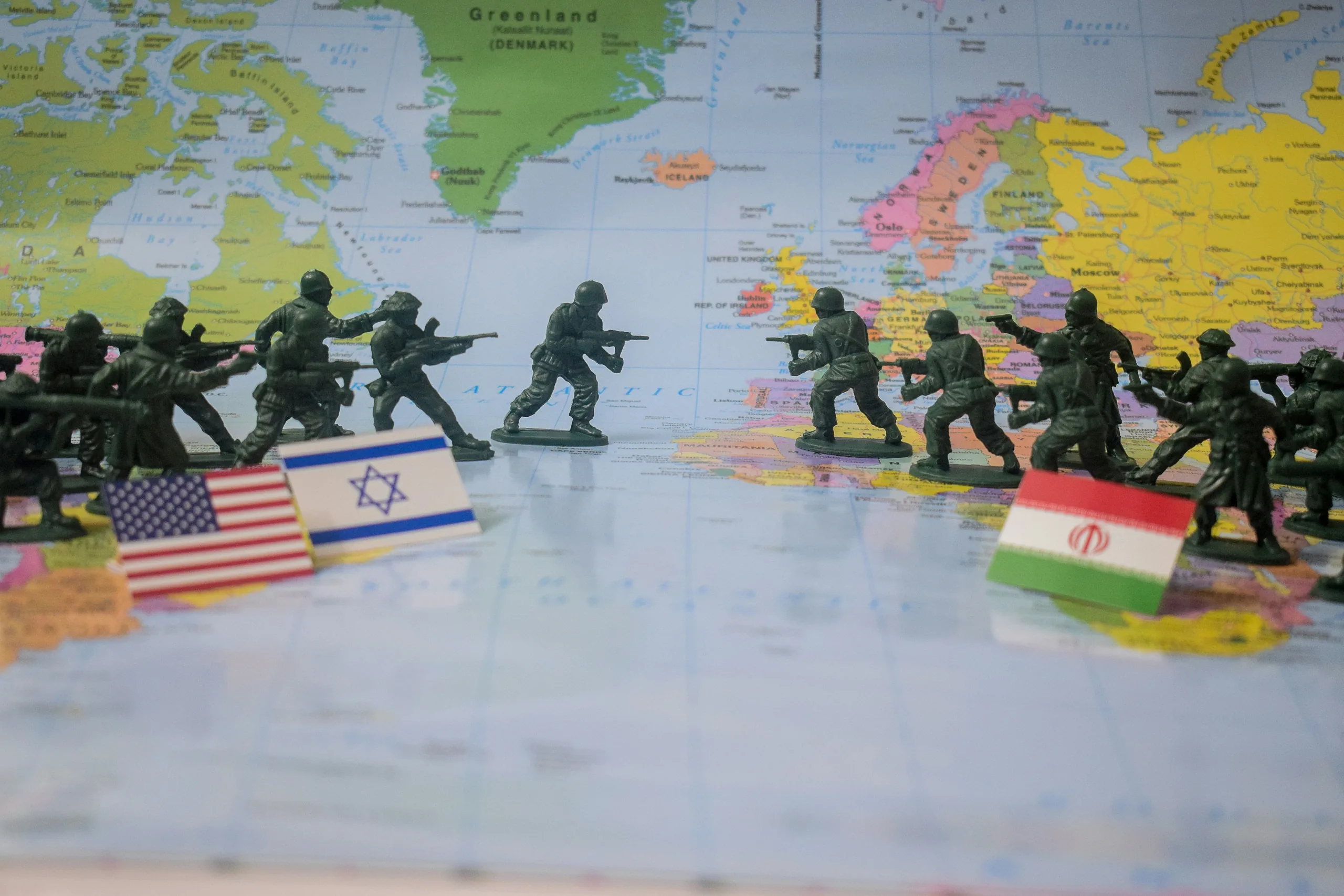
Dialogue / Afshin Matin-Asgari in Conversation with Azam Khatam / October 10, 2026
In this dialogue, Azam Khatam speaks with Afshin Matin-Asgari, special advisor on this issue, about his new book, Axis of Empire, and how Iran–US relations intersect with other factors that shape or transform the regional order in the Middle East.
Afshin Matin-Asgari is a Distinguished Professor of History at California State University, Los Angeles. He specializes in the 20th-century Middle East, modern Iran, and modern political and intellectual movements in Iran. He is the author of Iranian Student Opposition to the Shah (2002), a study of the Confederation of Iranian Students, and Both Eastern and Western: An Intellectual History of Iranian Modernity (2018); his last book, Axis of Empire: A History of Iran–US Relations (2026), was published by Verso Books.
 Azam Khatam (A.K.): Dr. Matin-Asgari, thank you for agreeing to discuss your book, Axis of Empire: A History of Iran–US Relations (2026), with us and for sharing your knowledge and insights in shaping this issue, particularly by guiding us in selecting books on Iran–US relations. Iran–US relations have long attracted scholarly attention across several disciplines. Yet interest in the subject has recently been renewed, with five or six books published around the same time as your book, some of which we feature in this issue. Would it be fair to see this renewed interest as reflecting scholarly curiosity about the failures of US policy in the post-9/11 Middle East? I am thinking particularly of the wars in Afghanistan and Iraq, as well as the establishment of dozens of US military bases across the Persian Gulf, partly intended to counter Iran. In your view, what explains this renewed interest in Iran–US relations?
Afshin Matin-Asgari (A.M.): Thank you for including my book among your reviews. I am not sure how recent books on US–Iran relations show changing scholarly understanding of the Middle East. Iraq and Afghanistan have been examples of American policy failures in the Middle East, and they do not receive major scholarly attention. Israel/Palestine continues to be the center of attention in Middle East scholarship and for good reasons. Turkey and Egypt receive less attention than Iran which has become even more important because of the ongoing war. The war has made the Persian Gulf region a central concern of scholars and global policy analysts, arguably marking a changing moment in US interventions in the Middle East, although the direction of the change is not clear.
A.K.: Turning to Axis of Empire, one of the book’s central arguments is that the United States has consistently pursued its imperial interests throughout more than a century of relations with Iran. What are these interests, and how has the United States sought to advance them over this period? How have these interests shaped its relations with successive Iranian states, both before and after the 1979 Revolution?
A.M.: US priorities in Iran have been clear, focused on oil, other commercial interests, and geostrategic control through linkage to the Iranian military under the monarchy and systematic pressure to change the behavior of post-revolutionary Iran via onerous economic sanctions, political and military pressure, and now war. As we see in the current war, the American approach was never due to misunderstanding because there was always ample information about realities on both sides. Under the monarchy, Washington chose to ignore blatant evidence of the Shah’s unpopularity and his regime’s instability. After the 1979 revolution, all experts within and outside the government knew while the Islamic Republic defied America’s imperial designs, it posed no significant threat to the US or Israel, was not building a nuclear bomb, and its regional policies at times coincided with Washington’s, for example in Iraq and Afghanistan.
A.K.: Your book examines two contrasting episodes in Iran–US relations: the US role in the 1953 coup against Mosaddeq’s government, following Iran’s nationalization of its oil industry, and the Obama administration’s pursuit of a nuclear agreement with Iran (JCPOA). What do these two cases tell us about the prospects for reaching an agreement with the United States and changing its policy toward Iran?
A.M.: Throughout the book, my narrative emphasizes the agency and responsibility of Iranian actors in their engagement with the American imperial hegemon. Thus, my account of the oil nationalization campaign and the 1953 coup is different from typical narratives in several respects. First, I locate the origins of the oil nationalization movement in working class struggles of 1920s, two decades prior to its more famous articulation by Mosaddeq’s middle-class National Front coalition. Second, I criticize Mosaddeq’s failure to recognize that both Truman and Eisenhower administrations acted to undermine him during the oil nationalization dispute with the UK. Truman’s outward gesture of support for Mosaddeq was meant to loosen the British monopoly of Iranian oil and carve out an American share in Iran’s oil. Nor did Mosaddeq have a strategy to build a party-based nationalist movement or manage relations with the communist Tudeh Party and the Soviet Union. Finally, he failed to end or curtail intimate American ties to Iran’s armed forces, leaving intact the instrument Washington would use to bring about his demise in 1953. I don’t agree with scholars who argue that regardless of his policy choices, Mosaddeq would have been overthrown by the British and the Americans.
The Mosaddeq era is not comparable to the Obama period, but, during his first term, Obama took a strong anti-Iranian stance by making existing economic sanctions more onerous. At the same time, Obama quietly initiated negotiations with Ayatollah Khamenei, which, during his second term, led to the Joint Comprehensive Plan of Action (JCPOA), agreed upon in 2015 with President Rouhani in Iran. Netanyahu and the Israel lobby tried hard but failed to prevent the JCPOA, which showed two things: First, the Israel lobby was not all powerful and, second, de-escalation, if not normal relations, between Iran and the US was possible. However, catering to the Israel lobby, Trump pulled the US out of JCPOA, which led to the hardening of Iranian positions especially when Ebrahim Raisi replaced Rouhani as Iran’s President. At that point, I think the Islamic Republic made a strategic mistake by leaving the JCPOA and increasing uranium enrichment toward bomb-building capability. Instead of deterring military aggression, Iran’s approaching the nuclear threshold seemed to justify US-Israeli allegations about the Islamic Republic’s bomb-building intention.
A.K.: Following the US and Israeli attacks on Iran in 2025 and 2026, and the Islamic Republic’s survival despite the killing of its supreme leader and military commanders, political activists have become deeply divided over the government’s motives for resisting the United States and the extent to which its resistance can be considered anti-imperialist. Your account takes a critical view of the Islamic Republic’s state-centered anti-imperialism. How do you assess its claim to anti-imperialism in light of these developments?
A.M.: On this question, my view diverges from leftist perspectives that prioritize anti-imperialism as the ultimate benchmark to evaluate political regimes. Axis of Empire shows from its 1979 beginnings, the Islamic Republic could have been considered anti-imperialist, while its domestic policies were reactionary. This understanding of the Iranian Revolution emerged in Iranian left circles during 1979–1980 and was echoed by Fred Halliday, the leading international Marxist expert on Iran, affiliated with the journal New Left Review. In fact, Halliday went as far as labeling the Islamic Republic “fascist,” calling its defiance of the US “the anti-imperialism of fools.” Chapter 5 of Axis of Empire shows how, during its first year, the Islamic Republic fashioned a constitutional dictatorship where absolute power was held by a Supreme Leader, Ayatollah Khomeini, presiding over unelected clerical institutions superimposed on a republican state frame. This was the outcome of intense post-revolutionary struggles whereby the fledgling Islamic Republic crushed the freedom of press and association, workers councils, autonomous ethnic and national minorities, and women’s rights. The turning point ushering the regime’s peculiar anti-imperialist posture was the November 1979 seizure of the American embassy in Tehran. While some leftists hailed this as a great anti-imperialist move, others saw it as a project of domestic power consolidation, diverting the revolution from its socially emancipatory agenda toward an existential faceoff with the global hegemon. In the long run, the Hostage Crisis proved enormously damaging to Iran, starting the US economic sanctions regime that is still in place, while internationally isolating the revolution, allowing Iraq to invade Iran and plunge the country into eight years of destructive war. The war further solidified the Islamic Republic into a military-security state that brutally wiped out all dissent, killing thousands of Islamic and secular leftists during the early 1980s and in the war’s immediate aftermath in 1988. The regime’s militarization intensified in the post-Khomeini decades when the Revolutionary Guards became its backbone and most powerful shareholder in Iran’s crony capitalist system. The Guards reap tremendous financial rewards by managing a black-market economy that systematically bypasses the sanctions which choke the people’s livelihood. Repeated grassroots and civil society attempts at peacefully reforming the system have been crushed violently by the state’s repressive organs, particularly the Basij militia tied to Revolutionary Guards, killing thousands of Iranians in 1999, 2009, 2018–2019, 2022–2023, and most recently in January 2026. Tens of thousands of dissidents have been imprisoned and tortured during the past five decades. If impressed by the Revolutionary Guards’ current effective resistance to US-Israeli aggression against Iran, we should remember the bloody repression the Iranian people continue to endure under a regime that now seems to be an open military dictatorship.
A.K.: You point to factional disagreements within the Islamic Republic over anti-imperialism. What were the main points of these disagreements during the Reform era and the 1990s, and later during Hassan Rouhani presidency (2013–2021)? Do you still see these disagreements today under wartime conditions, and what role have they played since then?
A.M.: The book’s last chapter covers the post–Iran–Iraq War era, when President Rafsanjani tried to reduce tensions with the US, a policy that was relatively successful while the Clinton administration probed business deals with Iran and softened its anti-Iranian rhetoric, without, however, removing economic sanctions. However, the 1990s was a time when Israel and its American lobby sharpened their anti-Islamic Republic campaign to prevent any US–Iranian rapprochement. The reduction of US–Iranian tensions reached their peak during the first Khatami presidency through Iran’s “sports diplomacy” and Khatami’s Dialogue of Civilizations campaign. That was when Secretary of the State Madeleine Albright admitted the 1953 US intervention against Mosaddeq had been damaging to Iran’s democratic prospects. But US–Iranian relations took a turn for the worse when, after September 11, 2001, President George Bush placed Iran among the “Axis of Evil” countries considered major US enemies. This turn of American policy was accomplished by neoconservatives in the Bush administration and the Israel lobby, even as the Islamic Republic was quietly cooperating with the US occupation of Iraq and Afghanistan. The Islamic Republic was accused of threatening Israel’s existence, trying to build a nuclear bomb, and supporting international terrorism. The charge of Tehran pushing its nuclear energy program toward bomb-building capability moved to the top of these allegations, where it has stayed all the way the present war.
A.K.: Two interpretations frame the nuclear dispute: the US supported Iran’s nuclear program under the Shah but opposed it under the Islamic Republic, which was no longer a compliant ally. Yet you argue that only Nixon promised the Shah domestic nuclear fuel production. Was this linked to Nixon’s secret understanding with Israel to maintain its nuclear capability without overt testing? Why did Ford and Carter oppose domestic fuel production in Iran? Were they concerned about two nuclear powers emerging in the Middle East, as Carter reportedly told the Shah in 1978? What explains this shift in US policy?
A.M.: Nixon and Kissinger encouraged the Shah’s ambitions to develop nuclear energy, agreeing to sell nuclear reactors to Iran. They did not endorse the building of nuclear bombs by the Shah, and the revolution prevented the implementation of US–Iranian nuclear energy deals, including discussions of whether nuclear fuel production could take place inside Iran. Nuclear energy deals with the Shah, along with the Nixon-era policy of massive arms sales to Iran, faced growing criticism in US Congress and media during the second half of the 1970s, when the Shah’s regime was increasingly seen as an unstable ally. Carter continued the massive arms sales program, which collapsed as the Iranian Revolution gathered momentum in 1978. While Carter’s backing of a nuclear Israel never shifted, he was forced to change his Iran policy and accept the removal of the Shah by early 1979. Post-revolutionary Iran was under intense pressure, mainly from the left, to not only end all military purchases from the US but to end relations with Washington, seen as the Shah’s supporter and the revolution’s enemy. In fall 1979, Ayatollah Khomeini suddenly adopted this “anti-imperialist” line in the service of his “Second Revolution” launched with hostage-taking at the US Embassy.
A.K.: How should we understand the achievements of IRI’s support for the Palestinian cause within your broader framework? I mean through the lens of regional conflicts and its implications for Iran–US relations?
A.M.: The Islamic Republic’s grand strategy of defying Israel, by building a regional “Axis of Resistance,” could not change the material conditions of occupation, prevent genocidal Zionist attacks on Palestinians and Lebanese, or deter Israel from invading Iran. Prior to October 7, 2023, Iran had helped construct an Axis of Resistance around Israel, forging military ties to Palestinian organizations like Hamas, Lebanon’s Shi’i Hezbollah militia, and the Bashar Assad regime in Syria. The assumption in Tehran was for this military ring to bolster Palestinian, Lebanese, and Syrian resistance to Israeli aggression, while acting as deterrence to Israel’s ultimate objective of invading Iran and overthrowing the Islamic Republic. After October 7, Israel’s ferocious and genocidal onslaught, and Assad’s collapse in Syria, rendered the Axis of Resistance largely dismantled or diminished. Meanwhile, Tehran’s direct military support of Hamas and Hezbollah bolstered false Israeli claims branding them Iranian proxies. Nor did the Axis of Resistance project ever receive meaningful popular endorsement in Iran where many saw it as a failed venture draining the country’s depleted resources without any tangible benefits, not even to Palestinians.
A.K.: Some of the books reviewed in this issue discuss Iran’s “strategic loneliness” in its geopolitical environment, arguing that it has driven governments before and after the Revolution to ally with non-state armed groups in the region. What is your assessment of this argument? Should Iran’s ties with Lebanese Shiites and its support for Iraqi Kurds, both before and after the Revolution, be understood as expansionist interference in other countries’ internal affairs or as defensive policies?
A.M.: The argument about the Islamic Republic’s “strategic loneliness” is valid because Iran has no major state actors as its allies. The recent “Mecca Agreement” between Turkey, Pakistan, and Saudi Arabia shows how Iran is excluded from regional defense pacts, while in fact being the potential adversary against whom such pacts are formed. Neither can we consider powerful global actors, like Russia and China, as Iran’s allies, though they benefit from Iran’s clash with the US and thus provide Tehran with limited diplomatic support and some relief vis-à-vis American economic sanctions. Nor can Lebanese and Iraqi Shiites or Kurdish factions be considered Iran’s strategic allies, because their backing is limited and tactical at best. Yemen’s Houthis have emerged as Iran’s most effective ally in the recent war, but the Houthis’ own fortunes are precarious, and their agenda is not the same as the Islamic Republic’s. Currently fighting for survival, the Islamic Republic attacks American military targets in its Persian Gulf neighboring countries, but this policy is not sustainable in the long run when the Islamic Republic, or its successor regime, must mend fences with its neighbors and avoid military intervention outside its borders.
A.K.: The United States has also consistently been accused by Iranian elites of supporting the “illegal and illegitimate regime” of Israel. Could you elaborate on this dynamic and how it has impacted US–Iran relations? Since when, and during which periods, has this factor played a more important role in shaping tensions with the United States? I am thinking in particular of the Ahmadinejad era and his Holocaust denial rhetoric.
A.M.: Israel is an apartheid state with a long history of illegally occupying Palestinian land and recently committing genocide in Gaza. Neither Iran nor other countries are under any obligation to recognize Israel’s inhumane genocidal regime. This is different from calling for Israel’s physical destruction, something that even Ahmadinejad did not advocate, though he stupidly dabbled in Holocaust denial. As the recent war has shown, Israel is the enemy of the Iranian people, bombing their cities, killing thousands of them, and destroying their schools, hospitals, and the infrastructure sustaining their livelihood. So, I do not agree with those who argue Iran, under any regime, should normalize relations with Israel or recognize the monstrosity the Zionist state has become.
A.K.: If we focus on Iran–US relations in the 21st century, how do you assess the impact of the emergence of an Asian capitalist power bloc, and of the China–Russia bloc, on the evolution of Iran–US relations? Liberal and neoliberal groups in Iran have consistently opposed an eastward orientation, while this closer alignment has been more strongly supported by military and oligarchic factions. What is your view on this?
A.M.: From a long-term perspective, Iran, no matter what kind of regime rules it, is shifting away from its 20th-century entanglement with America’s global imperial architecture and moving toward integration into a broad Asian economic and geopolitical bloc, into which it fits more naturally. Russia is Iran’s powerful neighbor and China is a global superpower rivaling the US. Iran’s trade partners are its neighbors, including the Gulf states and India. Neoliberals who advocate Iran’s realignment with Western Europe and the US are in denial of 21st-century realities. They also ignore the fact that almost half a century of onerous American and European sanctions has been an act of war against the people of Iran who have borne the brunt, while the regime has adapted and survived them. So, the Islamic Republic’s alignment with Russia and China is understandable and even more so considering the present war’s destructive impact on the Iranian nation.
A.K.: How have US imperial strategy and Israeli regional interests converged to shape this war? Your book traces Israel’s strategic shift in the 1990s, when it increasingly replaced its hostility toward Arab states with hostility toward Iran as the peace process with the Palestinians and Arab countries advanced. You also note AIPAC’s role in shaping George W. Bush’s designation of Iran as part of the “Axis of Evil.” If Israeli interests were the main driver of this war, and Iran has demonstrated the military and strategic capacity to resist, are we witnessing a shift in the regional order since the 1970s—one in which regional powers have become more consequential actors vis-à-vis global powers?
From a long-term perspective, Iran, no matter what kind of regime rules it, is shifting away from its 20th-century entanglement with America’s global imperial architecture and moving toward integration into a broad Asian economic and geopolitical bloc, into which it fits more naturally.
A.M.: There is now almost unanimous consensus that Prime Minister Netanyahu prevailed upon Trump to go to war with Iran. Thus, Israel finally achieved the goal it had persistently pursued for three decades. Many, if not most, observers also agree that for decades Israel has been the most powerful actor shaping US policy in the Middle East. At the same time, we see growing recognition, in the US Congress, foreign policy establishment, media, and among the public, that unconditional support of Israel is detrimental to American interests, no matter how they are defined. This sentiment is spreading exponentially in the wake of the current war and is now shared even by segments of Trump’s MAGA base. The war with Iran has acutely exposed a dangerous fault line in the architecture of America’s global imperial standing, whereby a bellicose elite has repeatedly dragged the country into failed military engagements in Iraq, Afghanistan, Iran, the Persian Gulf states, and Lebanon. Israel has been involved in all these ventures, often acting as the blunt instrument of the American empire, though it also has its own specific agenda, i.e., upholding a genocidal apartheid state at any cost. Given the failure of the current US-Israeli war against Iran, we have reached an historical inflection point where American imperial hubris and overreach have disrupted the global economy and Washington’s relations with its Gulf region and NATO allies, with Russia and China waiting in the wings to exploit America’s loosening grip on the axis of its empire in the Middle East.
A.K.: Do you think the Islamic Republic might succeed in securing an agreement in this war that includes the lifting of sanctions? Or could the prospect of normalizing relations emerge in the future?
A.M.: I can’t see how anyone can predict the outcome of this war, particularly given the fact that Trump randomly shifts his policies, attacks in the middle of negotiations, and voids agreements he himself might make. Trump’s war objectives were never clear and his current focus on supposedly preventing an Iran nuclear bomb is an obvious excuse for prolonging the war. Iran is not building nuclear bombs and lifting US sanctions or other incentives are not necessary to change this. So, I don’t see Trump abandoning the sanctions leverage until Iran surrenders to maximalist US-Israeli demands. After almost fifty years of hostility, destructive economic warfare, and the current devastating war, normal US–Iran relations seem like a fantasy. Unfortunately, the best realistic outcome at the moment seems to be a fairly stable ceasefire, allowing both sides to slowly reduce tensions and recalibrate their attitude toward each other.
A.K.: Your book provides substantial evidence of the commitment to independence among leftist, nationalist, and Islamist groups. Yet this sentiment seems to have weakened among Iranians after half a century of anti-Americanism. During the Dey protests in January 2026, some young protesters in Iran may have viewed Trump as a potential “savior.” These developments have sparked debates about the people’s right to define who their “enemy” is—that is, the idea that the state is not the only actor entitled to determine Iran’s enemies. What do you think of this idea? Are there historical precedents in Iran where people’s views of foreign enemies differed from the state’s? What implications does this outlook have for the future of politics in Iran?
A.M.: A significant portion, though not a majority, of Iranian public opinion might have welcomed US-Israeli military intervention against a very unpopular regime. But I think the actual experience of the war, including massive suffering inflicted on ordinary people and the destruction of the infrastructure sustaining their daily lives, has shown many people the irrationality of wishing for a foreign savior. Monarchists who endorsed the US-Israeli invasion of Iran have suffered a major setback, while a portion of the population, and not those paid by the regime to rally in public squares, seem to, for the moment, stand by the Islamic Republic out of nationalistic sentiment. All of this, plus the fog of an ongoing war, makes it extremely difficult to see clarity in Iran’s political future, but existing conditions make the path of gradual reformist transition beyond the Islamic Republic much more difficult.
Related Content
 Editorial Note: Iran and the New Middle East? (©Background) GlobIS Review, Issue 6
 How Sanctions Work: Iran and the Impact of Economic Warfare (©Background)
 Rethinking Iran’s Grand Strategy with Vali Nasr (©Background)
 War as the Production of Space (©Background)
 On the Uses and Disadvantages of Exile and Diaspora for Iranian Studies (©Background)
Comments are closed.