New Releases*
What Is the Middle East?
The Theory and Practice of Regions
Cambridge University Press, 2025
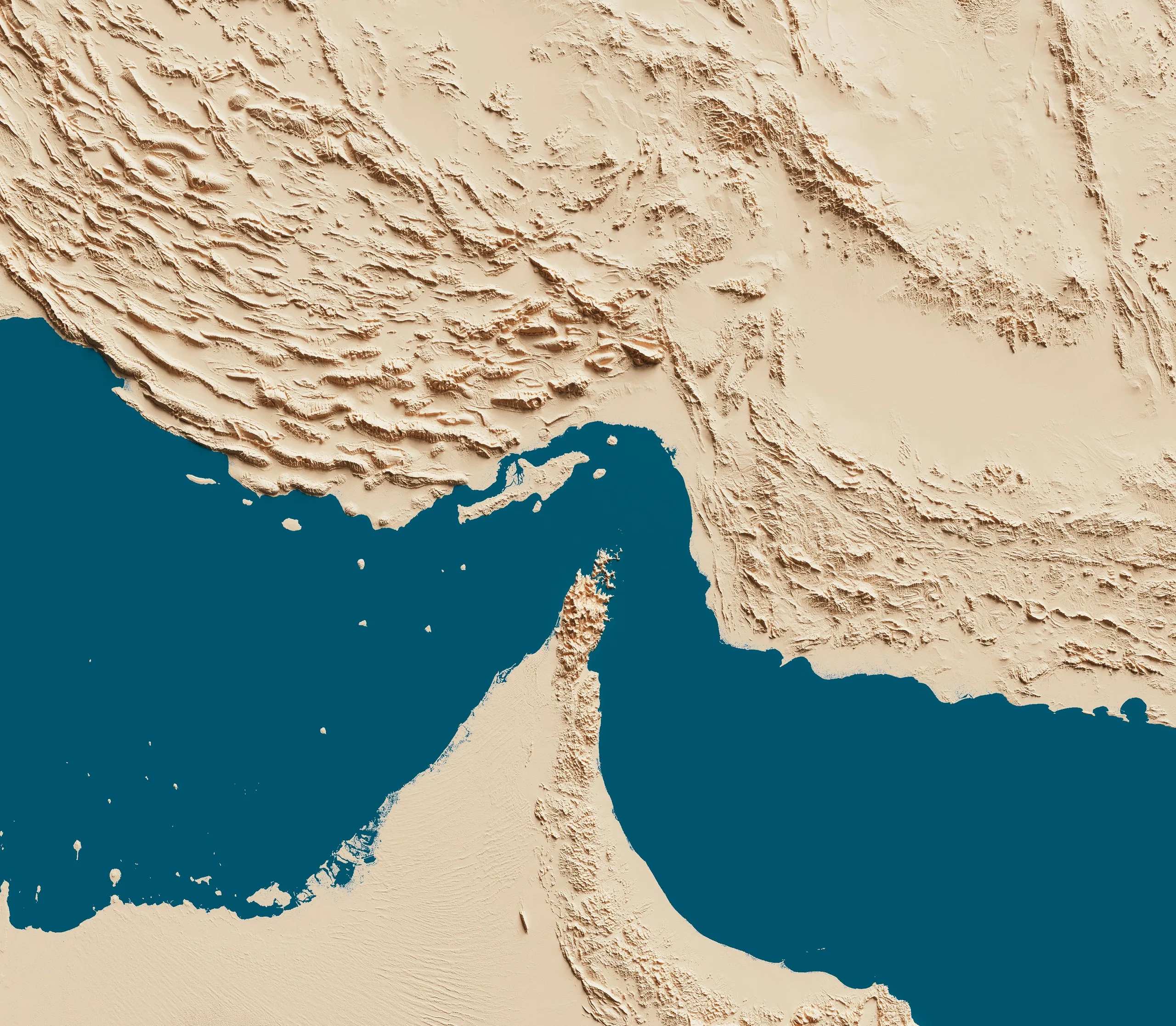
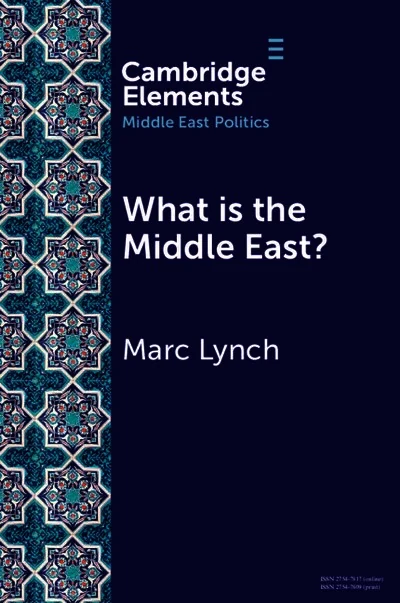
What Is the Middle East?: The Theory and Practice of Regions, by Marc Lynch, questions a region whose boundaries are widely assumed but rarely defined or justified. Lynch traces how today’s idea of the Middle East took shape through colonial rule and Cold War politics, and how it became embedded in both global diplomacy and American academia. He shows that competing definitions of the region carry real strategic weight, reflecting ongoing struggles over its political identity. The book argues that treating the Middle East as a single, coherent unit has skewed political-science research by narrowing which cases scholars compare and by obscuring the deeper politics behind regional labels. Lynch calls for a broader, more flexible understanding of the Middle East, one that accounts for connections stretching beyond its conventional borders, as part of a wider case for comparative area studies.
America and Iran: A History, 1720 to the Present
Alfred A. Knopf, 2021
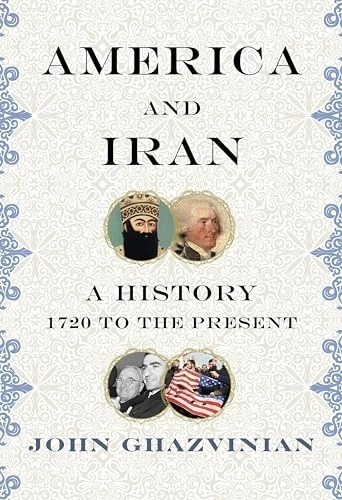
America and Iran, 1720 to the Present, by John Ghazvinian, traces three centuries of relations between the two nations, beginning with the Persian Empire that so impressed Thomas Jefferson and John Quincy Adams, and an Iran that once looked to America as a model of government. Drawing on extensive archival research in both countries, including rare access to Iranian government records, the Oxford-trained, Iranian-born historian organizes this history into four phases: an early period of mutual admiration, a stage of growing contact, an era of close strategic partnership, and finally decades of deep mutual distrust. Ghazvinian pinpoints where and how the relationship broke down, explaining why two nations that once held each other in genuine esteem became such determined adversaries, and why this outcome was never inevitable.
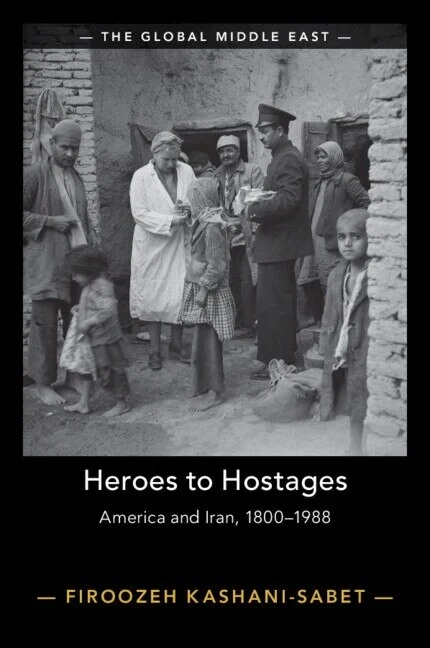
Heroes to Hostages: America and Iran, 1800–1988
Cambridge University Press, 2023
Heroes to Hostages: America and Iran, 1800–1988, by Firoozeh Kashani-Sabet, revisits a US–Iran relationship that, before the last half-century of hostility, was once marked by genuine cooperation. Spanning two turbulent centuries, the book asks when and how this partnership unraveled. Drawing on both English- and Persian-language sources, many previously overlooked, Kashani-Sabet argues that the rupture was not caused solely by dramatic events such as the 1953 coup or the 1979 revolution, but developed gradually through social and cultural as well as diplomatic shifts. Told largely from the vantage point of Iranian society, the book follows both countries through war, decolonization, and revolution, offering a fresh history of a rivalry that continues to shape regional politics today.
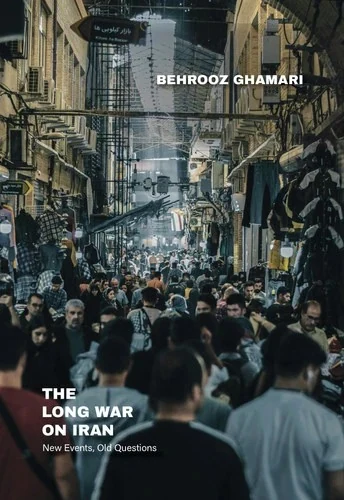
The Long War on Iran: New Events, Old Questions
OR Books, 2026
The Long War on Iran: New Events, Old Questions, by Behrooz Ghamari, examines the decades-long standoff between the United States and Iran, shaped by miscalculation and conflicting ambitions on both sides. Drawing on twenty years of political analysis, Ghamari traces the history of American intervention in the region, focusing on sustained sanctions and Washington’s persistent view of the Islamic Republic as an obstacle to its influence. He argues that, despite state repression, Iranian society remains dynamic, with active intellectual, cultural, and social-justice movements that continue to reshape the country’s politics. Challenging the common portrayal of Iran as a monolithic, totalitarian state, Ghamari calls for a more informed and nuanced American approach to the region, warning that failing to recognize Iran’s internal transformations will only perpetuate the same unresolved questions.
Trump and Iran: From Containment to Confrontation
Lexington Books, 2019
Trump and Iran: From Containment to Confrontation, by Nader Entessar and Kaveh L. Afrasiabi, examines how US–Iran relations grew sharply more confrontational under the Trump administration, to the point that war between the two countries became a real possibility. The authors trace the administration’s withdrawal from the nuclear accord and the reimposition of sanctions as part of a broader break from the containment strategy pursued by previous US administrations, driven by a cabinet with a long history of hostility toward Tehran. They argue that this shift toward regime change carried significant consequences not only for Iran but for its neighbors and for long-term stability across the Persian Gulf. Drawing on a social-scientific framework, the book analyzes the escalating pattern of hostility between Washington and Tehran and considers the risk that this dynamic could spiral into open conflict.
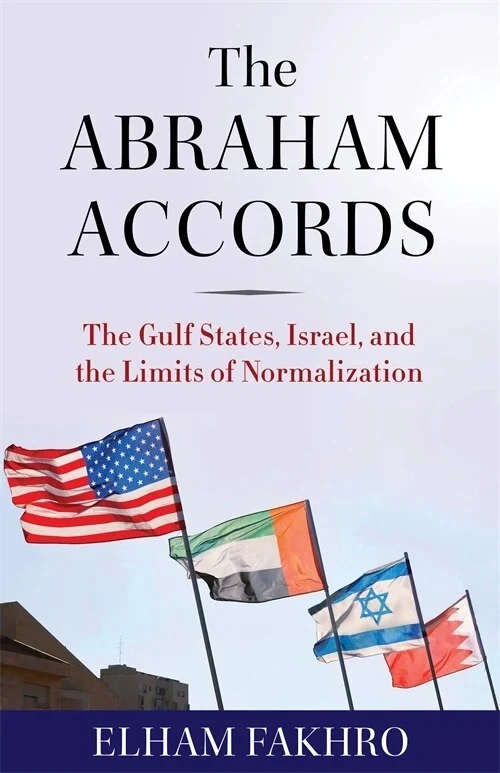
The Abraham Accords: The Gulf States, Israel, and the Limits of Normalization
Columbia University Press, 2024
The Abraham Accords: The Gulf States, Israel, and the Limits of Normalization, by Elham Fakhro, examines the 2020 agreements that normalized relations between Israel and the United Arab Emirates, later joined by Bahrain—the first such accords between Israel and Arab states in over two decades. Fakhro asks how these agreements came about, why the parties saw normalization as being in their interest, and how the accords have reshaped Middle Eastern politics and the question of Palestine. She shows how shared security concerns, economic interests, and regional political shifts drove an unexpected strategic alignment between the Gulf states and Israel, bringing long-covert ties into the open, and examines the Trump administration’s role in brokering the deal. Fakhro argues that Washington’s growing focus on expanding normalization came at the expense of attention to the Israeli-Palestinian conflict, entrenching conditions that continue to destabilize the region.
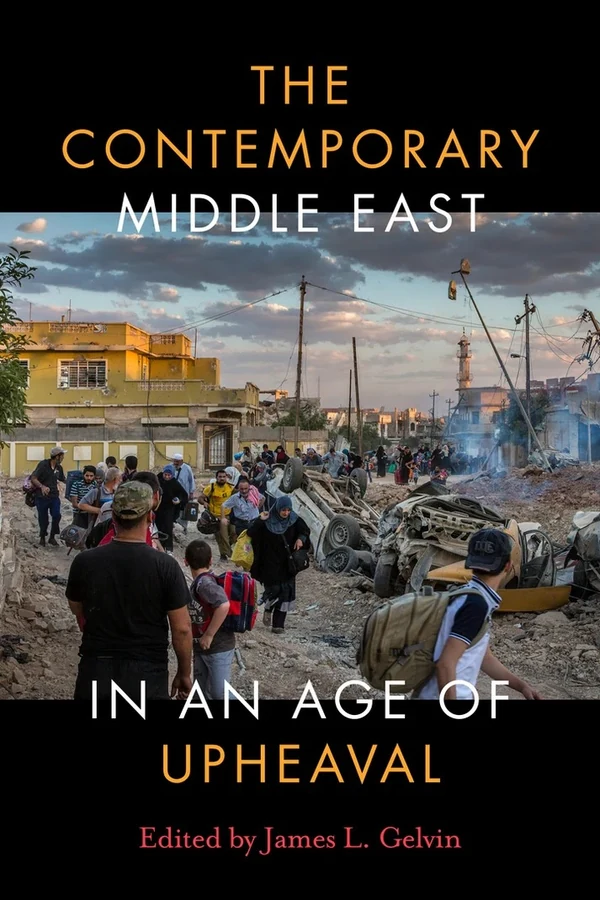
The Contemporary Middle East in an Age of Upheaval
Stanford University Press, 2021
This book examines the emergence of the New Middle East in four sections: continuity and change in the neoliberal state; culture and community; old states and new dilemmas; and global and regional dynamics. The first section traces the Arab revolutions to economic adjustment policies. The second focuses on the transformation of political Islam and Islamism. The third explores political changes in Saudi Arabia, Turkey, Syria, and Iraq amid Wahhabism, occupation, war, and refugee flows. The last examines regional proxy wars, once driven by global powers during the Cold War but now increasingly initiated by regional actors. The introduction identifies the occupation of Iraq, the Arab Spring, and rapid population growth as key developments. The emerging regional order is marked by a crisis of political legitimacy, state-sponsored sectarianism, more state interventions in neighboring countries, the US’s growing tendency to withdraw, and the declining significance of the Arab-Israeli conflict.
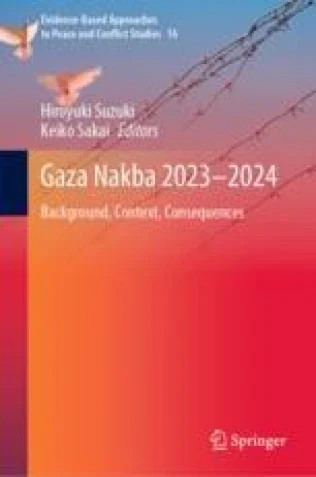
Gaza Nakba 2023–2024: Background, Context, Consequences
Springer, 2025
The Gaza Nakba 2023–2024: Background, Context, and Consequences argues that the Gaza war cannot be understood as an isolated military confrontation triggered by October 7, 2023, but must be situated within the longer history of the Israeli-Palestinian conflict and the enduring structures of occupation, displacement, and settler colonialism. Through an interdisciplinary examination of Gaza’s humanitarian crisis, Palestinian resistance and political culture, Israeli public opinion, regional responses, Iran and the “Axis of Resistance,” and the international legal dimensions of the war, the volume shows how the conflict has exposed the profound limitations of existing mechanisms of conflict management and peacebuilding. At the same time, it highlights a widening gap between the universal norms proclaimed by the international order and their uneven application in practice. The contributors further argue that the war is reshaping the politics of international response by expanding the role of Global South states, non-state actors, and civil society movements in challenging established approaches to the conflict and the international order that sustains them.
* Summaries are adapted from publishers’ websites with minor edits.
Related Content
 Editorial Note: Iran and the New Middle East? (©Background)
 New Horizons in Studying Iran–US Relations (©Background)
 The Crown Center: Middle East Studies at Regional and Global Intersection (©Background)
 When Categories Cease to Explain: Political Science and the Middle East after the Arab Uprisings (©Background)
 Iran’s National Security on the Border of Thought and Might: Re-reading Political Rivalries in the Contemporary Middle East (©Background)
 The Axis of Resistance and the New Middle East (©Background)
Comments are closed.