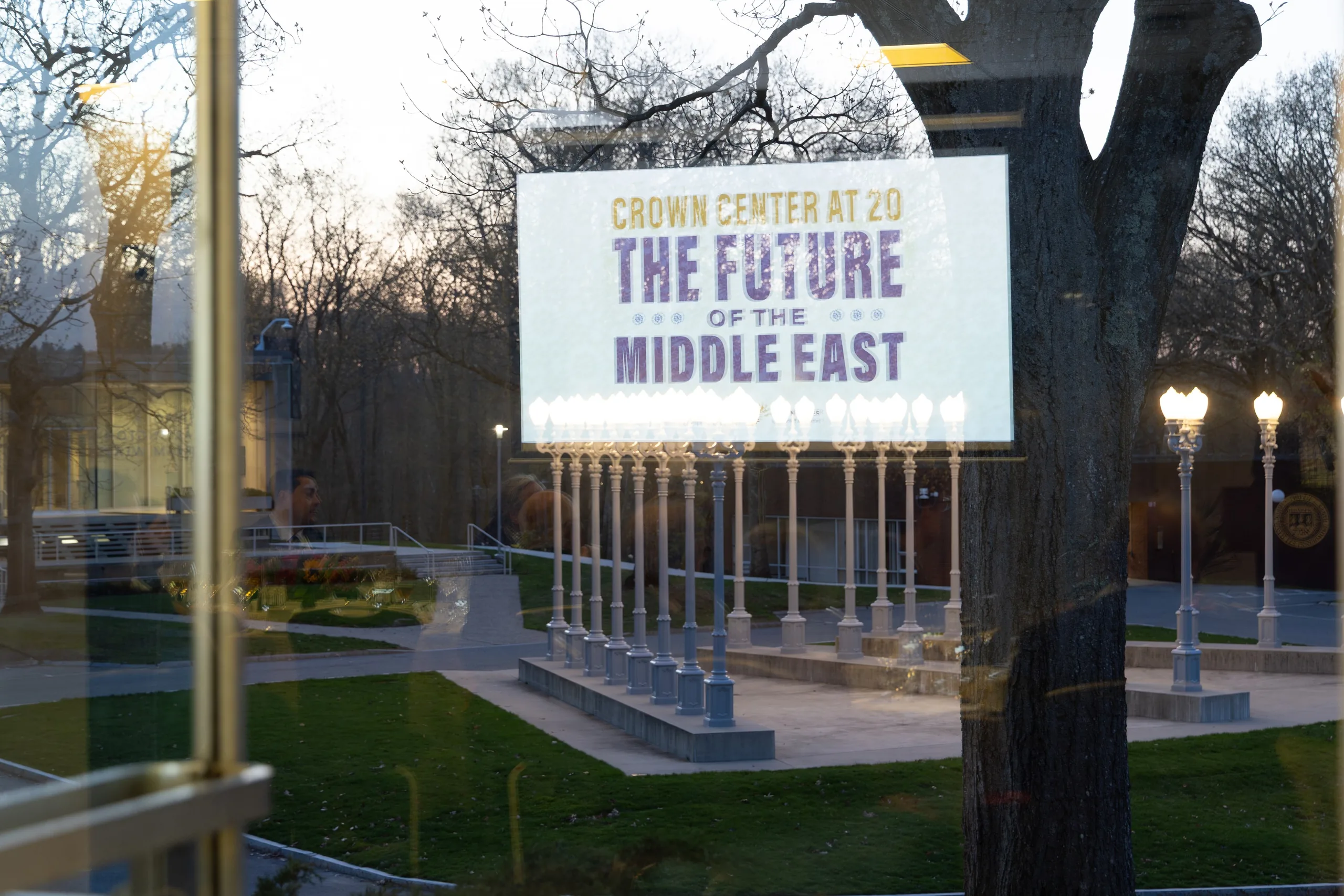
The Crown Center: Middle East Studies at Regional and Global Intersection (©Background)
Dialogue | Reading Time: 14 minutes
The Crown Center
Middle East Studies at Regional and Global Intersection
ISSN 2818-9434
Dialogue / Naghmeh Sohrabi and Ramyar Rossoukh in Conversation with Arang Keshavarzian / August 13, 2026
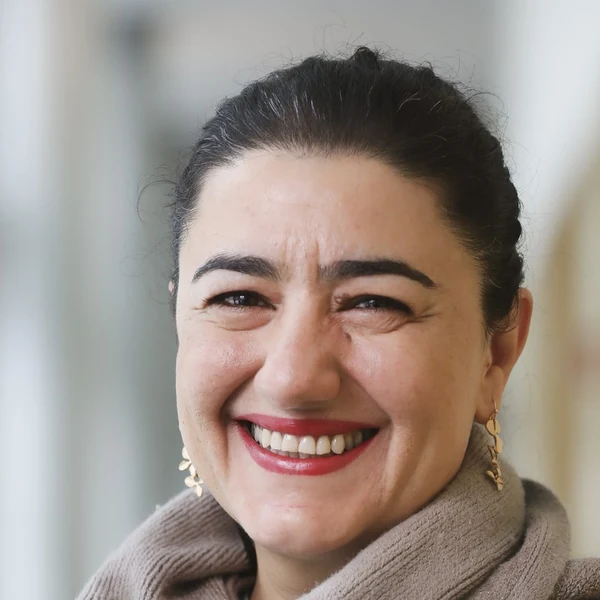
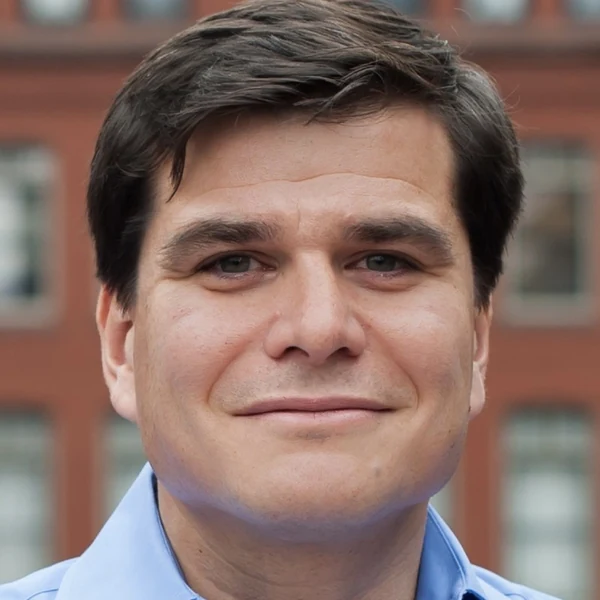
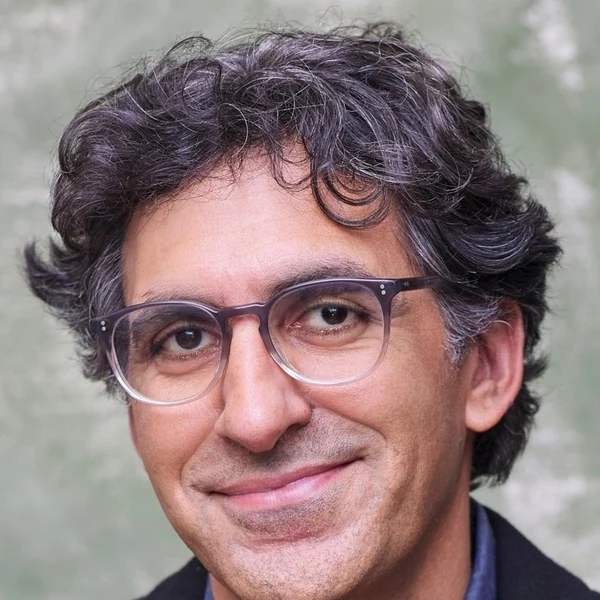
In this conversation, Arang Keshavarzian discusses the history of Middle East studies and recent regional developments with Naghmeh Sohrabi and Ramyar Rossoukh.
Naghmeh Sohrabi is the Charles (Corky) Goodman professor of Middle East History and the Director for Research at the Crown Center for Middle East Studies at Brandeis University. She is an historian of modern Iran and is currently finishing a book about the revolutionary generation in Iran titled The Intimate Lives of a Revolution: Iran 1979. Her scholarship on the 1979 revolution has been published in History Compass, International Journal for Middle East Studies, Comparative Studies of South Asia, Africa and the Middle East, and various edited volumes. Her analyses of contemporary Iran have been featured across a variety of media in Persian and English including the BBC and Equator magazine. Prof. Sohrabi regularly publishes translations of writings from inside Iran on her substack These Are the True Things.
Ramyar Rossoukh is an anthropologist who focuses on culture and media in the Middle East. He spent time with the Bakhtiyari, a tribal group in southwestern Iran, before undertaking a three-year fieldwork project on the Iranian film industry, which is the subject of his first book project. Rossoukh co-edited (with Steven Caton) the volume Anthropology, Film Industries, Modularity (Duke University Press, 2021), and contributed one of the volume’s essays on the first uses of digital film editing technologies in Iran. He holds a PhD in anthropology and Middle Eastern Studies from Harvard University and is the Associate Director for Research at the Crown Center for Middle East Studies at Brandeis University.
Arang Keshavarzian (A.K.): The Crown Center is one of roughly fifteen academic centers in the United States focused on the Middle East. Some of these centers date back to the 1950s and 1960s when the US invested in regional knowledge in the context of the Cold War and other are newer, such as Crown. Like many of these centers, it offers interdisciplinary coursework, creates spaces for scholars to present research, and develops research projects. Some centers work closely with academic departments, while others are more autonomous. How would you describe the Crown Center, and how is it similar to or different from other Middle East centers in the United States?
Naghmeh Sohrabi: The Crown Center was established in 2005 through a generous gift from the Chicago based businessman and philanthropist, Lester Crown.
It was established with several core ideas: The first was to look at the region as an integrated whole. Rather than focusing on one place or giving primacy to a single country in the Middle East, the idea was to analyze the Middle East as a region and to look at the interconnections among events. There is a tendency, particularly in the United States, to treat Iran as simply “Iran” when Iran is in the news, or Palestine as simply “Palestine,” as though events in one country or two countries away do not have ripple effects and there are no linkages between events across the region.
The second idea was whether in a polarized atmosphere we could create a center in which people could engage in what the founding director, Shai Feldman, called “dispassionate analysis.”
People sometimes interpret dispassionate analysis to mean an absence of passion. That is not what we mean. It means lowering the temperature in the room enough that people can disagree with one another without disagreement becoming a reason to exclude or cancel someone. That idea runs through our public events, our community, and our publications.
The third principle was interdisciplinarity. You cannot have an integrated view of the Middle East without having a center that is multidisciplinary. And the fourth was the commitment to public-facing knowledge.
 Ramyar Rossoukh (R.R.): One thing that distinguishes the Crown Center is that it is explicitly a research center rather than primarily a university-based Middle East studies center. We are relatively small, with a core group of faculty, but we build a resident scholarly community each year through our fellows, who are recent PhDs and faculty who spend their sabbaticals with us.
The fellows are not simply given an office and left to work independently. The center is a space in which fellows, faculty, and graduate students read one another’s work, participate in workshops and retreats, and spend a great deal of time talking across different interests. People are working on different countries and different subjects, so the center is not only interdisciplinary; it also tries to use different disciplinary perspectives productively.
That structure frees fellows from having to think entirely within their disciplinary silos. It encourages them to think across the boundaries of their work. That also connects to the commitment Naghmeh mentioned to producing public-facing scholarship.
Much of our programming deliberately reaches beyond an academic audience. When we invite someone because they have an important new book, for example, we do not want them simply to discuss the book’s intervention in the scholarly literature. We use the research as a jumping-off point for thinking about larger questions in the contemporary Middle East.
We do the same thing with our publications, including the Middle East Brief series and Crown Conversations. We ask authors to think about what someone outside their immediate disciplinary or country specialization can understand from their research. So I would describe what makes the Crown Center distinctive as a combination of a resident research community, a fellowship program, an interdisciplinary structure, and a commitment to taking scholarship beyond its immediate disciplinary setting and making it legible to a broader public.
Naghmeh Sohrabi (N.S.): Just to add to what Ramyar said, I think in 2005, the language of “public-facing scholarship” was not as common or as emphasized in universities as it is now. At the Crown Center, it was a commitment from the beginning.
At the time, people sometimes understood public-facing work to mean that your work had to be policy-relevant. But that was not what we mean. Scholars spend years developing knowledge through language study and through time spent working on and in the region. We have a social responsibility to translate some of that knowledge for audiences beyond the academy.
 A.K.: You both work extensively on modern Iran. The Center itself has scholars working on Iranian economics, history, society, and politics, as well as fellows and graduate students whose work addresses different dimensions of Iran. How do you integrate Iran into this broader understanding of the Middle East as an integrated whole? What are the benefits and challenges of thinking about Iran in relation to other histories, geopolitical struggles, and social movements?
R.R.: As noted earlier of the things that the Crown Center has tried to do since it was established is to treat a country such as Iran as an integral part of how we think about the Middle East as a whole, rather than as a separate field of study that becomes interesting only after a crisis emerges.
That means bringing deep knowledge of Iran into conversation with the rest of the region, but it also means asking what looking outward from Iran allows us to see differently about the region as a whole.
One concrete example is our recent work on the Iran War, which is included in this issue. We look at the war from multiple levels, not only through Iran’s domestic politics but also through the regional dimensions and larger geopolitical dynamics surrounding it. Over my time at the Crown Center, I have learned how difficult it is to understand Iran—or any country—without factoring in these broader processes. It makes us rethink the boundaries of what we are actually studying.
I have found the same thing in my own work on Iranian cinema: even a seemingly national subject looks very different once you follow the technologies, labor, and circulation that connect it to wider regional and global processes.
N.S.: There is a tendency in American media—which is something we are always thinking about at the Crown Center—to construct a particular understanding of what the region is. Our goal is not necessarily to “correct” that understanding but to add nuance to it.
There is a tendency to make Iran stand singularly outside of history. It is the Islamic Republic of Iran; it is the mullahs; it is this or that. One example of why this is problematic is the notion that because Iran is an Islamic Republic, it somehow does not participate in a global market-capitalist system or operate within a global economy that shapes its political decisions. But when you study Iran as part of a wider region, you begin to see that many things we think are singular to Iran are actually replicated elsewhere, perhaps in different forms and through different factors. You see similarities and the ways ideas travel across the region. That does not necessarily provide solutions, but it gives you better insight into how to think about a conflict or a war and about possible paths forward. You have to have a comparative perspective for that.
The current war is a particularly good example. You cannot understand it by thinking about one country alone. As your own work shows, the Persian Gulf is a multi-country space. If I analyzed the war only by talking about Iran and no other country, I would simply be missing part of the analysis.
Naghmeh Sohrabi: When you study Iran as part of a wider region, you begin to see that many things we think are singular to Iran are actually replicated elsewhere, perhaps in different forms and through different factors. You see similarities and the ways ideas travel across the region. That does not necessarily provide solutions, but it gives you better insight into how to think about a conflict or a war and about possible paths forward. You have to have a comparative perspective for that.
A.K.: What you are describing is also a kind of de-exceptionalization of Iran: thinking comparatively or dialogically about events and histories in Iran and beyond treats Iran not as an enclosed box. That seems important in the United States, but perhaps also in Iran, where, for understandable historical reasons, people can sometimes see Iran as uniquely confronted with US hegemony, economic crisis, and other problems.
N.S.: Absolutely. Comparison can help make visible the ways in which problems that appear unique to Iran are also part of wider regional and global processes.
A.K.: Another dimension of the Crown Center’s work is its engagement with policy analysts, think tanks, and people in Washington. These experts are often translated into Persian and invited onto BBC Persian, Voice of America, and other Persian-language media, and in some ways they are more visible in the broader Persian-language mediascape than university professors. What is the logic behind engaging with policy analysts, and what has that experience been like?
N.S.: The logic begins with a simple question: Do scholars have a responsibility toward the world in which they live? The Crown Center was founded on the idea that they do and government is an important part of this world.
But just because the question is simple, it doesn’t mean it is simple or easy to create this engagement between the policy and scholarly worlds.
In the United States, these two worlds often understand themselves as opposites rather than complements. The scholarly world sometimes believes that by refusing to engage the policy world it is speaking truth to power. The policy world often rejects the scholarly world by calling it irrelevant to “real politik.”
I once had a conversation with people in the policy world in which I was giving a detailed explanation of Iran’s political system. The policymaker stopped me and said, essentially, “I don’t have time for nuance. I need to know: Is the Supreme Leader good or bad? Is Shiism good or bad? That is the space in which the policymaker wanted to operate. It goes against every fiber of a scholar’s body. Scholars do not generally like to live in black and white. We are comfortable with gray areas. So, in answer to the question of how to engage with the policy world, the answer is: with great difficulty, and by finding different avenues, including our publications.
At the Crown Center, we try to produce what we call policy-relevant scholarship, but we deliberately do not make policy recommendations. That goes back to the principle of dispassionate analysis. We do not want to advocate for one particular position.
R.R.: I would add that one way the Crown Center has intervened is by changing the question being asked, or at least shifting what is understood to be the most important question.
Think tanks often frame a problem in terms of immediate policy needs. We can sometimes shift that framing and ask what the problem looks like from inside Iran, for example, rather than beginning with the question of what the United States should do about Iran.
That means grounding the question in the deep regional knowledge that exists at the Crown Center. It also means avoiding the emphasis on prediction that can dominate policy conversations.
A.K.: Right. Rather than asking, “Will the Islamic Republic fall?” or “What should the United States do about Iran?” the questions might be: What is actually happening? To whom is the war happening? How are different strata of Iranian society being affected?
R.R.: Exactly. There does seem to be a recognition that the questions being asked and the knowledge that currently exists are inadequate to approach some of the challenges we face. Perhaps that is contributing to a broader range of voices being included. Whether those voices actually affect policy is a separate question.
One thing a place like the Crown Center can do is create some space in which the urgency with which think tanks identify problems can be questioned. We can open up space for depth, context, and historical explanation to contribute to the conversation.
A.K.: The Crown Center was established in a particular historical moment, in 2005, shortly after 9/11 and during the Iraq War. We are now in a very different moment. The 2026 war on Iran has been remarkably unpopular in the United States, including from the beginning. At the same time, there has been increasing discussion of a decline in US global power, the rise of China and East Asia, and the emergence of a more multipolar world.
Within that broader transformation, people have also begun talking about a “new Middle East.” What does that phrase mean? What are the new realignments and reorderings? And what is the role of an area-studies center in this changing and fluid global structure? Is it still useful to think about the Middle East as an integrated whole when the world around it is itself undergoing such profound changes?
R.R.: I do not have a simple answer, but I think these discussions point to the continued importance of area studies.
Some of the changes we are describing are obviously real. But one of the conversations we have all the time at the Crown Center is about distinguishing what has actually changed from what has persisted. The depth of knowledge that exists here allows us to contextualize the effort to categorize something as new and to think through what that designation actually means.
Ramyar Rossoukh: I do not have a simple answer, but I think these discussions point to the continued importance of area studies.
A good example is Iran’s domestic politics. There has been discussion about a new generation now governing Iran or taking over. But we need to be cautious about that claim. There is a great deal that we do not know about what is happening inside the political system or how decisions are being made. And even if we simply look at the individuals who are now in charge of many things, they are also important political figures who were active before the war.
That is a small example of what it means to think historically about claims of a new regional order. Even in the case of Iran, it suggests the significance and value of expertise that is not committed to generalizing too quickly but is grounded in deep knowledge of the region. And I think this also speaks to the broader question of what a field such as Middle East studies can do. We can take an event that is often presented as a rupture and place it in longer histories, while also examining the transformations that followed it.
The point is not to deny that things change. It is to ask what has changed, what has persisted, and how those things interact.
N.S.: In the 1990s, people thought Middle East studies and area studies were going the way of Soviet studies and would essentially disappear. Then 9/11 happened, and there was a burst of funding for positions. I received my PhD at a time when there were roughly forty different jobs just in Middle East history. There were jobs throughout the field. We came of age in a post-9/11 academic boom in which money was being put into positions, language programs, and area studies.
That boom eventually petered out. Some of the decline has to do with the broader way in which funding is being siphoned away from higher education, not only in North America but also in Europe and elsewhere.
But if you simply look at what has happened to the world, the recent US-Israel war on Iran is an argument for Middle East studies as something that needs to exist.
If we think about the linkages beginning with October 7, 2023, and follow them through to the present, the Middle East as a region has been embroiled in conflict with the United States in different ways. No part of the region can simply say, “This has nothing to do with me.”
That makes an argument for continuing to think about the Middle East as an object of study. But how we think about it has changed. We should not think about the Middle East as a whole that is disconnected from the rest of the world. We should think about the region within a global context, considering both the linkages within the region and the linkages between the region and the wider world.
The practical problem is that the gutting of higher education is having real effects. After 2001, money was put into positions, and the Crown Center itself emerged from that period. Now we are seeing the opposite trend. Universities are eliminating programs and majors, and the resources available for this kind of scholarship are shrinking.
We are therefore in a strange situation. The reality on the ground requires the study of the Middle East as a whole if we want to understand what is happening. But the economics of higher education are making that study more difficult.
And that returns us to the reason for thinking about the Middle East as a region. The region is not isolated from the rest of the world, but neither are its internal connections incidental. We need to think about both.
A.K.: So perhaps the challenge for Middle East studies is not to abandon the category of the region, but to rethink what it means to study a region in a world in which regional and global processes are increasingly intertwined.
N.S.: Exactly.
R.R.: Yes
A.K: Many readers in Iran may not be aware of the extent of the contraction of higher education in North America, and also in Europe. People may apply to graduate programs and discover that there are fewer places for MAs or PhDs, or that a department they had planned to apply to is being closed.
N.S.: I still think people should get higher education, and I do think people should get PhDs.
But it is important to understand how the shrinking academic system affects people coming from Iran. You may be fortunate enough to obtain a student visa, complete a PhD, and then have to find a job. The problem is that the system that supported the creation of that knowledge is increasingly unable to support people after they have created it.
On one hand, the knowledge being produced is extremely important to understanding what is happening in the world. On the other hand, once that knowledge has been produced, there is much less of a support system that allows scholars to continue working in universities in North America and Europe, not to mention the dismal situation of universities inside Iran.
Related Content
 Editorial Note: Iran and the New Middle East? (©Background) GlobIS Review, Issue 6
 New Horizons in Studying Iran–US Relations (©Background)
 New Horizons in Persian Gulf Studies (©Background)
 When Categories Cease to Explain: Political Science and the Middle East after the Arab Uprisings (©Background)
 Global Middle East (©Background)
Comments are closed.