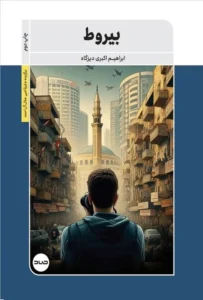
A novel about a young Iranian with a seminary background who travels to Lebanon to work on a documentary about Imam Musa al-Sadr and rethinks his faith and belonging.
Books, films, reports and more on Iran and its region.
A novel about a young Iranian with a seminary background who travels to Lebanon to work on a documentary about Imam Musa al-Sadr and rethinks his faith and belonging.
A study of how novels by Iraqi women are translated from Arabic into English, read through feminist translation theory.
An anthropological study of how Iranian Dutch people talk about sexuality, at a time when sexual and gender norms are treated as measures of immigrants’ cultural belonging.
Leading political scientists survey a decade of research after the Arab uprisings and show how the field rethought authoritarianism, protest, identity, security and migration.
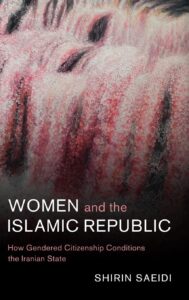
A study of how non-elite women’s practices of citizenship have shaped the making of the Iranian state since the revolution, from wartime to the present.
A comparative study of why the Arab uprisings of 2010–2011 led to democratic progress in some countries and to stagnation, repression or war in others.
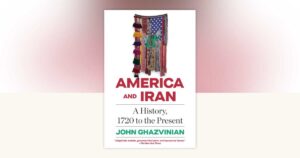
A history of relations between the United States and Iran over three centuries, from early mutual admiration to decades of deep distrust.
An ethnography of Indian labour migration to oil projects in the Gulf, following workers, recruiters, officials and companies from Indian villages to oilfields and back.
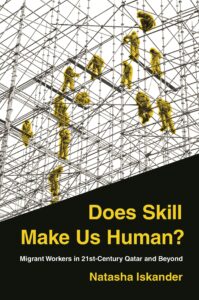
A study of migrant construction workers in Qatar before the 2022 World Cup, showing how the label of ‘skill’ works as an instrument of control.
Short essays showing how the Middle East has long been connected to the rest of the world through religion, science, culture, trade, migration and political movements.
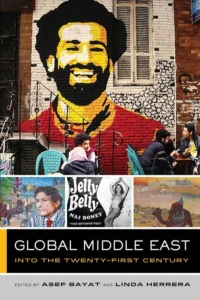
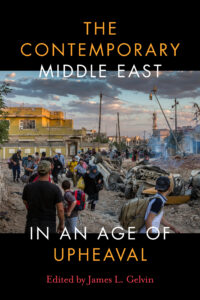
An edited volume on the ‘new Middle East’ that has emerged since the occupation of Iraq and the Arab uprisings, covering states, societies and regional politics.
An ethnographic study of the Lebanese diaspora across several continents, arguing that diasporic culture shapes Lebanese life inside Lebanon as well as abroad.
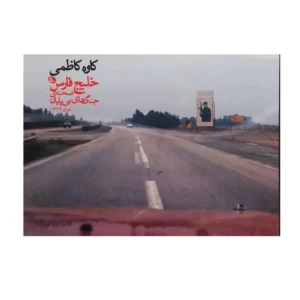
A photobook by the Iranian photographer Kaveh Kazemi documenting three weeks in Iraq in early 1991, during the war to expel Iraqi forces from Kuwait.
A history of the informal networks that distributed videocassettes in Iran during the state ban of 1983–1994, and of how they reshaped cultural life.
An analysis of how Iranian women activists have worked through the media, civil society and politics to build a pluralist, deliberative civil society in the Islamic Republic.
A former Iranian diplomat argues that friendly relations between Iran and Saudi Arabia are possible and proposes a roadmap towards a new security structure in the Persian Gulf.
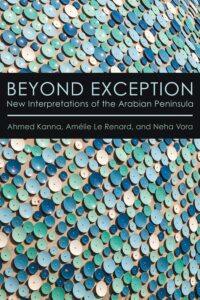
Three anthropologists reflect on fieldwork in the Arabian Peninsula and on the exceptionalist ways in which the region and its people are represented.
An ethnography of Iraqis in London that tells five life stories of exile and nostalgia to show the long history of imperial violence in Iraq.
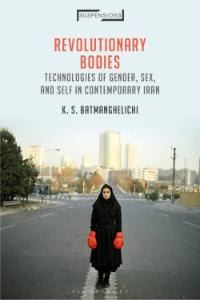
A study of how ideas about women’s bodies in state, religious and public-health discourse have shaped gender and sexuality in the Islamic Republic, and how women have responded.
A history of how ports, shipping routes, roads, law and labour have tied the Arabian Peninsula to global capitalism, and how wars have repeatedly reshaped them.
An ethnography of the Iranian pop music industry of Los Angeles from the 1980s to the 2000s, and of the place its songs hold in Iranian life at home and abroad.
A theory of revolution that explains how revolutions start, unfold and end by tracing recurring sequences of events across cases, from England and Chile to Iran and Ukraine.
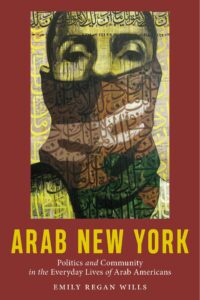
An ethnography of the everyday political life of Arab Americans in New York, based on fieldwork with community organisations in Bay Ridge, Brooklyn, between 2008 and 2010.
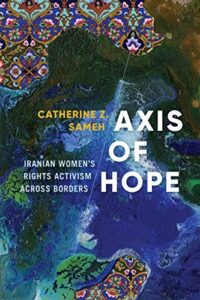
A study of Iranian women’s rights activism inside and outside Iran after 9/11, and of the transnational networks of solidarity activists have built.
This website uses cookies to improve your experience. We'll assume you're ok with this, but you can opt-out if you wish. Accept Read More