An Impossible Love for the Persian Cat in Lebanon (©Background)
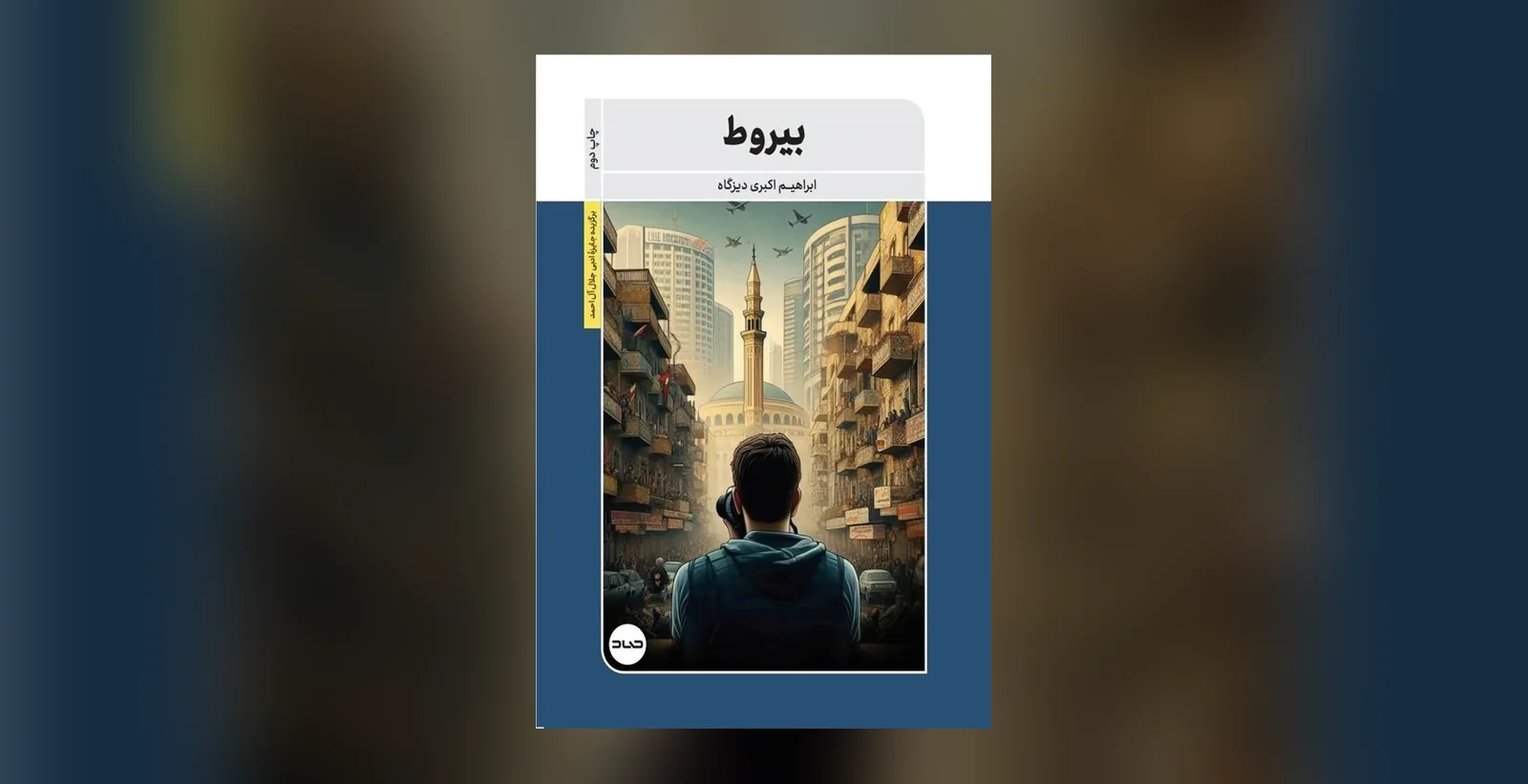
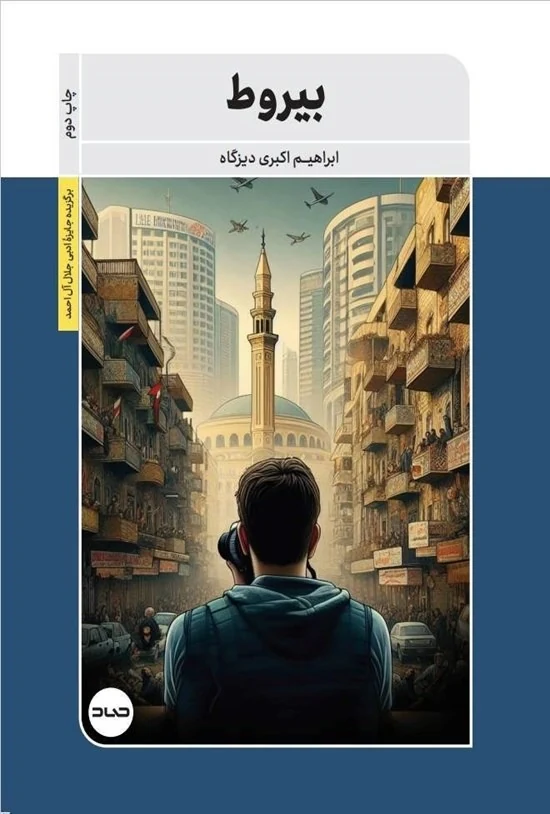
Beyrut
Ebrahim Akbari Dizgah
Saad Publishing, 2022 (in Persian)
— We have a saying from the Prophet (Muhammad) that says: “Loving cats is part of faith.” Oh wow, what a saying (…)
— I came across a sentence by Imam Musa al-Sadr. It was interesting: “If there is no love, there is no country.”
— He was right. But does the country even exist now? (Beyrut, p. 51)
Beyrut, intentionally spelled incorrectly instead of Beirut, by Ebrahim Akbari Dizgah, moves formally between a novel, a travelogue, and a documentary-style narrative. Published in 2022, the book had reached its fourth edition by the time this review was written. It has also won the Islamic Republic’s Book of the Year Award and was selected as the winner in the novel category of the Jalal Al-e Ahmad Literary Award in 2023. Yet Beyrut is not easily found in the ordinary bookstores of Tehran, such as the Shahr-e Ketab chained bookstores. It must be searched from national book fairs, cultural institutes, or neo conservative shops that are spreading in central Tehran over the last 10 years. Reviews of the book must be sought not so much in literary magazines as at the Imam Musa al-Sadr Cultural Research Institute or on literary websites close to the discourse of the Resistance and the promotion of Islamic culture. In fact, the readership of Beyrut constitutes a particular community of young, Islamic, politically engaged intellectuals.
Beyrut is a fictional account of the real journey of a writer born in the 1980s, who, with a background in seminary studies, travels to Lebanon to document the life of Imam Musa al-Sadr, an Iranian Shi’a cleric who lived in Lebanon for many years. The book can therefore be examined from various perspectives, and most of the reviews written about it have focused on the author’s personal and spiritual experiences and his passage between doubt and faith during the journey. In this review, however, I attempt to examine the author’s perspective on international affairs and his understanding of Lebanon as represented in the novel. What becomes significant from this perspective is the encounter between the story’s protagonist, a disdainful Iranian intellectual man, and Lebanon’s social and cultural-political fabric. Through such encounter he combines a curious international observation with a newfound nationalism and Iranian exceptionalism. I will also examine his understanding of the relationship between Shi’a and Sunni Muslims, as well as his attention to the diversity of women’s lives in Beirut, which he finds inspiring.
Through the eyes of the protagonist, I seek to reflect on the book, and on its readers, as a way of understanding how a young generation close to the Islamic Republic’s ruling establishment imagines Lebanon: those who, perhaps, in these days of war against Iran, are present at the nightly gatherings in the central squares of Iranian cities.
About Beyrut
“For if a man stays too long in the company of others, he loses his individuality and grows a fool.” (p. 48)
Beyrut is the story of the inner and outer journeys of Yahya Rabbani, a young philosopher and seminary student who is on the verge of emigrating to Germany with a scholarship he has received, on his thesis entitled “The Role of Prophet Moses in the Revival of Children of Israel, Based on the Old Testament and the Qur’an.” One of the characters in the book describes this as “something akin to the role of Imam Musa al-Sadr in the revival of the Shi’a in Lebanon” (p. 195).
The author conveys Yahya’s pessimism toward the West and Germany through his habit of naming characters and nationalities after animals that he finds similar to them in either their habits or appearance. He even refers to his academic supervisor as a “German boar” (p. 42), whom he considers to have failed to properly understand Yahya’s knowledge and ideas. In 2013, Yahya accepts an offer from a documentary-making team out of financial necessity and, while calling the two thousand dollars they pay him, in Marx’s words, “the devil’s dung,” sets off with their professional team for Beirut to make a documentary about the life of Imam Musa al-Sadr.
At the beginning of the journey, we learn that Yahya has brought Nietzsche’s Thus Spoke Zarathustra and a German language guide with him. Throughout the book, however, the author gradually introduces us to his deeper studies of Arabic and religious matters, which have led him away from the beliefs of his father, an ultra-conservative mujtahid who holds rigid and negative views about his son’s view of faith and religion. His father reprimands him for writing online and for “writing against religion and faith” (p. 30).
Two sets of factors shape Yahya’s experience during this journey. The first involves observing and becoming acquainted with Beirut’s new and secular urban society: dealing with Shi’a and Sunni people; observing Muslim women without the hijab; and noticing the role of Arab songs and music in Lebanese media and in the nightlife of Beirut’s cafés. The second involves being ensnared and trapped by Takfiris and ISIS, as well as, of course, becoming acquainted with the ideas of Musa al-Sadr, his associates and followers, and his ideology—an ideology that speaks of unity among sects, of building a country through “love,” and of fighting oppression, particularly Israeli oppression.
At the intersection of these factors, Yahya arrives at a new spirituality, develops a new sense of belonging to the land of Iran, abandons his plans to emigrate, and returns alone to Iran to continue writing and rebuild his relationships. In the end, Yahya does not become emotionally attached or bound to Beirut; rather, he comes to the conclusion that Beirut has lost its way.
By writing “Beyrut” instead of “Beirut,” the author also points to a city that has lost its balance. In an interview with the Khaneh-ye Adabiyat website in 2025, he explains his choice of title as follows: “In Shi’a thought, Medina becomes Medina when it has an Imam; Beyrut is a city that has lost its Imam. Beirut had a balance when Imam Musa al-Sadr was there, and when he left, it lost its balance and became ‘Beyrut.’”
About Ebrahim and Yahya
“So, my father can tolerate smoking, but not religious intellectualism. For now, I’ll get up and have a cigarette. When the time is right, I’ll formally announce that I am not an intellectual; I am fed up.” (p. 37)
Yahya Rabbani, the novel’s protagonist, travels to Lebanon as a “religious expert” accompanying a documentary-making team. Yahya claims that he is not an intellectual, and throughout the book he speaks disparagingly of intellectualism and of religious intellectuals, whom he identifies as Ali Shariati, Abdolkarim Soroush, and Mostafa Malekian. Yet the author portrays his hero, much like the protagonists of other novels in contemporary Iranian literature, as a fed up intellectual man who has given up on life, dislikes everything and everyone and understands things better than everyone else. Even in Lebanon, although he pretends to be impatient with others, he teaches them lessons in religion, unity, and culture. More precisely, in the first-person narrative, Yahya teaches the book’s readers lessons about religion and unity, while forming little connection with the characters in the book.
When he is asked, “You’re Iranian; are you Shi’a?”, his answer takes on a philosophical tone: “Neither Shi’a nor Sunni, neither Zangi nor Rumi, nor anything else… suspended between earth and sky.” The author portrays him, as suffering from an existential impasse, in keeping with the classical tradition of literature concerned with the search for meaning. Yahya repeatedly has theological and symbolic nightmares; he no longer prays and he smokes, while distancing himself from his father, the mujtahid. He distances himself from the first generation of the Revolution not only at the level of belief, but also symbolically and politically. This distancing can likewise be seen in his attitude toward Lebanon, in his sarcasm toward the Arabic-language experts on Arab television channels, and in his understanding of the relationship between Iran and Lebanon. At one point, in response to his colleague’s commands and admonitions, Yahya says: “I don’t accept my father’s authority; now this guy has come along and is telling me what I must and must not do.” (p. 157)
At one point, the author says, “Beyrut is me.” It is therefore not far-fetched to consider Yahya’s character to be drawn from the author’s own personality. Dizgah, too, has a seminary education, but later became active in literature and literary criticism. In addition to publishing several books, his record includes positions such as secretary of the National Association of Seminarian Storytellers, head of content production at the Museum of the Islamic Revolution and Sacred Defense in Qom, and teaching at the Islamic Art School.
Writing the book was part of Dizgah’s compulsory military service project. Commissioned by the Imam Musa al-Sadr Research Institute, he traveled to Lebanon in 2020 at the Institute’s expense, in lieu of military service, and subsequently wrote the novel. According to the author, rewriting and publishing the book took several years, and it was rejected numerous times before a literary publisher finally agreed to publish it. In a 2023 interview with the website of the Imam Musa al-Sadr Institute, he says that he had not been particularly interested in Musa al-Sadr and had regarded him as simply another good cleric, like Mohammad Khatami, the reformist former president of Iran. Gradually, however, he became drawn to other dimensions of al-Sadr’s life, particularly his unifying activities and his experience as a Shi’a cleric in Lebanon. Eventually, the lost spirit of Beirut came, in his view, to represent the lost imamate of Musa al-Sadr.
He learns from al-Sadr’s conduct toward Lebanon’s Christians, Shi’a, and Sunnis, from his remarks on political events, and from his personal comportment, and places these alongside the divisions he observes among the people of Beirut. He is troubled by this distance and perhaps comes to feel that the threat posed by Israel and the rise of Takfiri and ISIS groups in Lebanon and Beirut would not have occurred during al-Sadr’s era.
As noted above, from the perspective of the Iranian ruling religious class, its official ideology, and its concerns about ideological changes among Islamic literary and artistic circles, this book has been considered “radical” and has been denied publication. According to the author, however, its eventual publication became possible with the help of Ms. Sadr and because of the relatively open and “feminine” atmosphere of the Imam Musa al-Sadr Institute. I will first turn to the book’s portrayal of the women of Lebanon and Iran, who receive considerable attention from the author, a concern already implicit in his reference to the Institute’s “feminine” manner of administration. Second, I will examine his search for the “real Shi’a.” Finally, I will reflect on his return to Iranian nationalism and his distancing from the cosmopolitanism of revolutionary Shi’a Islam. These three themes constitute the central concerns of Beyrut.
About What He Sees in Women
“I don’t know why I keep thinking that so many of the girls of Beirut are feline, only a few are goat-like, and even fewer deer-like. I should investigate; perhaps, contrary to Darwin’s theory, this group’s lineage goes back to cats.” (p. 165)
Perhaps the first thing that draws the reader’s attention in Beyrut is the author’s focus on women, which is not typical of books in this genre. This attention is so pronounced that one could argue that the book takes shape at the intersection of a loving obsession and hatred of women. Yahya repeatedly wants to go to Arab singers’ concerts, contrary to the wishes of the rest of his team, and listen to Nancy Ajram, Julia Boutros, and Haifa Wehbe. Yet throughout the story, obstacles and events that may carry a spiritual significance keep Yahya from reaching the concert, until eventually he consciously comes to regret wanting to go.
He pays attention to the Lebanese women he sees in the streets and describes them using the same terminology of that of animals. For example, he calls one a “Lebanese girl with a mane” (p. 53). The other characters in the book, from Yahya’s family to the Musa al-Sadr research team, are also misogynistic. His grandfather calls Yahya’s wife, Zari, from whom he is in the process of separating, “shameless” and “foul-mouthed,” and advises Yahya: “Even if what you want is a cow to milk, you have to make her behave herself” (p. 377). They call Souad, a woman he meets in Lebanon, a “Christian whore.” Yahya calls a woman who mistreated him and slapped him during a confrontation with the Takfiri groups an “Christian bitch,” and generalizes her disposition to all women, at another point claiming that women harbor a grudge against the male sex: “Women treat men as a species, whereas men, by contrast, pay attention to the individual, because their concern is beauty.” (p. 253)
This contradictory attention to women reaches the point where, at one place in the book, he says that others call him “anti-woman,” but that those same people have also called him “anti-religion,” and therefore they know nothing. The only woman in the story whom the author seems to genuinely love and regard as innocent is his sister Masi, short for Masoumeh (literally meaning innocent), who suffers from severe multiple sclerosis. Masi wears a chador, but beneath it she wears a colorful, shiny headscarf. This enrages her cleric father, and Yahya defends her decision. He subsequently writes about the hijab and women on his blog.
The author’s particular views on women can also be found in “Dizgahiyat,” his personal channel on the Bale, an Iranian local social network, where he writes about his experiences, particularly at the “Square” gatherings during the recent war against Iran. There, we see how a perspective different from that of the conservative religious generation that preceded him can occupy the center of power and connect the subject of women to politics:
“The city has reached a maturity in which both veiling and unveiling are values! In any case, it is the war in Iran that produces values; it places the unveiled woman alongside the veiled woman to prove that the female body is the homeland and the man its defender.” (2026)
Through this lens, the presence of beautiful women in the streets can itself become a “possibility”:
“After I said, ‘They have filled the streets with women—with femininity and beauty,’ several people insinuated that I was a ‘lecher.’ I must say that my gaze at women in the street is not the gaze of a man upon a woman. My gaze is theological; it has the reach and sharpness necessary to explain them in relation to the divine attributes of beauty, and to prove that after the Woman, Life, Freedom movement, women have set their will on making the street ‘beautiful.’
Although I respect the lecherous eye and recognize its possibility. Because the sharpness of women’s femininity in the home and the city is contingent upon the lechery of men’s eyes. Without lechery, women become sisters. So, reflect upon this.”
It seems that, from the author’s perspective, the embodied presence of women in the street, whether the streets of Beirut or Tehran, inevitably has to be reconciled with an Islamic gaze. The women who, in his view, are no longer deer but cats that claw, and who have now imposed their will upon the street, must be tolerated and transformed into a “possibility” serving the very hegemony toward which he harbors a hatred tinged with bigotry, even as he sees and celebrates their beauty.
About What He Wants to See in Shi’a Islam
“Saleh said it would be better if we stayed in the Shi’a neighborhood.Saleh’s sectarianism is a constant torment for me.” (p. 119)
When Yahya goes to Dahiyeh and realizes that the Shi’a of Beirut feel comfortable being together there, he says that sectarian thinking is a torment for him. As mentioned earlier, in his conversations with Lebanese people, the narrator repeatedly emphasizes that, to him, there is no difference between Shi’a and Sunni. Yet a closer reading of the book suggests that, in his attempt to uncover the character of Imam Musa al-Sadr, when the narrator is caught in the clutches of ISIS terrorists, and in the historical and religious narratives woven into the story, he is in fact advocating a form of spirituality that might be called “true Shi’a Islam” from his perspective.
True Shi’a Islam existed during the era of Imam Musa al-Sadr, when Shi’a thought was a central force in shaping the country of Lebanon; a time when people went to pray and, in political conversations, said, “Officials must attend to the people’s problems.” (p. 200) The notion of true Shi’a Islam also relates to Iran. Yahya repeatedly encounters anti-Iranian sentiment among the people of Beirut and is constantly astonished and angered by the fact that Imam Musa al-Sadr’s Iranian identity has not remained firmly present in people’s minds.
The ISIS members in the story, whom he calls the “wolves of Beirut” because they kill Iranians (p. 265), speak openly of their hatred of Iranians. They also speak of their jealousy of Yahya when they see the attention and affection Lebanese women show toward him, and they talk about killing Iranians. On the other side of this binary, some of the novel’s characters are delighted by his Iranian identity. The narrator ultimately distances himself from both poles and does not become close to anyone. He learns nothing new from Beirut. He finds Beirut to be a city diverse in cultures, religions, and sects, yet disparate and unkind, a city that has lost its true identity—an identity that, in his view, derived from Shi’a spirituality and promoted unity among sects and “love for people and country.”
In analyzing this sense of disappointment, one might consider various factors. Among them is the fact that transnational solidarities require an interest in learning about and establishing connections with other cultures, whereas the narrator, with his intellectual, top-down perspective, has no real interest in connecting with or understanding this other culture. Perhaps the author is also conscious of the loss of the Iranian politician’s transnational influence in Lebanon and is saddened by the decline of the golden age of that influence under Musa al-Sadr. In this angry and depressed self-awareness, he holds “Beyrut” responsible and wants his readers to understand what has happened, so that solidarity with the Shi’a of Lebanon is no longer presented as either necessary or glorious.
Perhaps, also, he no longer believes in transnational bonds and solidarities, and a return to the homeland and a turn toward nationalism constitute his ultimate destination and purpose. All these states of mind may be understood as signs of a perception, among a new generation of Muslim intellectuals, that an era has come to an end: the end of solidarities that emerged from below with other Muslim communities, after those solidarities had for several decades become an arena for the alliances of state and quasi-state forces.
About What He Imagines Iran to Be
“Have you ever noticed that the map of Iran itself resembles a cat sitting on a pillow?” Charles Harvey Stileman, English clergyman (p. 7)
This is the opening quotation of Beyrut. The author refers to Iran as cat-like, and to his own history and Persian identity, and is angered by the fact that people in Lebanon are unaware of the Iranian lineage of Imam al-Sadr or of the belonging of great figures such as Rumi to Iran. He sees a resemblance between his own journey to Lebanon and the Persian cat’s desire to wander through the world. For him, the Iranian cat must not remain only in Iran if it is to reclaim its Iranian identity. It must submit to movement and cross borders, if only to return once again and learn from its journey.
This movement, which since Iran’s encounter with modern Europe has always been oriented toward the West, now encompasses the new Middle East as well. It is a cat whose eyes are fixed on other cats, caught in a simultaneous and dual condition of love and hatred toward them. For the author of Beyrut, life outside Iran and in the new Middle East is both astonishing and frightening; he feels both a sense of inferiority toward it and a sense of superiority rooted in his identity. He is inspired by it to save himself, while at the same time believing that he knows the way to save it, even if he cannot succeed in establishing a genuine connection and friendship among the cats.
The author of Beyrut is searching for a country that, in Imam Musa al-Sadr’s words, is built through love. Yet this love remains fruitlessly concealed within the author’s supremacist, weary, and impatient thinking, and does not lead to genuine empathy or connection between the two peoples, or between the people of Tehran and Beirut. He constructs an exceptional image of the homeland in which its national, religious, and gendered dimensions are pronounced, but, like the narrator’s dreams/nightmares, it is not particularly real or grounded in intercultural and transnational dialogue.
If we consider the three main themes discussed above, we see that the author views the transformations taking place around women in the Middle East and accepts them, reluctantly and uneasily, but he opens no new horizon for recreating Iranian Shi’a cosmopolitanism in a transnational space. Instead, tired and alone, he returns to his own imagination of the homeland.
References
Khaneh-ye Ketab va Adabiyat-e Iran. (2025, December 29). “The seminary-trained author whose novel became a bestseller.” https://ketab.ir/News/33390
Imam Musa al-Sadr Cultural Research Institute. (n.d.). Content of page 21131. https://imamsadr.ir/21131/
Imam Musa al-Sadr Cultural Research Institute. (n.d.). Content of page 21227. https://imamsadr.ir/21227/
Dizgah, E. A. Content published on the “Dizgah” channel on the social network Bale. https://ble.ir/dizgah/-2060329484209653150/1773553646260
Dizgah, E. A. Content published on the “Dizgah” channel on the social network Bale. https://ble.ir/dizgah/-7178351056267064070/1776541997235
About the Authors
Ebrahim Akbari Dizgah is an Iranian writer, poet, and literary researcher in philosophy of literature and theory and story writing in Iran. Shah-Koshi (King-Slaying) is one of his novels.
Shima Vezvaei studied media and communications and teaches media management and journalism at various academic institutions. Her research and professional activities focus on women’s issues, migration, and children’s rights.
Related Content
 Editorial Note: Iran and the New Middle East? (©Background) GlobIS Review, Issue 6
 The Axis of Resistance and the New Middle East (©Background)
 Topics in the Sociology of Shi’ism in Iran (©Background)
 The Life Story of a Female Publisher: Steady and Persistent Until the Last Breath
 Breathing the Mist, Untangling the “Complicated”: How Scholars of Muslim Backgrounds Viewed the Jina Movement in Iran (©Background)
Comments are closed.