
The Axis of Resistance and the New Middle East (©Background)
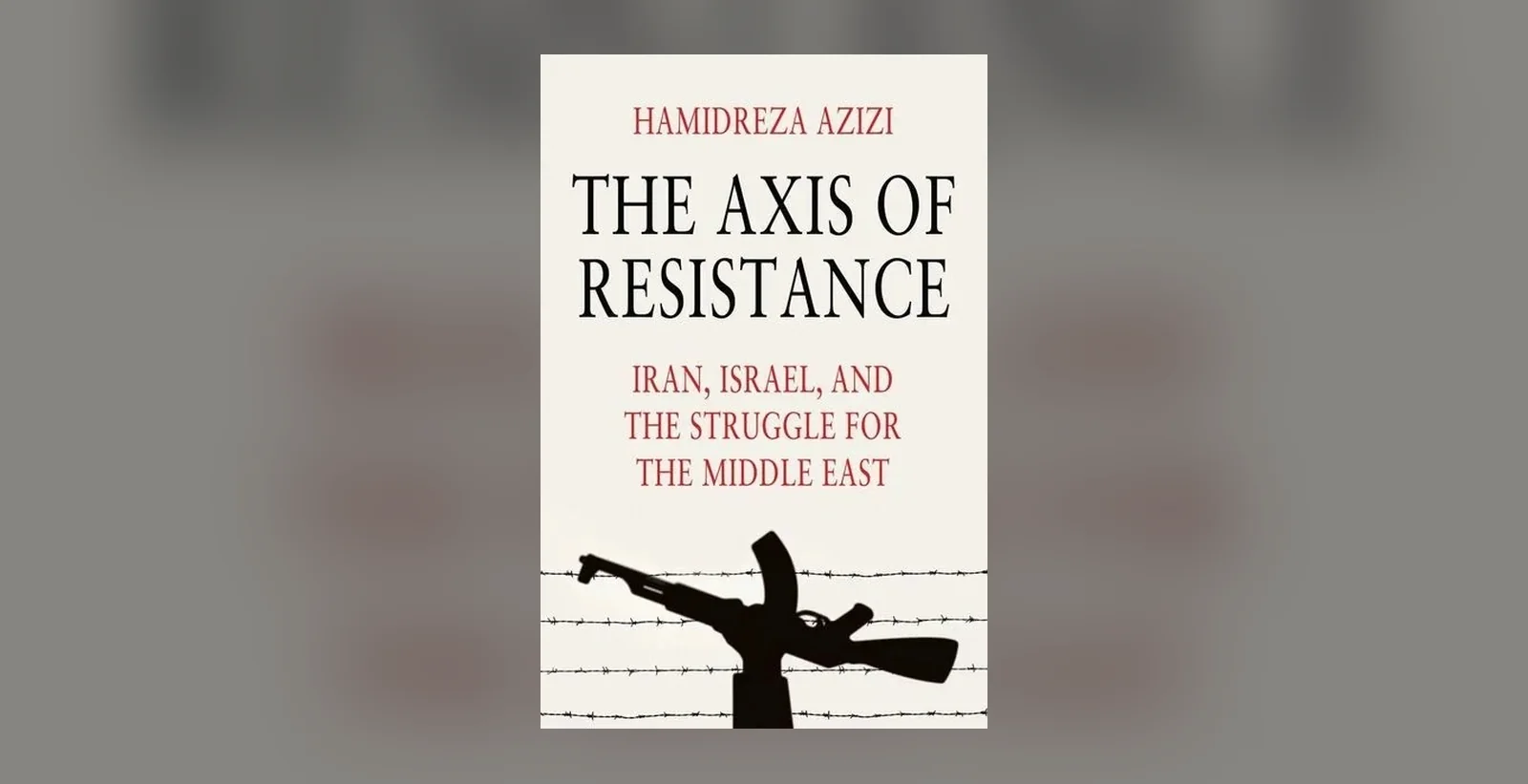
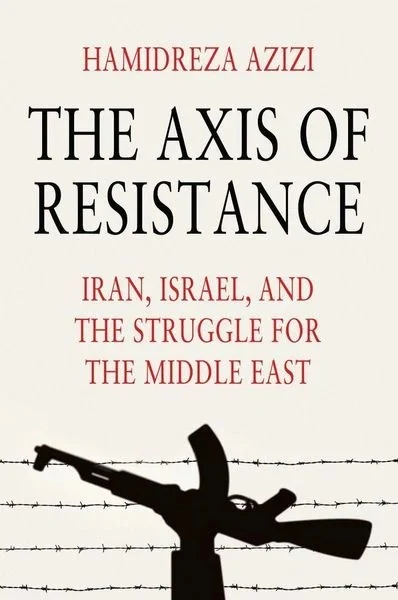
The Axis of Resistance: Iran, Israel, and the Struggle for the Middle East
Hamidreza Azizi
Polity Press, 2026
The Axis of Resistance: Iran, Israel and the Struggle for the Middle East offers fresh insight into the Axis of Resistance as one of the most significant and resilient actors shaping the Middle East’s regional dynamics over the last few decades. Drawing on his extensive expertise in Iran’s foreign and security policy, Azizi provides a detailed historical analysis of the Axis of Resistance—its origins, evolution, mission, regional impact, and central role in Iran’s military and security strategy. The book bridges military security and regional studies, highlighting the growing influence of non-state actors within a predominantly state-centric international system.
Because the book’s primary perspective is security strategy, it addresses Iran’s foreign policy only as the broader context in which the Axis developed and has evolved. In other words, it does not examine shifts in Iranian foreign policy across its different periods unless those changes have significantly altered the country’s approach to the Axis or its core mission and objectives. Nor does it discuss individual foreign policy challenges with security implications, such as nuclear development.
The author’s main argument is that Iran invested heavily in the Axis of Resistance as a central pillar of its forward defense strategy to address vulnerabilities stemming from its strategic loneliness. However, the post-Gaza War depletion in the power of the Axis has left it unable to fulfil the effective deterrent role it was envisaged to provide for Iran’s security. Spanning six chapters plus an Introduction, Conclusion, and Afterword, the book traces how Iran united several state and non-state actors under the banner of “resistance” to form a powerful political-military network, while also charting the network’s ideological foundations, internal structure, division of labor, ebbs and flows.
The first chapter explores the ideological and strategic underpinnings of the Axis within the Islamic Republic’s broader narrative. It attributes Iran’s post-revolutionary hostility toward the US to the 1953 US-orchestrated coup to overthrow Mosaddegh and its subsequent support for the Shah’s autocratic rule, as well as the strong anti-imperialist identity that united its revolutionary leadership. The focus of this anti-imperialism gradually shifted from broader hegemonic powers towards anti-Americanism and fierce opposition to Israel as the regional embodiment of global hegemony and arrogance following the end of the Iran-Iraq War, the collapse of the Soviet Union, and the death of Ayatollah Khomeini (pp. 22–23). The chapter then examines the concept of the “Export of the Revolution,” enshrined in the Islamic Republic’s constitution as a foundational pillar of Iran’s foreign policy, and explores the practical measures taken to embed this doctrine in the Islamic Republic’s strategic planning and worldview. Within this context, post-revolution Iran first developed relationships with non-state military and political actors across the Middle East. However, Azizi agrees with Reisinezhad (2019) that Iran’s engagement with such groups, regardless of who rules the country, is a compensatory measure for its loneliness in its strategic environment. (p.46) In other words, despite the essential differences between the Pahlavi and the Islamic Republic, both in political character and foreign policy, the continuation of certain geopolitical constraints, such as strategic loneliness, leads to the adaptation of similar strategies, such as building alliances with non-state regional armed groups.
The chapter introduces four stages for the evolving role of non-state armed groups in post-revolutionary Iran’s strategy. Initially viewed as vehicles for exporting the revolution, these groups later became the building blocks of Iran’s forward-defense doctrine—confronting threats beyond its borders to safeguard the homeland. In the post-Arab Spring era, the collapse of strong Arab states (Egypt, Libya, and Syria) and the 2011 US withdrawal from Iraq enabled Iran to expand its regional influence through the Axis, marking a strategic shift from mere defense and deterrence (p. 11). Although Qassem Soleimani’s assassination initially caused disarray, the subsequent creation of a Joint Operations Room (JOR) —supported by Hezbollah—ushered in a new phase of coordinated command. This moved the Axis away from Soleimani’s centralized, vertical model toward a more decentralized, horizontal structure that grants greater autonomy to its members (p. 12). Such formulation of evolution stages demonstrates the author’s systemic approach. In other words, greater importance has been attached to the impact of regional geopolitical developments rather than the Islamic Republic’s domestic developments and the role of its individual decision makers.
Velayat-e Faqih (Guardianship of the Islamic Jurist), a foundational doctrine of the Islamic Republic articulated by Ayatollah Khomeini, holds that during the Major Occultation a qualified faqih should exercise political leadership to implement Islamic law and ensure just governance. Its enshrinement in Iran’s constitution established clerical supremacy and gave the Supreme Leader near-absolute authority. Though primarily domestic, it carries a strong universalist and transnational dimension tied to the Ummah and the export of the Revolution. Unlike “resistance,” a full adherence to Velayat-e Faqih is not required for the membership of the Axis, but groups such as Hezbollah and certain Iraqi Shi’a militias that fully embrace it, enjoy a privileged status. (p. 31)
Shaped by the trauma of the 8-year war, the doctrine of ‘forward defense’, which became the cornerstone of the Islamic Republic’s security strategy holds that Iran must constantly prepare for war and be willing to use offensive measures for self-defense. Rather than waiting for threats to reach its borders, the forward defense demands proactive engagement far beyond Iran’s territory to pre-empt them (p.32). At the core of forward defense lies the concept of strategic depth, which drove Iran’s shift “from passive deterrence to forward defence” and justified its expansion into neighbouring regions. In essence, strategic depth seeks to create deterrence by posing credible threats to adversaries’ interests beyond Iran’s borders. Iran’s overarching objective has been to build a “resilient and multifaceted deterrence strategy” to dissuade adversaries from aggression (pp. 33–34). Muslim countries, particularly in the Middle East, are viewed by Iran’s Supreme Leader and senior officials as the primary arenas for achieving this strategic depth.
Iran has pursued two main strategies to sustain its strategic depth and overcome the constraints of isolation, long-standing sanctions, and arms embargoes: First, it has developed robust asymmetric warfare capabilities, centred on ballistic missiles, drones, advanced naval assets, and cyber operations. The author interestingly does not include nuclear threshold achievement as part of Iran’s asymmetric warfare capabilities or its deterrence strategy. Second, it has cultivated extensive ties with non-state and semi-state armed groups to construct a broad network of proxies and partners across the Middle East. The strengthening of the Axis of Resistance is therefore central to Iran’s military strategy (p.37)
The three subsequent chapters focus on the introduction of the Axis of Resistance constituent groups within three tiers based on Iran’s vision of offensive defense deterrence. Those closest to Israel, as Iran’s main regional adversary, being perceived as the frontline or the first tier. Chapter 2 examines the evolution of Iran’s relations with the front line, Palestinian movements, tracing their roots to the pre-revolutionary period and the incorporation of revolutionary groups’ anti-imperialist ideology into the Islamic Republic. It traces Tehran’s shift from its initial partnership with the PLO to its alignment with Hamas after disillusionment with the PLO following the Oslo Accords. As a result, Iran threw its support behind Hamas, thereby strengthening Hamas’s position in the Palestinian political landscape. A similar level of support has been extended to the Palestinian Islamic Jihad (PIJ), who become even more closely aligned with Iran due to its heavy military and financial dependence. The Unity of arenas strategy enabled coordinated action among various Palestinian factions of the Axis, resulting in the sophisticated October 7 attack on Israel and their sustained resilience despite prolonged Israeli military campaigns in Gaza. (pp. 58–61)
Chapter 3 examines Lebanon and Syria as the second tier of the Axis of Resistance against Israel. After reviewing Iran’s historical ties with Lebanese Shi’a communities—which expanded significantly after the 1979 Revolution—the chapter highlights the centrality of Hezbollah’s alliance to Iran’s regional strategy and the pivotal role of Assad’s Syria within the broader Axis. This strategic importance explains Iran’s massive effort in preserving Assad’s regime at all costs, transforming Syria from a mere logistical conduit for Palestinian and Lebanese militias into a key operational front in the Axis’s confrontation with Israel, despite Assad’s cautious reluctance. The author argues that Assad’s weakening as a result of years of civil war and external pressures caused Hezbollah’s defeat against Israel, which in turn led to Assad’s downfall—weakening the Axis of Resistance’s vital Levantine link and inflicting major damage on the network. While this account oversimplifies complex events by overlooking multiple contributing factors, it correctly notes that the loss of the Levantine link significantly eroded the Axis’s deterrent power, paving the way for Israel’s 2025 attack on Iran.
Chapter 4 examines the third tier of the Axis—Yemen and Iraq—where Shi’a ideology and historical grievances underpin alignment with Iran. The chapter opens with a historical overview of Iran–Iraq ties, beginning with the Najaf–Qom seminary connections and Shi’a exiles. It then traces the evolution of Iran’s political and military influence in Iraq, from the establishment of the Ramadan headquarters during the Iran–Iraq War to Tehran’s support following the 2003 US invasion and its role in the fight against ISIS through the organization and training of Hashd-al-Shabi (Popular Mobilization Front-PMF) by Soleimani. Though his assassination resulted in a deterioration of Iran’s control over the PMF, Tehran still manages to project power through this member of the Axis. However, the PMF remains deeply contentious domestically, as seen in the 2019 Tishreen protest movement, which challenged the PMF’s legitimacy over corruption and perceived dependence on Iran.
Moving to Yemen, despite its long historical ties with Iran, the country only entered Tehran’s orbit after the Arab uprisings, the Houthis’ rise to power, and Saudi Arabia’s military intervention against them. Their strong anti-Israel stance has served as a key asset, facilitating their integration into the Axis of Resistance, justifying their prominent role in post-October 7 efforts to contain Israeli actions in Gaza. The chapter concludes by explaining the importance of this tier in the face of depletion on the Levantine front by becoming “the most reliable surviving scaffold of the forward defence”. (P.130)
Chapter 5 traces the evolution of the Axis’s command-and-control system, from the highly centralized hierarchical network built by Qasem Soleimani to a decentralized model following his assassination, with Hezbollah playing a central role in repairing the resulting fractures. While decentralization improved flexibility and adaptability, it risked undermining the network’s overall coherence. The establishment of the JOR was a strategy to coordinate military actions and operational decisions across multiple theatres in the post Soleimani era (p.147). Assessing the Axis’s performance in the post-7 October developments, particularly the 12-day US/Israel war against Iran, the chapter argues that the JOR failed to deliver the effectiveness achieved under Soleimani and the once-unified fronts have shifted toward modular deterrence. Consequently, while the Axis of Resistance remains a network united by shared ideology, it no longer functions as the cohesive axis it once was.
Considering the Gaza War a stress test for all competing visions for the Middle East regional order, Chapter 6 reviews the perception of the Axis towards the international system and its aspiration to reshape the Middle East regional order in a way that is more aligned with their strategic objectives and vision. The author argues that Iran perceived the October 7 attacks as a step towards realization of such vision. As such, despite clear lack of prior knowledge of Hamas’s plans, the Axis mobilized maximum military capabilities as well as diplomatic potential to support Hamas in getting them closer to their aspired regional order. While post-October 7 regional developments have in many ways resulted in reducing the power of the Axis, one cannot underestimate its diplomatic achievements, including the suspension of Saudi-Israel normalization process and the opportunity for Axis members to expand their diplomatic reach internationally.
The afterword section explains how the cumulative weakening of the Axis members shaped US-Israel calculations to start their 2026 war against Iran as the head of the Axis. While the first and second tier are either neutralised (Syria) or under siege, the Axis failed to operate as an “integrated and mutually reinforcing structure” that Iranian strategists had once envisaged. (p.190)
Increased interest in the Axis of Resistance, especially in the post-October 2023 era, has led to some quality publications on this subject in recent years. Sobelman’s (2025), Axis of Resistance: Asymmetric Deterrence and Rules of the Game in Contemporary Middle East Conflicts, is one of the closest books to Azizi’s. Using Hebrew, Arabic and English sources and interviews with Israeli politicians and commanders, Sobelman offers Israel’s perspective, as opposed to Azizi’s Iranian perspective. While networked deterrence remains the central concept in both these analyses, Azizi’s point of departure is political ideology, while Sobelman’s is International Relations. In other words, in Azizi’s argument, ideology is the focal point of different groups coming together within the Axis. For Sobelman, it is ‘imbalance of power’ which leads the weaker actors to come together under the Resistance umbrella. These weaker actors use asymmetric deterrence to subject their much stronger opponent to limitations, which balances vulnerabilities by imposing high costs on that opponent in case of escalation while holding reserve capabilities for coercive leverage. (p.10)
Mirzaei’s Axis of Resistance: Persia’s Strategy of Resistance from Antiquity to Modern Iran (2025) is another relevant book with a more historical and anthropological approach, examining the Axis within the context of Iran’s historical statecraft. He frames the Axis of Resistance as part of Iran’s unique survival strategy and ideational philosophy that continues to influence today’s geopolitical landscape. As such, while Azizi examines the Axis of Resistance as a post-revolution, anti-imperial phenomenon, Mirzaei perceives it as a cultural continuum embedded in the Iranian history of resisting external invaders.
While each of these publications offers a distinct perspective and methodological approach, they effectively complement one another and collectively exemplify rigorous academic scholarship. That said, Azizi’s analysis could be further strengthened by examining the Axis of Resistance’s role not only in Iran’s national security but also in the regime’s domestic survival, particularly given documented involvement by groups such as Hezbollah and the Hashd al-Shaabi in the suppression of internal unrest since 2009. A valuable addition would also be a discussion of Iran’s unsuccessful efforts to recruit or sponsor such groups in countries such as Azerbaijan (Hossainiyun) and integrate them into the Axis of Resistance. Furthermore, the work offers limited examination of the Afghan (Fatemiyun) and Pakistani (Zainabiyun) brigades, whose contributions—though constrained—merit closer examination, alongside an analysis of the structural and political factors that have limited Iran’s broader success in incorporating additional resistance groups from these states.
References
Mirzaei, Cyrus. (2025). The Axis of Resistance. Cyrus Mirzaei Publishing
Reisinezhad, Arash. (2019). The Shah of Iran, the Iraqi Kurds, and the Lebanese Shia. Palgrave Macmillan.
Sobelman, Daniel. (2025). Axis of resistance: asymmetric deterrence and rules of the game in contemporary Middle East conflicts. State University of New York Press.
About the Authors
Hamidreza Azizi is an analyst of Iran and Middle East geopolitics and security. He is a Visiting Fellow at the German Institute for International and Security Affairs in Berlin and a Nonresident Fellow at the Middle East Council on Global Affairs in Doha. He was an assistant professor of regional studies at Shahid Beheshti University (2016–2020).
Marzieh Kouhi Esfahani, Assistant Professor in Politics and International Relations of the Middle East at Durham University, UK.
Related Content
 Editorial Note: Iran and the New Middle East? (©Background) GlobIS Review, Issue 6
 New Horizons in Studying Iran–US Relations (©Background)
 When Categories Cease to Explain: Political Science and the Middle East after the Arab Uprisings (©Background)
 Iran’s National Security on the Border of Thought and Might: Re-reading Political Rivalries in the Contemporary Middle East (©Background)
 Dominant Identity and Foreign Policy in the Middle East: A Critical Assessment (©Background)
Comments are closed.