Dominant Identity and Foreign Policy in the Middle East: A Critical Assessment (©Background)

Book Review | Reading Time: 12 minutes
Dominant Identity and Foreign Policy in the Middle East
A Critical Assessment
ISSN 2818-9434
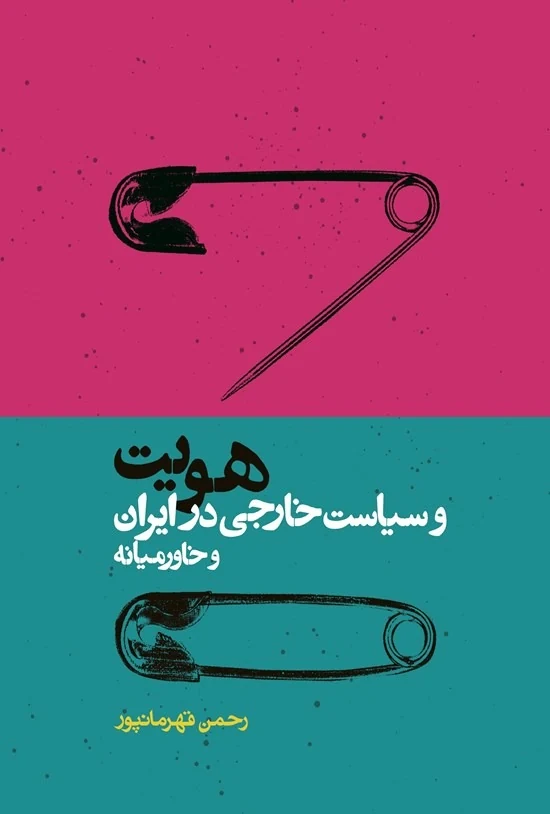
Identity and Foreign Policy in Iran and the Middle East
Rahman Ghahramanpour
Roozaneh Publications, 2015 (in Persian)
Identity and Foreign Policy in Iran and the Middle East is originally written as Rahman Ghahramanpour’s doctoral dissertation in Political Science at Shahid Beheshti University and was published more than a decade ago. However, it remains an important contribution to the scholarship produced in Iran on a central question in the study of Middle Eastern politics: how do political identities and orientations shape divergent foreign policy patterns and contribute to the persistence of conflicts in Middle Eastern societies? (Ghahramanpour, 2015).
Within the social sciences, the well-known proposition that “all history is contemporary history” suggests that revisiting the past is ultimately a means of illuminating the problems of the present. Ghahramanpour’s work can be read precisely in this spirit. Ghahramanpour approaches this question through a historical and comparative examination of state formation in the Middle East, tracing the identity-based foundations of foreign policy behavior. He argues that many regional conflicts cannot be adequately explained by material interests, power balances, or rational calculations alone (2015: 26–27).
The significance of the book lies in its departure from approaches in International Relations that focus primarily on material, security, and geopolitical factors, instead drawing attention to the role of identity, culture, and historical experience in shaping states’ foreign policies. In this respect, it contributes to a growing body of scholarship that brings history, political sociology, and international relations into dialogue to offer a more nuanced understanding of political developments in the Middle East.
The book builds on a scholarly tradition that emphasizes long-term historical processes and the enduring influence of historical structures on political action. Its distinctive contribution, however, lies in its introduction of the concept of “dominant identity,” which the author describes as, “with some degree of approximation,” equivalent to the identity of the state (ibid., p. 459). Ghahramanpour conceptualizes dominant identity as the intermediary between society and foreign policy. Drawing on a constructivist approach, he argues that states do not simply pursue pre-existing interests; rather, dominant identity shapes what comes to be defined as the “national interest.” From this perspective, national interests are neither fixed nor objectively given but are socially and historically constructed through the interaction and competition of social forces, political actors, and historical processes.
The opening chapters establish the book’s theoretical foundations, while Chapters 5 to 8 constitute its principal empirical contribution. In these chapters, Ghahramanpour applies his theoretical framework to four major case studies—Iran, Turkey, Israel, and Egypt—to demonstrate how the dominant identity within each country has influenced the definition of national interests and, ultimately, foreign policy behavior.
The selection of these four cases is far from arbitrary. According to the author, Iran, Turkey, and Egypt represent three historical and civilizational states whose political and cultural traditions predate the emergence of the modern nation-state. Israel, by contrast, represents a distinct case in which political identity was shaped through the modern Zionist project of state-building (ibid.: 144–150). Comparing these four cases therefore provides an opportunity to assess the explanatory power and broader applicability of the book’s conceptual framework.
Theoretical Framework and Methodology: From Constructivism to “Dominant Identity”
The central concern of Identity and Foreign Policy is to reconsider some of the theoretical assumptions underlying the analysis of foreign policy in the Middle East. Ghahramanpour suggests that conventional approaches in International Relations, particularly realism, neorealism, and other rationalist perspectives, have important limitations when applied to many political developments in the region (ibid.: 26). In particular, these approaches tend to treat states as rational actors pursuing relatively fixed interests, with limited attention to their cultural and identity contexts. He argues that the region’s historical experience calls for a broader perspective that accounts for the roles of identity, historical memory, religion, ideology, and collective narratives in shaping how national interests are understood.
Within this framework, the author situates his analysis within the constructivist tradition. Constructivism, most notably associated with Alexander Wendt, holds that political reality is socially constructed rather than determined solely by the material distribution of power (Wendt, 1999). Ghahramanpour extends this perspective by combining constructivist insights with historical analysis and comparative methodology. He examines how political identities form and transform in relation to historical events, political crises, wars, and interstate rivalries. The “dominant identity” thesis implies that the state is not merely a passive reflection of society but the institutional expression of an identity that has prevailed over competing identities. Since multiple identities coexist in the public sphere, Ghahramanpour asks why a particular identity succeeds, at specific historical moments, in becoming the state’s official identity. He attributes the success to the interaction of three interrelated variables: (1) how state identity has been formed in its initial formation stages; (2) the role of strategic actors in shaping and institutionalizing that identity; and (3) the influence of internal environment and external structures (ibid., p. 460). As these factors interact to shape the trajectory of identity formation and transformation, identity should not be understood as static but as a dynamic and continually reproduced process.
In contrast to classical theories of international relations, the author argues that what counts as “national interests” is fundamentally determined by the dominant identity, rather than by states first identifying their interests and then formulating foreign policy to pursue them. For example, if a state’s dominant identity is grounded in the idea of “exporting the revolution,” supporting ideologically aligned movements across the region may become an integral component of its national interest. Conversely, if that identity later shifts toward economic development and integration into the global order, the definition of national interest will likewise change. In this respect, the dominant identity thesis is indebted to Benedict Anderson’s influential work Imagined Communities (1983), in which nations are conceptualized as “imagined communities” constructed through narratives, institutions, and historical memory.
Comparative Historical Method and the Significance of Critical Junctures
Methodologically, Identity and Foreign Policy exemplifies comparative historical research on foreign policy in the region. Comparing Iran, Turkey, Israel, and Egypt, the author identifies both common patterns and key differences in how these states define their national interests. The concept of the “critical juncture” is central to explaining the evolution of these identities to poltics: These are historical moments when major events fundamentally alter the developmental trajectories of societies, such as the collapse of the Ottoman Empire, the establishment of Israel, the discovery of oil, the 1953 coup d’état in Iran, the Arab–Israeli wars, the Iranian Revolution, the Iran–Iraq War, the US invasion of Iraq, and the Arab Spring. During these pivotal moments, dominant identities are redefined, giving rise to new directions in foreign policy (ibid.: 110–113).
By historicizing foreign policies and moving beyond single-cause explanations, this framework offers a deeper, multidimensional analysis of inter-state relations in the region. Nevertheless, it has several limitations, especially in defining the concept of “dominant identity” and its transformations. First, in some cases, it remains unclear which empirical indicators can reliably establish when a particular identity becomes dominant. Second, the author’s emphasis on the possibility of identity redefinition occasionally creates the impression that identity transformation depends primarily on the decisions of political actors, raising questions about how these elites interact with the institutional, local, and international structures that constrain their actions. More broadly, it remains unclear how the dominant identity thesis engages with frameworks such as political economy, class analysis, and geopolitical approaches to foreign policy, which shed light on other dimensions of intergovernmental relations in the region.
The Islamic Republic of Iran: Revolutionary Identity and Ideological Foreign Policy
In Chapter 4, Ghahramanpour conceptualizes Iran’s dominant identity under the Islamic Republic through six fundamental components: (1) Shi’a political Islam; (2) Velayat-e Faqih (Guardianship of the Islamic Jurist); (3) cultural independence and nativism; (4) revolutionary popular sovereignty; (5) anti-Westernism and anti-imperialism; and (6) the pursuit of justice (ibid.: 164). According to the author, these elements extend beyond political rhetoric to form the Islamic Republic’s ideological foundation. They consequently shape the state’s conception of national interest and its foreign policy practices—from supporting resistance movements in the region and opposing Israeli policies to criticizing the existing international order and pursuing political independence—as manifestations of the regime’s dominant identity rather than merely tactical choices. From this perspective, the foreign policy of the Islamic Republic cannot be understood apart from the identity foundations established by the 1979 Islamic Revolution.
Yet Iran’s foreign policy adjustments over recent decades suggest that identity alone cannot account for changes in foreign policy behavior. These adjustments cannot be attributed to identity transformation alone but must also be understood in relation to international structural pressures and the state’s imperative of survival. This limitation reflects the book’s insufficient attention to political economy, economic sanctions, oil revenues, and geopolitical imperatives.
Turkey: From Kemalism to Post-Kemalism
Chapter 5, which examines Turkey’s dominant identity, is arguably the book’s strongest case study. Ghahramanpour demonstrates how Kemalist identity, following the collapse of the Ottoman Empire, became dominant and shaped the new Turkish Republic. The six principles of Kemalism—(1) republicanism, (2) Turkish nationalism, (3) secularism, (4) statism, (5) populism, and (6) revolutionism (ibid., p. 276)—collectively produced an identity that oriented Turkish foreign policy toward the West, NATO, and the United States for several decades. The more interesting aspect of this analysis concerns the emergence of post-Kemalism and the rise of the Justice and Development Party (AKP). The author argues that the political transformations of the first decade of the twenty-first century signaled a redefinition of Turkey’s dominant identity, marking a significant shift in both domestic politics and foreign policy orientation.
Israel: Security, Zionism, and the Garrison State
Chapter 6, devoted to dominant identity in Israel, is also a significant and, at the same time, controversial section of the book. The author’s central argument is that Israeli foreign policy should be analyzed first through the social and cultural origins of Zionist identity and then through the formation of the Israeli state. He argues “if the Islamic Republic in Iran can be understood as a response to the question of returning to an authentic self, and Kemalism as a response to the humiliation and weakening of the Ottoman Turks by European powers during the nineteenth and twentieth centuries, then Zionism can likewise be understood as a response to the Jewish Question. Unlike the previous two ideologies, however, Zionism emerged in Europe before the establishment of the state of Israel itself (ibid.: 339). Building on this argument, the author identifies four principal foundations of Israel’s dominant identity: (1) exile, referring to the historical dispersion of the Jewish people; (2) redemption, understood as the fulfillment of divine promise; (3) settlement in the Promised Land; and (4) the establishment of a Jewish state (ibid.: 344). These elements were institutionalized through political Zionism and ultimately culminated in the creation of the State of Israel.
Ghahramanpour suggests that a foreign policy shaped by these factors tends toward a strategic alliance with the West; ambiguity in the relationship between religion and the state arising from competing interpretations of sacred texts; the construction of Arabs as the primary “Other”; the political instrumentalization of myth and religion; and a security-based collective identity (ibid.: 356–361). He concludes that a substantial part of Israeli foreign policy can be understood through the lens of a persistent sense of insecurity.
Egypt: The Exceptional Case
The Egyptian case occupies a distinctive place among the book’s four case studies, as Ghahramanpour himself acknowledges that it poses challenges to his theoretical framework. He argues that Egypt’s dominant identity under Gamal Abdel Nasser was constituted by four principal elements: leadership of the Arab world, Arab socialism, anti-imperialism, and populist politics (ibid.: 405). Unlike the cases of Iran, Turkey, and Israel, Egypt’s dominant identity proved difficult to sustain over time. The presidencies of Anwar Sadat and Hosni Mubarak, as well as the transformations associated with the Arab Spring, marked successive stages in its weakening.
Whereas relatively stable dominant identities can be observed in Iran, Turkey, and Israel, Egypt has experienced persistent competition among Egyptian nationalism, Pan-Arabism, Islamism, military rule, and statism. This suggests that states do not necessarily possess a single dominant identity at any given historical moment; at certain conjunctures, ongoing competition among identities may itself become a defining feature of the political system. Consequently, Egypt most clearly exposes the limitations of the dominant identity framework.
Empirical Analysis of Foreign Policy and Dominant Identity
Across the four case studies, the author applies the dominant identity framework to explain variations in foreign policy. He argues that identity formation shapes strategic actors whose responses to identity-related challenges can redefine the dominant identity and, consequently, redirect foreign policy. This relationship is most convincingly demonstrated in Iran, Turkey, and Israel, but proves more problematic in the Egyptian case.
In Iran, the 1979 Islamic Revolution marks the origin of the Islamic Republic’s state identity, founded on Shi’a Islam, with religion and revolution serving as its principal sources of political legitimacy. The key strategic actors are the clergy and revolutionary elites, while relations with the West are characterized by confrontation and the United States and Israel constitute the principal “Others.” Foreign policy is primarily oriented toward regime survival and the dissemination of revolutionary identity. The state is thus characterized as ideological, with democratization and globalization identified as its central challenges. Within the author’s framework, the prospective redefinition of this identity would take the form of post-Islamism, potentially leading to a more balanced regional foreign policy.
In the Turkish case, the collapse of the Ottoman Empire constitutes the historical origin of the dominant identity, while Kemalism provides its ideological formulation. Republicanism and the nation serve as the principal sources of legitimacy, with the military and Kemalist elites acting as the key strategic actors. Turkey’s relationship with the West is characterized as one of alliance, although it has evolved over time. The primary “Others” are ethnic separatism and regional instability, while foreign policy is oriented toward economic development and regional security. The state is characterized as national-secular, with the central challenge being the tension between Islam and secularism. The anticipated redefinition of this identity is post-Kemalism, potentially facilitating greater integration into the international system.
For Israel, the emergence of political Zionism constitutes the historical origin of the dominant identity, with Zionism providing its ideological framework and the establishment of a Jewish state serving as its principal source of legitimacy. The strategic actors are the Zionist movement and the country’s security elites. Israel maintains a strategic alliance with the West, while Arabs and Iran constitute its principal “Others.” Foreign policy is primarily oriented toward security and national survival, producing a security-oriented state identity. The central challenge is the tension between religion and democracy. According to Ghahramanpour, a future redefinition of Israeli identity through post-Zionism could ultimately reduce the state’s garrison-style security orientation.
In Egypt, the Free Officers’ Revolution marked the origin of the dominant identity, with Nasserism emerging as the state’s prevailing identity. The nation-state served as the principal source of legitimacy, while the military emerged as the key strategic actor. Egypt’s relationship with the West has varied over time, while radical Islamism has functioned as its principal “Other.” Foreign policy has primarily aimed at regime stability, producing a military-bureaucratic state. Yet because the central challenge is the weak cohesion of the dominant identity, no clear trajectory for its redefinition emerges. As noted earlier, the Egyptian case ultimately exposes the explanatory and predictive limitations of the author’s theoretical framework.
Critical Reflections
Identity and Foreign Policy in Iran and the Middle East stands among the relatively small number of books originally published in Iran that attempt to integrate historical sociology, comparative politics, and International Relations theory into a coherent analytical framework for understanding foreign policy developments in the Middle East. The book’s greatest contribution lies in moving beyond purely geopolitical and security-oriented frameworks by emphasizing the role of identity regimes in shaping states’ foreign policies. Ironically, the book’s key strength is also a source of its limitations: the author pays limited attention to structural, geopolitical, and security factors, which are often overshadowed by identity-based explanations.
The first major strength of the book is its attempt to construct a theoretical model derived from the historical experiences of the Middle East itself, one that incorporates the region’s distinctive cultural and historical trajectories into explanations of interstate behavior and regional competition. Much of the International Relations literature, particularly within the realist tradition, conceptualizes states as unitary, rational actors pursuing survival and power within an anarchic international system (Waltz, 1979). By departing from this perspective, Ghahramanpour shows that many aspects of Middle Eastern foreign policy are more convincingly understood through states’ identities, ideologies, and historical experiences.
A second important contribution is the author’s use of the comparative historical method. By selecting four contrasting case studies, he creates an analytical framework capable of comparing diverse trajectories of state-building, nation-building, and foreign policy formation. This comparative perspective allows the study to transcend the Iranian case and move toward broader regional theorization.
A third strength lies in the framework’s balanced treatment of structure and agency. Unlike many structuralist approaches that minimize the role of political actors, Ghahramanpour emphasizes the importance of strategic actors, illustrating how political leaders, elites, and governing coalitions can reshape dominant identities during critical historical junctures. This insight is particularly evident in his analyses of the Iranian Revolution, Turkey’s political reforms, and Egypt’s political transformations.
Despite these strengths, the book also exhibits several theoretical and methodological shortcomings. The most significant concerns the conceptual ambiguity surrounding the definition and measurement of dominant identity. Although this concept serves as the central analytical category throughout the book, the author does not clearly specify the empirical criteria by which a particular identity may be identified as dominant. It therefore remains unclear how to measure the relative strength of an identity against competing identities. This problem becomes especially significant in societies such as Egypt, Lebanon, or Iraq, where multiple, competing identities coexist among the ruling elites.
A second criticism concerns the limited attention given to political economy. The author’s focus on identity variables leaves relatively little room for factors such as oil economies, class structures, economic dependency, globalization, and geopolitical competition, which have played a significant role in shaping foreign policy in the Middle East. This interaction shows up in many cases. In Iran, ideological identity interacts with the economic constraints of oil dependence and international sanctions in shaping relations with the West. For the Gulf states, foreign policy choices are likewise inseparable from petroleum wealth and the power structures of global energy markets.
A third criticism concerns the normative character of some of the book’s conclusions. Although the author generally seeks to maintain an analytical perspective, several sections reveal an underlying commitment to the project of identity redefinition. Much of the argument ultimately suggests that reducing regional tensions requires transitions from Islamism, Kemalism, and Zionism toward forms of post-Islamism, post-Kemalism, and post-Zionism. While this conclusion may be analytically plausible and supported by empirical evidence, it occasionally narrows the distinction between scholarly analysis and policy prescription.
By emphasizing a policy-oriented recommendation, the author ultimately narrows the book’s central contribution to redefining state identities as a solution to the Middle East’s crises of peace, security, and democracy, leaving limited room for alternative projections of the region’s future. Yet this policy-oriented conclusion leaves the book’s own theoretical insights, particularly those emerging from the Iranian experience, underexplored. Important questions remain: What does the evidence on attempts to transform Iran’s dominant identity reveal, and what alternative trajectories might these processes produce? Which social and political forces are likely to drive such a redefinition in the future? How does the state, as an institutional and bureaucratic organization, resist identity transformation? Finally, does a change in state identity necessarily lead to a reduction in regional conflicts?
These questions remain at the center of both theoretical and political debates concerning the contemporary Middle East. The enduring value of Ghahramanpour’s work lies precisely in opening new avenues for thinking about the relationship between state identity and state transformation. For this reason, the book is highly recommended to students and scholars of International Relations, Political Science, Historical Sociology, and Middle Eastern Studies.
References
Anderson, B. (1983). Imagined Communities: Reflections on the Origin and Spread of Nationalism. Verso.
Ghahramanpour, R. (2015). Identity and Foreign Policy in Iran and the Middle East. Tehran: Roozaneh Publications. (In Persian).
Luciani, G. (Ed.). (1990). The Arab State. Routledge.
Waltz, K. N. (1979). Theory of International Politics. Addison-Wesley.
Wendt, A. (1999). Social Theory of International Politics. Cambridge University Press.
About the Authors
Rahman Ghahramanpour is a political sociologist and foreign policy scholar who worked at the President’s Office’s Center for Strategic Studies (2002–2005) and later at the Center for Strategic Research of the Expediency Discernment Council, where he headed the Disarmament Group. He also served as editor-in-chief of Hamshahri Diplomatic.
Nima Shojaei is a political sociologist, researcher, and instructor. He was a distinguished researcher at Allameh Tabataba’i University in 2017.
Related Content
 Editorial Note: Iran and the New Middle East? (©Background) GlobIS Review, Issue 6
 New Horizons in Studying Iran–US Relations (©Background)
 Global Middle East (©Background)
 Iran’s National Security on the Border of Thought and Might: Re-reading Political Rivalries in the Contemporary Middle East (©Background)
 The Axis of Resistance and the New Middle East (©Background)
Comments are closed.