Iran’s National Security on the Border of Thought and Might: Re-reading Political Rivalries in the Contemporary Middle East (©Background)
Book Review | Reading Time: 17 minutes
Iran’s National Security on the Border of Thought and Might
Re-reading Political Rivalries in the Contemporary Middle East
ISSN 2818-9434
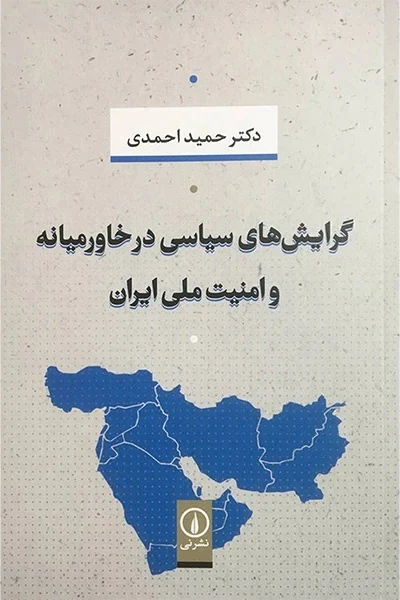
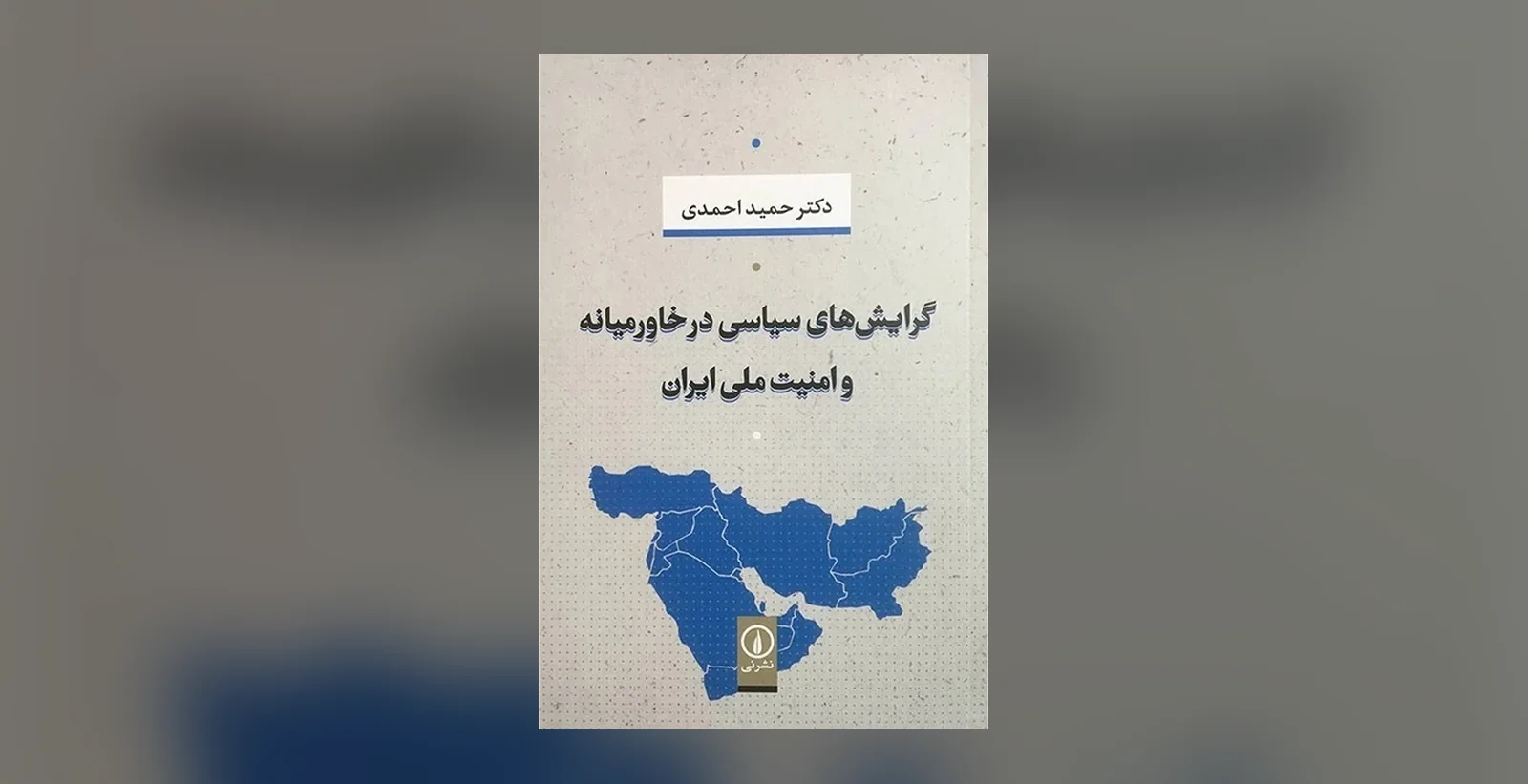
Political Tendencies in the Middle East and Iran’s National Security
Hamid Ahmadi
Ney Publishing, 2024 (in Persian)
The book Political Tendencies in the Middle East and Iran’s National Security critically examines the relationship between the Islamic Republic’s regional policies and the Middle East’s intellectual-political movements, along with the resulting threats to Iran’s national security. Re-reading this book assumes double importance, especially in light of the military aggressions by the United States and Israel against Iran, which forced two wars upon the country in the spring of 2025 and the summer of 2026.
The book’s author, a senior political analyst and commentator at the Center for Scientific Research and Middle East Strategic Studies, has written and translated numerous works on this subject in Iran. This book is one of three interconnected volumes that rank among his latest publications. The first volume in this series, titled Politics and Government in the Middle East and North Africa, was published in 2021; the second, titled Regional and International Conflicts in the Middle East and North Africa, came out in 2023; and finally, the third volume—which is the focus of our review here—was published in 2024 by Ney Publishing.
This three-volume set is primarily aimed at university-level education, providing a wealth of data to students and researchers in political science and international relations—including those new to the subjects of Iran’s geopolitics and national security. At the same time, it also addresses diplomats and decision-makers in the field; adopting a cautionary tone, it expresses the hope that “awareness of such policies and an understanding of regional political tendencies and their associated challenges” will lead to the placement of “knowledgeable elites—well-versed in politics and the regional and global landscape—within the country’s foreign policy institutions” (p. 43).
Ahmadi’s efforts to disseminate fresh ideas and critique state policies—with the aim of reforming high-level policymaking—represent an emerging approach within the realm of regional security politics, even though such practices are well-established in Iran’s social sciences. Until a few years ago, critical discourse in this field was confined to closed government circles and had no place in the public sphere; however, recent setbacks and the perilous situation that culminated in war transformed foreign policy into a matter of widespread public concern, drawing academics into the debate over major strategic challenges.
In this book series, the author adopts a broad definition of the Middle East, identifying three distinct zones within the region: the first comprises the Persian Gulf and the Arabian Peninsula, encompassing Iran, Iraq, Saudi Arabia, Yemen, Oman, the United Arab Emirates, Qatar, and Kuwait; the second is the Eastern Arab zone—referred to by some Arab nationalists during World War I as “Greater Syria”—which includes Lebanon, Syria, Palestine, Jordan, Israel, Iraq, and Turkey (a non-Arab country); and the third is the Western Arab zone, or North Africa, comprising Sudan, Egypt, Libya, Tunisia, and Morocco.
In the first chapter, Ahmadi outlines the theoretical framework of his argument by contrasting “classical realism” with the “comprehensive approach” to security policy, ultimately advocating the latter. The book is organized into two main sections: the first examines the genealogy of six contemporary political tendencies in the Middle East, while the second analyzes the impact of these tendencies on Iran’s national security; finally, the author’s concluding argument—emphasizing the necessity of prioritizing the element of “Iranian nationhood” in Iran’s security policies—is explored.
The opening chapter contrasts these two foundational national security paradigms. Grounded in the theories of Kenneth Waltz and John Mearsheimer, the realist paradigm prioritizes military security and territorial sovereignty, centering its analysis on state actors and the structure of international relations. Conversely, the “comprehensive security” paradigm—grounded in the Copenhagen School and the work of theorists like Barry Buzan—extends beyond purely military boundaries to integrate economic, cultural, identity, and value-based dimensions as core security components. Ahmadi (p. 31) observes that while “nation-state-based realism” and “transnational idealism”(armangaraei fara-meli) have competed within Iran’s national security policy since the 1979 revolution, the balance has increasingly tipped toward transnational idealism since the early 2000s. Vali Nasr also describes this shift in his recent book, Iran’s Grand Strategy (2025), as a transition to a “forward defense” doctrine—a shift that formally took place in 2001 and entailed defending the homeland through an active presence in the Arab world (p. 217). The shift must also be understood in the context of the geopolitical developments that followed the September 11, 2001, attacks on the World Trade Center, including the US designation of Iran as part of the “Axis of Evil” and the subsequent invasion of Iraq in 2003. Citing Arash Reisinejad (2019), Nasr traces the roots of this strategy to the Pahlavi era, particularly the 1958 Arab nationalist coup in Iraq and the onset of the Lebanese Civil War. Documents from the period show Colonel Mojtaba Pashaei, who oversaw the Middle East portfolio in Iran’s intelligence apparatus, describing Iran’s regional approach in terms strikingly similar to those of its contemporary proponents: “We must contain the threat on the eastern shores of the Mediterranean to prevent bloodshed on Iranian soil” (p. 218).
While Nasr seeks to identify the objective, non-ideological factors that drove Iran toward the “forward defense” doctrine, Ahmadi focuses on the adoption of an idealistic foreign policy and argues that the shift toward “transnational idealism” has not produced positive results for Iran: “The reality is that, four decades after the establishment of the Islamic Republic, the transnational objectives of its foreign policy—namely, striving for Muslim unity, supporting the world’s oppressed, and backing Islamic movements—have not been realized” (p. 384).
Ahmadi argues that the emphasis on “Muslim unity” and “emancipation” in the discourse of resistance, while rooted in ideological commitments, has contributed to conflict between Iran and the Arab world and fostered hostility toward the West, particularly the United States and Europe. He suggests that this idealistic policy has not only weakened Iran’s diplomatic capacity to build coalitions with international institutions but has also contributed to the imposition of international sanctions. Ahmadi therefore calls for a return to “realist policymaking,” centered on Iran’s national interests and the principle of non-interference in the internal affairs of other countries, as a means of restoring the country’s diplomatic bargaining power (p. 385).
As noted earlier, the first part of the book—chapters 2 through 6—provides a concise examination of six major political currents in the Middle East against the historical backdrop of the nineteenth and twentieth centuries. Chapter 2, devoted to the genealogy of Arab nationalism, argues that Arab nationalism—and its broader manifestation, Pan-Arabism—was among the most significant political movements in the Middle East’s modern history. The author traces its emergence to interactions between Arab intellectuals and elites, Christian missionaries, and French nationalists, highlighting their role in weakening and ultimately contributing to the collapse of the Ottoman Empire. From the ashes of that collapse emerged a new Middle Eastern order, characterized by territorial boundaries shaped by colonial policies.
Chapter 3 focuses on Turkish nationalism and its more extreme manifestation, Pan-Turkism. The author analyzes this movement across various periods of modern Turkish history, tracing its evolution from the late Ottoman era through the establishment of the Republic of Turkey and subsequent developments. Within this framework, Pan-Turkism is not viewed merely as a cultural current but as a political ideology with transnational potential and implications for countries with Turkic-speaking populations, including Iran. In Chapter 4, Ahmadi examines Jewish nationalism (Zionism), tracing its ideological evolution from its European origins to its profound impact on the Middle East. While he does not revisit the Palestinian conflict and peace processes—topics extensively covered in his earlier work, Regional and International Conflicts in the Middle East and North Africa—he places significant emphasis on Jewish nationalism as a key driver of the region’s changing political and security order.
Chapter 5 examines leftist and Marxist ideologies and forces in the region. The author partly explains the rise of leftist currents in the Middle East through Soviet support, while also pointing to alliances or policy overlaps between the left and nationalist forces in Iraq and Syria. In this account, the history of the Middle Eastern left is largely confined to its relations with states and is approached primarily from a security perspective. In fact, the activities of Marxist parties and organizations receive the author’s attention only insofar as they have posed a challenge to the states of the region, particularly through articulating ethnic demands and seeking to mobilize the social and political support of ethnic communities, including in Iran. Ahmadi even regards the radicalization of some Arab and Islamist currents as partly the result of their engagement with the literature, organizational practices, and methods of struggle of leftist movements. The author also attributes the radicalization of certain Arab and Islamic movements, to some extent, to their adoption of the rhetoric, organizational structures, and methods of struggle characteristic of leftist movements.
Chapter 6 examines Islamism—a movement the author regards as the region’s most prominent political trend over the last two decades. Ahmadi traces the evolution of Islamism starting from the second half of the nineteenth century—a period he terms the “reformist era”—during which issues such as liberty, constitutional government, foreign domination, and the necessity of ijtihad (independent legal reasoning) in Islam came to the fore. He then follows this trajectory through the victory of political Islamists and the emergence of moderate currents, culminating in the rise and decline of Salafi tendencies in the twenty-first century.
Ahmadi attributes the rise of radical Islamism in the Middle East to the interplay between regional political developments and foreign interventions, citing events such as the Soviet occupation of Afghanistan, Iraq’s 1991 invasion of Kuwait, the 2011 Arab Spring, and developments in Syria from 2012 onward. He identifies the insecurity prevailing in war-torn and politically abandoned territories—such as Afghanistan following the Soviet withdrawal and Iraq following the US invasion—as well as the instability in Syria after the Arab Spring, as fertile ground for the growth of radical Islamist groups. However, he considers the decisive factor to be the financial and political support for extremism originating within the region, particularly from Saudi Arabia. From this perspective, radical Islamism is fundamentally a Middle Eastern phenomenon, and understanding it requires examining its regional roots and internal dynamics rather than reducing it to the consequences of foreign intervention. This emphasis on the ideological dimensions of the region’s states and non-state actors differs from Laura Robson’s (2020) approach to collective violence in the Middle East, which highlights the colonial origins and geopolitical interests behind extremism.
Chapter 7 examines the region’s “ethno-nationalist tendencies,” through which Ahmadi traces the emergence and evolution of independence movements rooted in ethnic identity among the Kurds, Baluchis, and ethnic groups in North Africa. In discussing the Kurds, the author analyzes the various phases of ethnic movements and demands in terms of their impact on the regional political order and security. He then turns to ethnic movements among the Baluchis and in North Africa. Ahmadi largely attributes the rise of ethno-nationalist sentiment in the twentieth century to the hopes and promises of independence or autonomy extended to ethnic groups by major powers—particularly Britain and the Soviet Union—in pursuit of their own interests. He identifies two discourses—the Wilsonian notion of “liberal self-government and the right to self-determination” and the “Leninist-Stalinist Left”—as influential in the rise and spread of this tendency, tracing their impact through the writings of intellectuals and elites from these ethnic groups. Notably, he points to the 1920 Congress of the Peoples of the East in Baku, which aimed to propagate socialist ideology and was attended by representatives of groups such as the Kurds, Armenians, Baluchis, and Pashtuns (p. 175).
In this analysis, unlike his earlier approach to examining Islamic extremism, Ahmadi places disproportionate weight on the role of foreign interventions and Cold War rivalries. In doing so, he falls short of examining the historical documents and evidence that other scholars have brought to bear in analyzing ethnic tensions in the emergence of the centralized modern state in the region. Notable among these works are studies examining the fate of various tribes and ethnic groups during the era of authoritarian state-building under Reza Shah, such as the writings of Stephanie Cronin (2007) and Laura Robson (2020), the latter of whom examines a similar phenomenon in postcolonial Arab states. Consequently, Ahmadi’s analysis in this area remains aligned with centralist and state-centric approaches, which tend to interpret ethnic demands as the product of foreign interference, incitement, or manipulation. Such a perspective, however, leaves little room for understanding contemporary dynamics. The formation of the Kurdistan Region in Iraq, the establishment of Rojava’s autonomous administration in Syria, and the Turkish government’s evolving policies toward Kurdish parties, for example, represent forms of “ethnic politics” in the Middle East that transcend the “foreign intervention” paradigm and are better understood in relation to the region’s internal dynamics and structural transformations.
Regional Political Currents and the Configuration of Iran’s National Security
In the second part of the book, the intellectual and political tendencies of the Middle East are examined from the perspective of the challenges they pose to Iran’s national security. Ahmadi seeks to demonstrate the actual or potential impact of each of these tendencies on Iran’s interests, territorial integrity, national cohesion, and security. In Chapter 8, where Pan-Arabism is presented as the dominant nationalist movement in the Middle East, Ahmadi emphasizes that, contrary to its historical anti-colonial roots, the movement has come to embody different concepts and orientations, with Iran gradually replacing the former adversaries of Arab nationalism. As he puts it, “The Saudis and their allies in the Persian Gulf, as well as across the Arab East and West, have positioned Iran as the successor to the previous enemies of Arab nationalism—namely, the United States and Israel” (p. 235). He views the expansion of military cooperation between certain Arab states in the Persian Gulf and the United States and Israel as a serious threat to Iran’s national security.
Pan-Turkism—the subject of Chapter 9—is presented as a threat to Iran’s territorial integrity, particularly in light of the historical precedent of the formation of the Azerbaijan Democratic Party under Ja’far Pishevari and the establishment of the autonomous government of Azerbaijan in 1945 with Soviet backing. Ahmadi argues that the historical memory of these events continues to resonate among Pan-Turkist circles in Iran (p. 253). He contends that the Republic of Azerbaijan and Turkey seek to exploit these tendencies in pursuit of their political objectives (p. 259). At times, moreover, the Shiite-centric policies of Iran’s ruling establishment appear to overlap with, or even converge with, Pan-Turkist tendencies in their attacks on manifestations of Iran’s national identity—including the Persian language, which the author regards as its most important constituent element (p. 256).
Chapter 10 addresses the challenges that Jewish nationalism and Zionism have posed to Iran’s national security. In this chapter—one of the more critical chapters of the book—Ahmadi examines the history of Jewish nationalism and the emergence of Zionism, as well as Iran’s approach to issues concerning Jews, Israel, and Palestine during both the Pahlavi era and the Islamic Republic. By analyzing Benjamin Netanyahu’s role in advancing policies of “Iranophobia” and escalating tensions between the two countries, the author identifies three interconnected dimensions of the resulting threats—political, military, and economic—which operate within the broader framework of an anti-Iranian regional and international coalition. At the first level, he addresses ethno-political threats, arguing that while Zionism does not inherently pose an identity-based threat to Iran, potential Israeli support for ethnic-based movements—such as Pan-Turkist circles in the Republic of Azerbaijan and their adherents within Iran—could pose a serious challenge to Iran’s territorial integrity and national unity.
Citing the work of Brenda Shaffer (2002)—a scholar associated with conservative circles in the United States—Ahmadi acknowledges the influence of her writings on the formation of ethno-nationalist discourse in Iranian Azerbaijan and notes her recommendation that the United States employ ethnic divisions as an instrument against Iran (p. 379). He also discusses Israel’s military, economic, and geopolitical policies as additional dimensions of the security challenge. In particular, he points to the normalization of Israel’s relations with Arab states, exemplified by the “Abraham Accords” and multilateral gatherings such as the “Negev Summit,” as evidence of the emergence of broad political and security cooperation directed against Iran, sometimes referred to as an “Arab NATO” (p. 277).
To counter Iranophobia, Ahmadi ultimately argues that Iran must engage in “narrative management” on the global stage and make a “conceptual distinction” between opposition to the policies of governments, including Israel, and the denial of the existence of particular communities or religions, such as Judaism and Zionism. In his view, distinguishing among religion, nationalism, and state policies, while simultaneously working with the international community to address the Palestinian issue, could be an effective step toward easing tensions and overcoming diplomatic deadlocks (p. 277).
Focusing on the relationship between Marxism and Iran’s national security, Chapter 11 examines the historical trajectory and ideological evolution of leftist movements from a state-centric and security-oriented perspective. Ahmadi traces the roots of these security concerns to Iran’s proximity to the Soviet Union and Moscow’s political and ideological influence since the 1920s—factors that led Iranian governments, both during the Pahlavi era and after the Revolution, to view leftist movements not merely as domestic political forces but also as instruments of foreign influence and potential threats to Iran’s territorial integrity. From this perspective, events such as the Jangal Movement, the activities of the Azerbaijan Democratic Party, and Kurdish movements illustrate the links between leftist movements and Soviet policies.
The author observes that, following the 1979 Revolution, similar developments gradually transformed the initially cooperative relationship with some of these forces into one of confrontation. He acknowledges that leftist forces contributed to the revolutionary victory and that some leftist movements around the world initially sympathized with the Islamic Republic because of its anti-American stance. However, factors such as the Soviet intervention in Afghanistan, the escalation of political violence, and the association of certain leftist factions with ethnic conflicts led the government to regard these forces as serious threats to national security.
From Ahmadi’s perspective, drawing on the views of the Syrian leftist philosopher Sadek Jalal al-Azm1, the collapse of the Soviet Union marked a turning point that precipitated a theoretical crisis among Marxists. The influence of the Left subsequently waned as some factions shifted their focus from socialist ideals toward promoting secularism in the Middle East, although Ahmadi notes the continued presence of labor and student activism and their radical opposition to the government’s cultural policies. In examining the intellectual evolution of Iran’s leftist movements following the collapse of the Soviet Union, the author discusses the shift among some of them toward “national” and “Iran-oriented” ideas, which he interprets as a reaction to their previous experience of supporting ethnic autonomy and to the possibility of the future misuse of federalism-related discourse. In his view, this development reflects the high degree of sensitivity within Iranian society toward national identity, such that any instrumental or political exploitation of ethnic issues will lead to the political isolation of the groups advocating them (pp. 259, 298).
Chapter 12 returns to one of the book’s central concerns: the implications of radical Islamism for Iran’s national security. Taking a comparative perspective, Ahmadi contrasts Iran’s trajectory from the relatively moderate Islamism of the 1990s toward more radical religious policies with the seemingly opposite development that unfolded during the “Arab Spring.” In several Arab countries, moderate Islamist movements increasingly distanced themselves from the Islamic Republic’s model and instead gravitated toward forms of political Islam associated with Turkey’s Justice and Development Party (AKP) (p. 309). He also notes the rise of “Salafism” in parts of the Middle East and identifies Wahhabi ideology as a fundamental threat to Iran’s national security—a threat that, fueled by hostility toward Shi’ism and sustained by the financial support of certain regional actors, seeks to undermine Iran’s religious and social cohesion (p. 312).
The impact of ethnicist tendencies on Iran’s national security is the subject of chapter 13, in which the author examines the growing “sensitivity” and “over-politicization” of ethnic issues in Iran. He identifies four key factors contributing to this crisis: the consequences of poor national policies across economic, political, cultural, and social spheres; the impacts of Cold War-era ethnicist discourses; elites’ mobilization of ethnic groups for electoral gain; and regional actors’ media influence. Ahmadi criticizes Iran’s educational and political policies for excessive emphasis on religious identities and the downplaying of “Iranian national identity” for paving the way for the rise of ethnicism (p. 382). However, he does not offer a precise analysis of the discriminatory economic and social policies against ethnic groups; He merely notes that the economic pressures imposed on the government by foreign sanctions diminish its capacity to develop regions inhabited by Iran’s ethnic groups, thereby fueling widespread discontent. (p. 324)
In an effort to substantiate the central hypothesis that Iran’s national security paradigm needs to be revised, Ahmadi presents a table at the end of the chapter classifying regional threats according to their scale and intensity. He argues that the six ideological and political forces analyzed earlier could threaten Iran’s stability at five distinct levels: separatist, economic, military, political-identity, and existential (p. 374).
To elaborate on these threats, he argues that 1) the territorial and separatist threat involves separatist actors initially seeking regional autonomy and eventually moving toward formal secession, thereby undermining the legitimacy of national sovereignty and fragmenting Iran; 2) the military threats extend beyond direct warfare to encompass the bolstering of foreign powers’ military capabilities, the disruption of the regional balance of power, and support for proxy forces to exert pressure on or launch attacks against Iran; 3) economic threats aim to destabilize infrastructure, production resources, and the public’s secure access to capital and prosperity—objectives that can be pursued through regional pressure or by rendering border areas insecure; 4) political and identity threats—classified as “soft threats”—involve the efforts that try to reshape or alter the existing order from within. The weakening of the shared language and other elements of national identity, and their replacement with transnational identities, may undermine social cohesion; 5) an existential threat to Iran, Ahmadi argues, can arise only from “Salafi Pan-Islamism” because, owing to its Takfiri nature, hostility toward Shi’ism, and transnational violence, this movement does not merely target part of the country but seeks to destroy the Iran as a political community.
The conclusion at the end of the chapter outlines the author’s strategies for strengthening Iran’s national security across three domains: foreign policy, development, and identity and participatory politics.
Ahmadi suggests that national security is inextricably linked to societal conditions, arguing that economic and political underdevelopment are primary drivers of discontent and factors that undermine human security. Nevertheless, his analysis remains fundamentally grounded in a state-centric approach to security, such that even issues such as political participation and the development of deprived regions are framed primarily as means of mitigating discontent and averting security threats. In this section, the author largely reiterates his earlier arguments about prioritizing national interests, reaffirming Iranian identity, and promoting development; he does not, in effect, propose distinct strategies in foreign policy, development, or identity. Moreover, in some sections, his tone shifts from scholarly analysis to direct, aspirational recommendations addressed to policymakers, an approach more characteristic of official policy reports.
Assessing Iran’s National Security Challenges in the Absence of Political Economy
Political Tendencies in the Middle East examines the challenges that competing intellectual and political tendencies in the region pose to the Islamic Republic, and can be assessed in terms of both its analysis of these discourses and its evaluation of their threat to Iran’s national security.
The author’s primary aim is to address a gap in prevailing economic and political narratives that, by emphasizing colonialism, oil, and political economy, often overlook the significance of collective and ideological identities. By highlighting how political ideas and discourses mobilize collective action and shape security policies, Ahmadi effectively identifies the power of ideology in shaping security policies and categorizes the competing discourses that shape states, quasi-state entities, and opposition groups. However, these ideologies and tendencies appear static, with little attention to their transformation, including the post-Islamist discourses and forces examined by scholars such as Asef Bayat (2013), or the pro-democracy social tendencies that spread across the region during the Arab Spring.
While the author’s attempt to situate Iran’s security challenges within six discourses and identity politics offers a general overview, it does not clearly analyze the temporary, issue-specific alliances in the region—whether supporting Iran’s security or opposing it. Such analysis is especially important amid the Middle East’s rapid transformation, driven by a host of shifting factors. Recent developments, such as Saudi Arabia’s accommodation of Iran during the conflict and the mediating roles of Qatar and Pakistan, are difficult to explain within the book’s framework. Likewise, its treatment of intra-Arab conflicts remains limited, resulting in a relatively static, identity-based view rather than a dynamic account of shifting power configurations. While the author’s Iran-centered approach keeps national security at the core of the analysis, it comes at the expense of a broader view of structural convergences and conflicts across the Middle East. It leaves little room to examine key confrontations, such as Pan-Arabism and Zionism after Gaza, or Pan-Turkism and Kurdish ethno-nationalism in Turkey. Moreover, by separating political discourses from the region’s political economy, the analysis overlooks the material forces shaping their rise and decline. Thus, its explanation of Arab nationalism’s shift from anti-colonialism to accommodation with colonial powers remains focused on political failures rather than the underlying causes of this transformation.
The final assessment suggests that, despite the book’s emphasis on Iranian nationhood as a foundation of national security, it fails to establish a meaningful link between democracy and security. It leaves unresolved whether national identity is imposed through state-centered, top-down narratives or shaped through the free and equal participation of diverse citizens. While the author advocates replacing religious idealism with Iranian nationalism, to liberate the country from security challenges, a renewed nationalism detached from democratic principles risks aggravating, rather than resolving, Iran’s internal ethnic tensions and regional nationalist challenges. Iran has experienced a rigid form of twentieth-century nationalism, marked by the 1941 occupation and the exile of its ruler.
Ultimately, the significance of Political Tendencies in the Middle East and Iran’s National Security lies not only in its content but also in its publication context. Written amid severe security crises, the book reflects a shift in discussions of regional security from the exclusive domain of state institutions to a matter of public and academic concern. In this sense, the author’s effort to critique and reform state policies takes place within an epistemological shift from the private to the public sphere and represents a necessary and commendable step toward bringing political debates into the public sphere.
A renewed nationalism detached from democratic principles risks aggravating, rather than resolving, Iran’s internal ethnic tensions and regional nationalist challenges.
Bibliography
Ahmadi, H. (2021). Politics and government in the Middle East (West Asia) and North Africa. Ney Publishing.
Ahmadi, H. (2023). Regional and international conflicts in the Middle East and North Africa. Ney Publishing.
Bayat, Asef. (2013). Post-Islamism: The changing faces of political Islam. Oxford University Press.
Cronin, Stephanie. (2007). Tribal politics in Iran: Rural conflict and the new state, 1921–1941. Routledge.
Nasr, Vali. (2025). Iran’s grand strategy: A political history. Princeton University Press.
Palestine Studies. (n.d.). The Palestinian question. https://www.palestine-studies.org/en/node/40510
Reisinezhad, Arash. (2019). The Shah of Iran, the Iraqi Kurds, and the Lebanese Shia. Palgrave Macmillan.
Robson, Laura (2020). The politics of mass violence in the Middle East. Oxford University Press.
Shaffer, Brenda. (2002). Borders and brethren: Iran and the challenge of Azerbaijani identity. MIT Press.
Notes
1. Sadek Jalal Al-Azm (1934–2016)A prominent Syrian philosopher and thinker; an advocate of secularism and Enlightenment in the Arab world; an analyst of the relationship between Islam and modernity; and a critic of the link between political power and religious identities in the region.
About the Authors
Hamid Ahmadi, a professor of international relations and senior analyst of Middle East affairs in Iran, has served as the Head of the Department of Political Science at the University of Tehran (1998–2003). He is the editor-in-chief of the quarterly journal Middle East Studies published by the Center for Scientific Research and Middle East Strategic Studies.
Samar Saremi, an architect and urban anthropologist, is a graduate of McGill University who works as an associate at Tajeer Consulting Architects in Tehran.
Related Content
 Editorial Note: Iran and the New Middle East? (©Background)
 When Categories Cease to Explain: Political Science and the Middle East after the Arab Uprisings (©Background)
 Global Middle East (©Background)
 Dominant Identity and Foreign Policy in the Middle East: A Critical Assessment (©Background)
 The Axis of Resistance and the New Middle East (©Background)
 Cultural Revolution: It is Time to Balance the Books!
Comments are closed.