A history of Iranian migration across the Persian Gulf in the twentieth century and of how border regimes redefined belonging on its two shores.
Books, films, reports and more on Iran and its region.
A history of Iranian migration across the Persian Gulf in the twentieth century and of how border regimes redefined belonging on its two shores.
A political history arguing that Iran’s foreign policy since 1979 follows a consistent logic of state survival and independence, shaped by a long memory of foreign intervention.
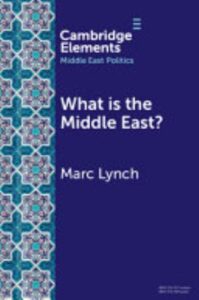
A study of how the idea of the Middle East as a region was made, and of how treating it as a single unit has shaped and limited political science.
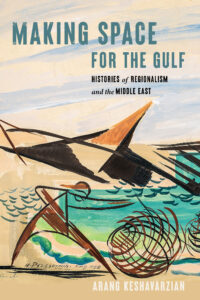
A history of how the Persian Gulf was made into a region through circulation, imperial enclosure, borders, free-trade zones and urbanism, from the nineteenth century to the present.
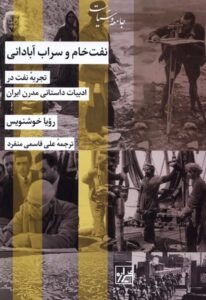
A study of how oil and the modernity it brought have been represented in modern Persian literature, from the early years of extraction to the present.
A history of relations between the United States and Iran from 1800 to 1988, seen mainly from the side of Iranian society.
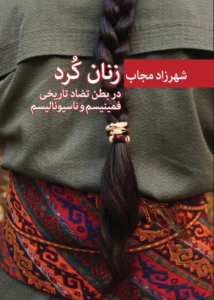
A study of Kurdish women’s lives and struggles across the Middle East and the diaspora in the twentieth century, between the claims of feminism and of nationalism.
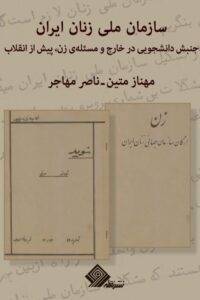
A history of the National Organization of Iranian Women, founded abroad in 1965 alongside the Confederation of Iranian Students, with interviews and documents.
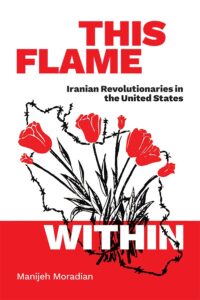
A history of the Iranian Students Association in the United States in the 1960s and 1970s and of the solidarities its activists built with other movements.
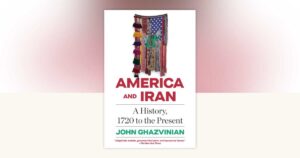
A history of relations between the United States and Iran over three centuries, from early mutual admiration to decades of deep distrust.
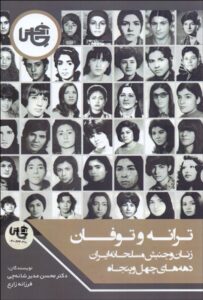
A study of women’s part in Iran’s armed opposition movements of the 1960s and 1970s, based on the memoirs and writings of women who took part.
A journalist’s account of the 1978 Cinema Rex fire in Abadan, built from documents, published accounts and the memories of the neighbourhood the perpetrators came from.
A history of environmental law and policy in Pahlavi Iran under the five development plans of 1948–1978, asking why no strong environmental movement emerged.
An ethnography of Iraqis in London that tells five life stories of exile and nostalgia to show the long history of imperial violence in Iraq.
A history of how ports, shipping routes, roads, law and labour have tied the Arabian Peninsula to global capitalism, and how wars have repeatedly reshaped them.
A diplomatic history of the Persian Gulf between the two world wars, arguing that Iranian nationalism and Arab responses in this period laid the roots of the Arab–Iranian conflict.
A theory of revolution that explains how revolutions start, unfold and end by tracing recurring sequences of events across cases, from England and Chile to Iran and Ukraine.
A historical and ethnographic study of drug policy in Iran that uses the state’s handling of drugs and addiction to examine how the Islamic Republic governs crisis.
An ethnography of Iranian professionals in Hamburg since the 1930s that links diversity within a migrant community to inequality at local and global levels.
A study of how the Pahlavi state, alongside dissident intellectuals, promoted an anti-Western ‘authenticity’ discourse that helped prepare the ground for the 1979 revolution.
A study of the stateless residents of the United Arab Emirates who were given passports of the Comoros, and of the ‘precarious citizenship’ produced by Gulf migration regimes.
A spatial social history of labour in Iran’s oil industry from 1908 to 1941, showing how the oil complex of Khuzestan and the city of Abadan were assembled.
A history of the Patriotic Women’s Society of Iran, one of the most lasting women’s organisations of the early twentieth century, with a guide to its journal.
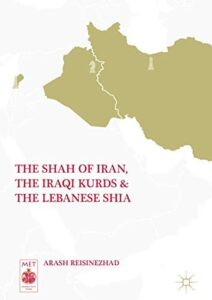
An archival history of how the Shah’s Iran worked with non-state groups, above all the Iraqi Kurds and the Lebanese Shia, to counter its regional rivals between 1958 and 1979.
This website uses cookies to improve your experience. We'll assume you're ok with this, but you can opt-out if you wish. Accept Read More