A former Iranian diplomat argues that friendly relations between Iran and Saudi Arabia are possible and proposes a roadmap towards a new security structure in the Persian Gulf.
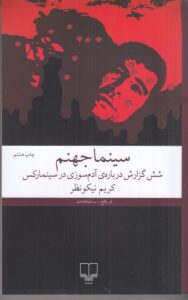
A journalist’s account of the 1978 Cinema Rex fire in Abadan, built from documents, published accounts and the memories of the neighbourhood the perpetrators came from.
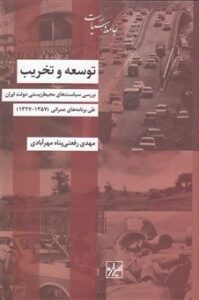
A history of environmental law and policy in Pahlavi Iran under the five development plans of 1948–1978, asking why no strong environmental movement emerged.
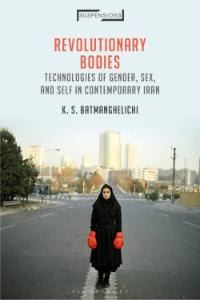
A study of how ideas about women’s bodies in state, religious and public-health discourse have shaped gender and sexuality in the Islamic Republic, and how women have responded.
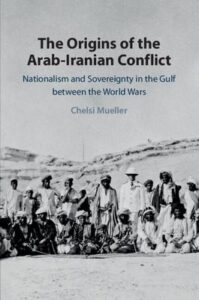
A diplomatic history of the Persian Gulf between the two world wars, arguing that Iranian nationalism and Arab responses in this period laid the roots of the Arab–Iranian conflict.
A historical and ethnographic study of drug policy in Iran that uses the state’s handling of drugs and addiction to examine how the Islamic Republic governs crisis.
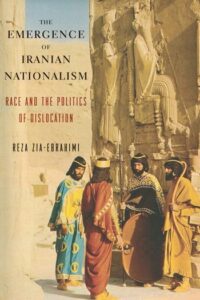
A study of how the Pahlavi state, alongside dissident intellectuals, promoted an anti-Western ‘authenticity’ discourse that helped prepare the ground for the 1979 revolution.
A spatial social history of labour in Iran’s oil industry from 1908 to 1941, showing how the oil complex of Khuzestan and the city of Abadan were assembled.
A history of the Patriotic Women’s Society of Iran, one of the most lasting women’s organisations of the early twentieth century, with a guide to its journal.
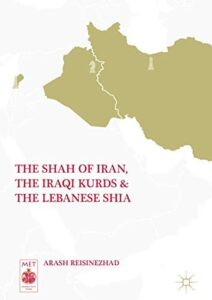
An archival history of how the Shah’s Iran worked with non-state groups, above all the Iraqi Kurds and the Lebanese Shia, to counter its regional rivals between 1958 and 1979.
A study of the sound recordings Kate Millett made in Tehran in March 1979, which reveal a revolutionary moment her own published account did not capture.
An assessment of how far women’s rights activism in Iran has changed women’s legal status, and of why Iran has not ratified the UN convention on women’s rights.
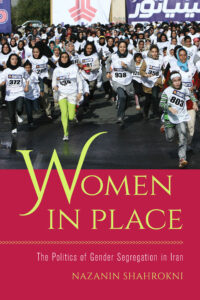
An ethnographic study of gender segregation policies in Tehran’s buses, parks and stadiums, and of what they reveal about the Islamic Republic’s pragmatics of statehood.
A study of women’s participation in public life and elections in Iran, arguing that sustainable and just development depends on their place in legislation and politics.
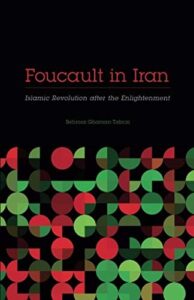
A reading of Michel Foucault’s writings on the Iranian revolution that defends them against their critics and traces how the revolution shaped his later thought.
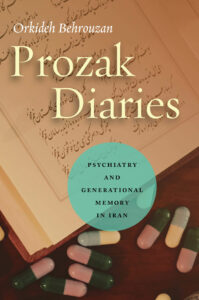
An anthropological study of how a generation of young Iranians came to describe their experience of the revolution and the war in the language of psychiatry.
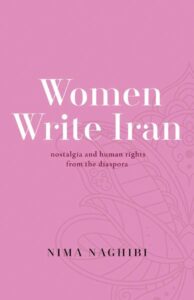
A study of autobiographical writing and other life narratives by Iranian women in the diaspora, read through nostalgia for pre-revolutionary Iran and the language of human rights.
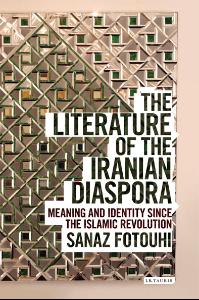
A study of the literature written in English by Iranians of the diaspora since the 1979 revolution, and of how it negotiates individual and communal identity.
A comparative study of how the identity that dominates a state shapes its national interests and foreign policy, with Iran, Turkey, Israel and Egypt as cases.